Showing posts with label ecovillage. Show all posts

Wednesday, August 4, 2021

An Ecovillage is Born

This will be my last post for this blog as Google is ending the email subscription service for it in August. I will instead start making public blog posts at my Patreon site, and to get you started I've made over 50 of my previous posts public.

The big news is that a few people have joined with me and we've purchased land for an ecovillage! Join and follow me on Patreon to read all about it!

Sunday, November 15, 2015

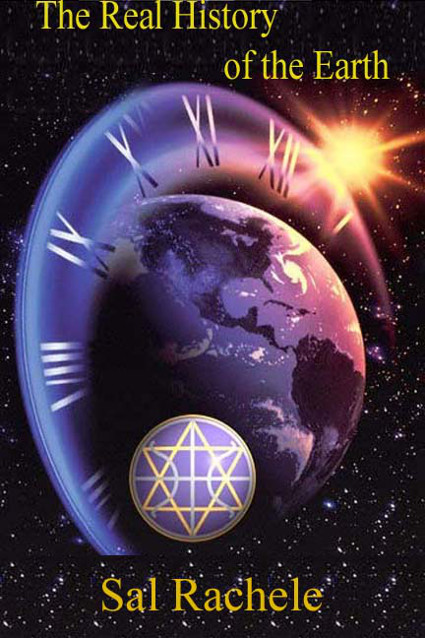
The Real History of the Earth

I just finished reading Sal Rachele's latest book "The Real History of the Earth" and thought it was great. Regarding the predictions, this book confirms what was hinted at in Sal's last book, that nothing major would happen until after the comet flyby on May 5, 2017 that causes another ascension boost and a major upheaval in world economies.

On December 21, 2012 the Earth reached a 4.00 vibration and transitioned to being a 4D planet. By mid-2015 the Earth reached a vibration of 4.25. In Sal's last book he had stated a person needed to be within 1.00 of the Earth to remain on the planet (i.e. at least 3.25 with the Earth at 4.25), but in this book he says a person needs to be within 0.5 of the Earth to remain here.

Since Sal's last book, the average vibration of humanity has increased from 3.55 to 3.60, but during that same time period the Earth has gone from 4.05 to 4.25. So the situation has reversed from most people being within the 0.5 range to now being outside it. This means that in the coming years more people will be dying such that by 2020 deaths will exceed births and the world population will begin declining. As I wrote last December, world population is what I'm using to validate the predictions.

In terms of physical ascension, similar rules apply, as it's also extremely difficult to maintain a physical vibration more than 0.5 higher than the Earth average. Since physical ascension requires a vibration of 5.00, this will only be possible once the Earth reaches a vibration of 4.50 which is not expected until sometime between 2030 and 2050.

Boy, 2050 would be a much longer wait than what I was expecting when I first read about physical ascension back in 2008, but the book does offer some hope. It hints that high in the mountains far away from 3D civilization the Earth maintains a much higher vibration than the average. So moving to a 4D spiritual community far from any 3D cities might allow for physical ascension as early as 2025. In any case, I'll be here waiting, watching and raising my vibration through daily spiritual practice.

Sunday, January 13, 2013

Creating a Life Together

The book "Creating a Life Together: Practical Tools to Grow Ecovillages and Intentional Communities" is an excellent resource for anyone interested in joining or starting an ecovillage or intentional community. It provides step-by-step practical information on how to create a successful ecovillage. Here is an excerpt from the Introduction.


The Successful Ten Percent

I’ve since learned that EarthDance Farm’s experience is fairly common. Most aspiring ecovillages and community groups — probably 90 percent — never get off the ground; their envisioned communities never get built. They can’t find the right land, don’t have enough money, or get mired in conflict. Often they simply don’t understand how much time, money, and organizational skill they’ll need to pull off a project of this scope.

I wanted to know about the successful ten percent, those groups that actually created their communities. What did they do right?

I’ve sought the answer to this question ever since, in my years as editor of Communities magazine, and by visiting dozens of communities and interviewing scores of community founders. And I’ve seen a definite pattern. Generally, founders used the same kinds of skills, knowledge, and step-by-step processes to create widely different kinds of communities, from urban group households or rural ecovillages.

Creating a Life Together is an overview of that process, gleaned from some of the most innovative and successful community founders in North America. This is what they did, and what you can do, to create your community dream.

To give you an idea of the level of detail that the books goes into, here is the Table of Contents.


Introduction

Part One: - Planting the Seeds of Healthy Community

Chapter 1 - The Successful Ten Percent — and Why Ninety Percent Fail
  • Lost Valley — How One Group Did It
  • What Works, What Doesn’t Work?
  • The Successful Ten Percent
  • Why Ninety Percent Fail
  • “Structural Conflict” — And Six Ways to Reduce It
  • What Will it Cost?
  • How Long Does it Take?
  • How Many People do You Need?
Chapter 2 - Your Role as Founder
  • What Kind of Person Founds a Community?
  • What Else You’ll Need
  • “If Only I Had Known!”
Chapter 3 - Getting Off to a Good Start
  • Don’t Run Out and Buy Land — Yet
  • When You Already Own the Property
  • Organizing Your Group
  • Getting Real about Finances
  • Collecting Funds
  • Raising Money from Supporters
  • Attracting and Integrating New Members
  • Creating “Community Glue”
  • Pioneers, Settlers, and the Flow of Members
Chapter 4 - Community Vision — What It Is, Why You Need It
  • Sound a Clear Note
  • Elements of a Community’s Vision
  • Your Vision Documents and Vision Statement
  • Do It First
Chapter 5 - Creating Vision Documents
  • More Than One Vision?
  • A Sacred Time
  • “That’s Not Community!” — Hidden Expectations and Structural Conflict
  • Exploring the Territory
  • Sharing from the Heart
  • Writing it Down
Chapter 6 - Power, Decision-making, and Governance
  • Power — The Ability to Influence
  • Focused Power, Widespread Power
  • How Consensus Works
  • What You Need to Make Consensus Work
  • “Pseudoconsensus” and Structural Conflict
  • Agreement-Seeking — When You Don’t Want to use Full Consensus
  • Multi-winner Voting
  • Community Governance — Spreading Power Widely
  • More than One Form of Decision Making?
  • What Decision-making Method Should You Use?
Part Two: - Sprouting New Community: Techniques & Tools

Chapter 7 - Agreements & Policies: “Good Documents Make Good Friends”
  • Remembering Things Differently
  • Giving Yourselves Every Chance of Success
  • Your Community’s Agreements and Policies
Chapter 8 - Making It Real: Establishing Your Legal Entity
  • Why You Need a Legal Entity — Before Buying Your Property
  • Using a Lawyer
  • Finding the Right Lawyer
Chapter 9 - The Great Land-Buying Adventure
  • Legal Barriers to Sustainable Development
  • Shopping for Counties — Zoning Regulations, Building Codes, Sustainable Homesteads, and Jobs
  • The Proactive Land Search
  • Friendly Loans from Friends and Family
  • Onerous Owner-financing (Better than None at All)
  • Do-it-Yourself Refinancing with a “Shoe Box Bank”
  • When One Person Buys the Property
  • Acquiring Fully Developed “Turn-Key” Property — Confidence, Persistence, and Negotiation
  • If at First You Don’t Succeed …
Chapter 10 - Finding the Right Property
  • Choosing Your Site Criteria
  • How Much Land Do You Want?
  • Raw Land — Lower Initial Cost, Years of Effort
  • Developed Land — Electricity, Toilets, and Showers
  • Fully Developed Turn-key Property — Move Right In (With a Big Financial Bite)
  • Buying Property like the Professionals Do
  • Conducting the Search — On Your Own or with a Real Estate Agent
  • Investigating Likely Properties
  • Taking Property Off the Market While You Do Further Research
Chapter 11 - Neighbors and Zoning
  • How Zoning Issues can Impact Community Plans
  • Zoning Issues and Your Property
  • Gambling with Former Use Permits
  • Seeking a Zoning Exception
  • Negotiating for What You Want
  • Zoning Exceptions, Neighbors, and Public Hearings
Chapter 12 - Financing Your Property (Loans You Can Live With)
  • About “Renting Money” — What You Should Know
  • Private Financing
  • When One Member Buys the Property
  • Protecting Your Sole Owner with a Triple Net Lease
  • Owner Financing
  • Bank Financing
  • Drawing on the Cohousing Model
  • What about Grants and Donations?
  • Refinancing Your Property
Chapter 13 - Developing Sustainable Human Settlements
  • Earthaven’s Development Process
  • Listening to your Land
  • Creating your Site Plan Yourselves
  • Avoiding “Urban Refugee Syndrome”
  • Creating Privacy in the Midst of Community
  • Designing for Conviviality
Chapter 14 - Internal Community Finances (Can We Afford to Live There?)
  • Rural Communities — How will your Members Make a Living?
  • The Risks of Community Businesses
  • Keeping Member Assessments Affordable
  • Joining Fees
  • Housing Arrangements
  • Site Lease Fees and the Debt Load
  • Labor Requirements
  • Building Equity
  • Can People Afford to Join You?
Chapter 15 - Legal Entities for Owning Property
  • Checklist for Choosing a Legal Entity
  • How You’ll Hold Title and Arrange Members’ Use Rights
  • Organizational Flexibility
  • How You’ll be Taxed
  • Overview: Corporations and Non-profit Corporations
  • Limited Liability Companies (LLCs)
  • Homeowners Associations — Tax Advantages (and Disadvantages)
  • Condominium Associations
  • Housing Co-ops — Separate Ownership and Use Rights
  • Non-exempt Non-profit Corporations
Chapter 16 - If You’re Using a Tax-exempt Non-profit
  • Advantages of a 501(c)3 — Donations, Tax Breaks, Limited Liability
  • Disadvantages of a 501(c)3 — Onerous Requirements, Irrecoverable Assets
  • Land-Owning Entities and 501(c)3 Corporations — The Best of Both Worlds
  • How One Group Retained Control of its Board
  • Title-holding Corporations — Collecting Income from “Passive” Sources
  • Private Land Trusts — Protecting the Land
  • Community Land Trusts — An Irrevocable Decision
  • For “Common Treasury” Communities — 501(d) Non-profit Corporations
Part Three: - Thriving in Community

Chapter 17 - Communication, Process, and Dealing with Conflict: The Heart of Healthy Community
  • The “Rock Polisher” Effect
  • Nourishing Sustainable Relationships
  • The Roots of Conflict: Emotionally-charged Needs
  • High Woundedness, High Willingness
  • Seven Kinds of Community Conflict We Wish We’d Left Behind
  • Twenty-four Common Sources of Community Conflict
  • The Fine Art of Offering Feedback
  • Receiving Feedback — Listening for Kernels of Truth
  • Threshing Meetings
  • Creating Specific Conflict Resolution Agreements
  • Helping Each Other Stay Accountable to the Group
  • A Graduated Series of Consequences
Chapter 18 - Selecting People to Join You
  • Select for Emotional Maturity — the “Narrow Door”
  • But is it Community?
  • Passive Victims, Outraged Victims
  • Membership Screening and the Law
  • Dealing Well with Saying “No”
  • How Can You Tell?
  • Questions, References, “Long Engagements”
Appendix 1 - Sample Community Vision Documents
Appendix 2 - Sample Community Agreements
Appendix 3 - Setting Up and Maintaining a 501(c)3 Non-profit

Saturday, December 22, 2012

Prediction Failed, What Now?

The long awaited day of December 21, 2012 has now come and gone . . . and nothing of any significance happened. The EM field weakness predicted by the Founders for that day did not materialize.


At the end of each Precessional Cycle, the Earth and the solar system pass through what is called a region of scalar electromagnetic impulses, or an area of space in which the EM field polarities become weaker. This weakness in the EM fields sometimes (but not usually) causes the north and south poles of the Earth to reverse polarity.

The geomagnetic field plot for December 21st was the same as any other day with no difference in field strength seen. It is unfortunate that this prediction failed to materialize, but no doubt part of the overall plan for humanity. It is also important to note that the trends described by the Founders are certainly present (i.e. financial crisis, climate crisis, energy crisis, etc.), and many of the other things they mention may still be true, but we won't know with any certainty until we actually experience them.

So what now? The only reason I was waiting for December 21, 2012 was to know who I should consider including in my plan to build an ecovillage. So now that nothing has happened to change anyone's beliefs, I will only seek out those that are already predisposed to the idea of living in an ecovillage. So if you live in the Ottawa, Canada area and are interested in participating in my ecovillage project, please email me at manoj.the.yogi@gmail.com and we can discuss. Here's an overview of my ecovillage vision.

Monday, August 13, 2012

A New We

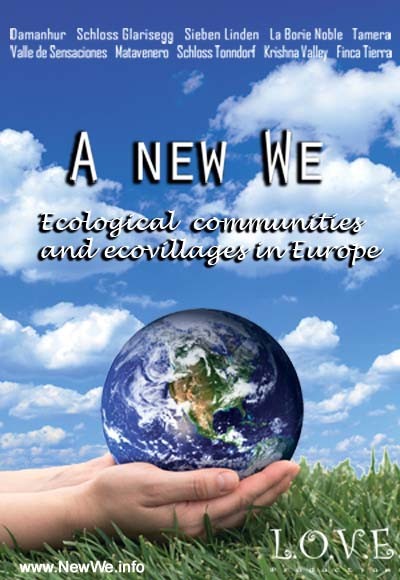
This post is not actually about the movie "A New We", but about writer/director Stefan Wolf's vision of an ideal ecovillage.


What the film A New We shows and demonstrates is that there is not just one way to live in a community or in an eco-village, but there are many ways. Thus each of us has to find out for him or herself what the individual needs are and which eco-village model serves these needs best.

The range of the modern term "community" is big and it goes from an income-sharing commune, to a student-flat or co-housing project, all the way to a modern eco-village. All of those have community characteristics and have benefits, as well as certain disadvantages.

After seeing all of this variety of communities and eco-villages during the making of A New We, what is my personal ideal eco-village?

My personal ideal eco-village unites the advantages of the community lifestyle with the advantages of the individual private lifestyle. That means the structure of the eco-village is set up in a way that it offers a personal land for each (soul)-family of about 0,5 ha to 1 ha in size, which allows them to create a space of love* on it and to be the owner of this land.**

On the other hand there is the village center as a "community-playground" which is owned by all members (likely through an association) and where the advantages of community-life are being explored and experienced. Here you have community buildings and materials, like a common washing-machine, beamer for presentations and films, activity-hall, everything free-shop, etc. You can join common activities like yoga, presentation, etc...or just have a chat with other people. There are no fixed common shared meals (but can happen if organised by people who wish so), but rather spontanious coming togethers for food e.g. Picnic in the grass. Cars are outside of the settlement and there is an organised car-sharing-circle.

What holds the people in this eco-village together is their common shared values and bright visions and aspirations for the entire creation. Love for all is the basic principle and motivation shared by those people.

What is I think an advantage of this model is that it gives the individuals and families great freedom. Since every (soul)-family has its own space of love they do not need to spend energy to discuss about redundant things like: "Shall we put the tomatoes there or here?" And then having a discussion about it for an hour because 20 people are having a different opinion about it...

The people in my ideal settlement just agreed to a general standard of arrangements like "only organic farming, respect and care for all living beings, etc..." Thus the people enjoy great freedom and individuality, while experiencing the joy of having like-minded neighbours and friends around with whom they can share, interact and have various projects.

At your own space you can create a paradise oasis in cooperation with the diverse plants, animals and insects. A big variety of fruit and nut trees, berry-bushes, vegetables, mushrooms, herbs, flowers and other plants make your life shiny and give abundance. Everything in this space of love will serve and love you and your beloved ones, from the smallest flowers and grasses to the biggest trees thereon. It is the perfect place for your ongoing self-realization and for becoming the best you can be.

Of course there are also disadvantages in my ideal eco-village. One is that you might need more money because you will purchase/use a bigger piece of land. Another is that the sharing of resources is limited to a certain extend. E.g. it would be much more cost-efficient and environmental friendly to live in one big house as a commune and share one toilet, bathroom, kitchen, etc... however this disadvantage can be compensated due to the very simple lifestyle of the various people in this settlement. And as mentioned above there is still a significant amount of resources which can be shared in the village.

To give the shortcut for my ideal eco-village:
  • around 10 ha of land.
  • around 10 to 15 familie domains(0,5 ha - 1 ha each)
  • around 0,5 ha - 1 ha community space in the center
  • individual landownership over familie domains
  • common landownership over community center place
  • common shared values: "peacefood"***, sustainability, spiritual growth, Ahimsa, etc.
  • Every community part-taking is voluntary and is done out of free will
  • other shared values: thriving for peacefood-self-sufficiency, nature-close lifestyle, etc.
  • unschooling project for the children
  • To be inspiring to other people through our simple, happy and healthy life
  • use of sustainable energy, compost toilets, reed-wastewaterplant, etc...
  • common use of various resources like washing machine, beamer, cars, etc...
  • trial membership for newcomers for a period of time
*Space of love is a term described in the books of Vladimir Megre in the ringing cedars series. It refers to a space where a family has created a so called family-domain – a place which is a self-sufficient aiming paradise garden with a house and provides for all the needs of the adults and children thereon. It also supports them in the unfolding of the tremendous potential which lies in human beings. The space of love is the material, outer extension and expression of the internal spiritual self.

** That does not mean if they would leave the village that they could sell the land to anybody, but instead the members of the village need to agree to the new person who wants to buy the land and live there.

*** The term peace-food in this text refers to an ahimsa (non-violence) kind of food. Since it is difficult to get ahimsa food from animals due to their and our nature it refers predominantly to plant-based foods. These are easier to get in an ahimsa-way (especially fruits) and thus is contributing to the global peace-field. Peace-food does not exclude animal foods like honey, milk or eggs if they are given voluntarily and freely by the animals. However it excludes products where violence towards animals has (probably) taken place. This is in no way a disadvantage for us since our bodies are designed to live and thrive on a plant-based diet and many living examples proof that. (Dr. Will Tuttle, Storm Talifero, Dr. Douglas, etc...)

Written by
Stefan Wolf
Creator of "A New We" and Co-founder of L.O.V.E. Productions

Stefan's vision is almost identical to mine, except as I've already stated, I would purchase more land up front to allow for future growth.

Monday, July 23, 2012

The Founders on Agriculture (part 2)

This post continues from part 1 of this series. Here the Founders delve into the spiritual aspects of growing food and building a community.


Use prayer, meditation, and higher consciousness techniques to raise the yield and quality of your produce. The Findhorn community in Scotland is a prime example of this. For years, they have had the best produce in Europe, even though their soil and water are just average. This has been attributed to prayer and mindfulness, as well as harmonious and joyful living.

If you can, talk to the plants. Commune with them. Learn to telepath. It might be easier than you think.

Although you will not grow enough to feed the entire world, learn to be generous with your neighbors. Use protection to keep thieves at bay. Send love and compassion to those in the cities that are having trouble finding food, but set your intention to become psychologically invisible to anyone who would steal your crops or farm equipment. Erect an etheric dome of golden, loving light around your farm and those of your neighbors.

Have regular community meetings with everyone in the area. Propose a purpose of the meetings, such as, "We have gathered together to assist each other in a bountiful harvest, and to share ideas and insights on how to grow better crops."

Talk to the nature spirits. They will often know what kind of winter is coming, or whether a particularly exotic fruit will flourish or die in your temperate climate. Devote small portions of your farm to crops that your intellect might say you are crazy to plant, but for which your inner guidance says go ahead.

Balance your time between farming, family and spiritual practice. This is not easy, since farming can be quite labor intensive. Share your talents and abilities in a balanced way with others. You might not be the farmer, but you might have the money to buy the property. That might be your primary contribution to the community. Everyone has unique sets of talents and abilities. Encourage souls to express their latent, as well as obvious, abilities. Ask for what you truly need.

Visualize a community that has a balance of talents and abilities, so that you attract one person who is good at plumbing, another who has an electrical wiring background, another who can purchase and install solar panels, etc., instead of attracting 100 plumbers and no electricians.

You want a balance between highly grounded souls who work with their hands and the Earth, and those who are more visionary and mental. Both are needed for a successful enlightened farming community. You will need some administrators and those who are natural leaders, but you do not want everyone trying to be the boss.

Sunday, June 10, 2012

Economic Realities (chapter 6)

In chapter 6 of the book "Earth Awakens: Prophecy 2012 - 2030" the Founders provide some practical investment recommendations for making the transition to the Golden Age.


It is our understanding that the American and European currencies will likely decline dramatically between 2012 and 2015, resulting in severe hyperinflation or depression, depending on how the central banks respond to the deepening crisis. At the same time, the value of real goods (including gold, silver and agricultural commodities) will rise significantly.

Real estate was hyper-inflated for many years due to speculation. In 2006 the bubble burst and it has been declining ever since. We anticipate that it will continue to drop for a while and then stabilize and eventually climb, since land and buildings are real assets. However, it is likely that by the time it appreciates significantly in value, housing and land will only be available to those who have gold, silver and precious metals as collateral.

It is recommended that you prepare for the collapse by prioritizing your investments as follows:
  • (1) buy land and grow your own food while you still can;
  • (2) buy gold, silver and other precious metals (have the metal on hand in a safe place);
  • (3) keep cash on hand rather than deposited in the bank;
  • (4) keep liquid assets, such as checking accounts and credit/debit cards;
  • (5) invest in forward-thinking companies that have excellent management and are contributing to the well-being of the world (such as alternative energy and environmental cleanup companies).
Remember, this is in order of priority. If you only have enough money for some of these, make sure items (1) and (2) are handled first.

I've written before about the importance of investing in gold, and here the Founders confirm the soundness of that advice, but even more important is buying land and growing food. While I've been growing food in my back yard as a learning exercise, I still have yet to purchase my one hectare of land as recommended by Anastasia for building a home and growing a food forest.

So while it is certainly possible to go it alone, I would much prefer to do so in a group as there is strength in numbers. I'm thinking of around 10 families buying around 100 acres or 40 hectares. If each family takes one hectare, then that still leaves plenty of space for growth as children become adults, marry and need their own hectare. The key to success though lies in having a shared vision of a Golden Age Ecovillage.

The Founders have much to say about this topic which I'll be sharing in future posts.