Showing posts with label anastasia. Show all posts

Monday, August 13, 2012

A New We

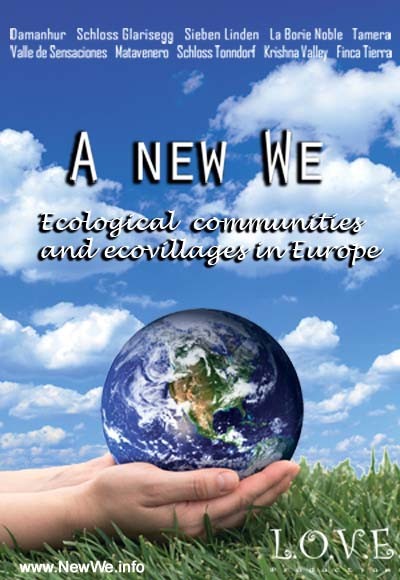
This post is not actually about the movie "A New We", but about writer/director Stefan Wolf's vision of an ideal ecovillage.


What the film A New We shows and demonstrates is that there is not just one way to live in a community or in an eco-village, but there are many ways. Thus each of us has to find out for him or herself what the individual needs are and which eco-village model serves these needs best.

The range of the modern term "community" is big and it goes from an income-sharing commune, to a student-flat or co-housing project, all the way to a modern eco-village. All of those have community characteristics and have benefits, as well as certain disadvantages.

After seeing all of this variety of communities and eco-villages during the making of A New We, what is my personal ideal eco-village?

My personal ideal eco-village unites the advantages of the community lifestyle with the advantages of the individual private lifestyle. That means the structure of the eco-village is set up in a way that it offers a personal land for each (soul)-family of about 0,5 ha to 1 ha in size, which allows them to create a space of love* on it and to be the owner of this land.**

On the other hand there is the village center as a "community-playground" which is owned by all members (likely through an association) and where the advantages of community-life are being explored and experienced. Here you have community buildings and materials, like a common washing-machine, beamer for presentations and films, activity-hall, everything free-shop, etc. You can join common activities like yoga, presentation, etc...or just have a chat with other people. There are no fixed common shared meals (but can happen if organised by people who wish so), but rather spontanious coming togethers for food e.g. Picnic in the grass. Cars are outside of the settlement and there is an organised car-sharing-circle.

What holds the people in this eco-village together is their common shared values and bright visions and aspirations for the entire creation. Love for all is the basic principle and motivation shared by those people.

What is I think an advantage of this model is that it gives the individuals and families great freedom. Since every (soul)-family has its own space of love they do not need to spend energy to discuss about redundant things like: "Shall we put the tomatoes there or here?" And then having a discussion about it for an hour because 20 people are having a different opinion about it...

The people in my ideal settlement just agreed to a general standard of arrangements like "only organic farming, respect and care for all living beings, etc..." Thus the people enjoy great freedom and individuality, while experiencing the joy of having like-minded neighbours and friends around with whom they can share, interact and have various projects.

At your own space you can create a paradise oasis in cooperation with the diverse plants, animals and insects. A big variety of fruit and nut trees, berry-bushes, vegetables, mushrooms, herbs, flowers and other plants make your life shiny and give abundance. Everything in this space of love will serve and love you and your beloved ones, from the smallest flowers and grasses to the biggest trees thereon. It is the perfect place for your ongoing self-realization and for becoming the best you can be.

Of course there are also disadvantages in my ideal eco-village. One is that you might need more money because you will purchase/use a bigger piece of land. Another is that the sharing of resources is limited to a certain extend. E.g. it would be much more cost-efficient and environmental friendly to live in one big house as a commune and share one toilet, bathroom, kitchen, etc... however this disadvantage can be compensated due to the very simple lifestyle of the various people in this settlement. And as mentioned above there is still a significant amount of resources which can be shared in the village.

To give the shortcut for my ideal eco-village:
  • around 10 ha of land.
  • around 10 to 15 familie domains(0,5 ha - 1 ha each)
  • around 0,5 ha - 1 ha community space in the center
  • individual landownership over familie domains
  • common landownership over community center place
  • common shared values: "peacefood"***, sustainability, spiritual growth, Ahimsa, etc.
  • Every community part-taking is voluntary and is done out of free will
  • other shared values: thriving for peacefood-self-sufficiency, nature-close lifestyle, etc.
  • unschooling project for the children
  • To be inspiring to other people through our simple, happy and healthy life
  • use of sustainable energy, compost toilets, reed-wastewaterplant, etc...
  • common use of various resources like washing machine, beamer, cars, etc...
  • trial membership for newcomers for a period of time
*Space of love is a term described in the books of Vladimir Megre in the ringing cedars series. It refers to a space where a family has created a so called family-domain – a place which is a self-sufficient aiming paradise garden with a house and provides for all the needs of the adults and children thereon. It also supports them in the unfolding of the tremendous potential which lies in human beings. The space of love is the material, outer extension and expression of the internal spiritual self.

** That does not mean if they would leave the village that they could sell the land to anybody, but instead the members of the village need to agree to the new person who wants to buy the land and live there.

*** The term peace-food in this text refers to an ahimsa (non-violence) kind of food. Since it is difficult to get ahimsa food from animals due to their and our nature it refers predominantly to plant-based foods. These are easier to get in an ahimsa-way (especially fruits) and thus is contributing to the global peace-field. Peace-food does not exclude animal foods like honey, milk or eggs if they are given voluntarily and freely by the animals. However it excludes products where violence towards animals has (probably) taken place. This is in no way a disadvantage for us since our bodies are designed to live and thrive on a plant-based diet and many living examples proof that. (Dr. Will Tuttle, Storm Talifero, Dr. Douglas, etc...)

Written by
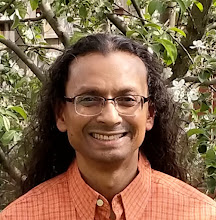
Stefan Wolf
Creator of "A New We" and Co-founder of L.O.V.E. Productions

Stefan's vision is almost identical to mine, except as I've already stated, I would purchase more land up front to allow for future growth.

Monday, May 28, 2012

Top 100: Fungi

This is the first of a series of posts that will cover the "Top 100" forest garden plants taken from volume 1 of the Edible Forest Gardens books. We will start with the fungi and work our way up to the trees. In Anastasia book 4 chapter 14, Vladimir mentions mushrooms briefly.


Russians are accustomed to eating mushrooms - well boiled, fried, marinated or salted. Anastasia eats them in their dried, natural state, without any processing. One time I was travelling from Moscow to Gelendzhik by car for a readers' conference. The whole trip I lived on mushrooms Anastasia had given me.

We now take a look at the 4 species of mushrooms listed in the "Top 100".


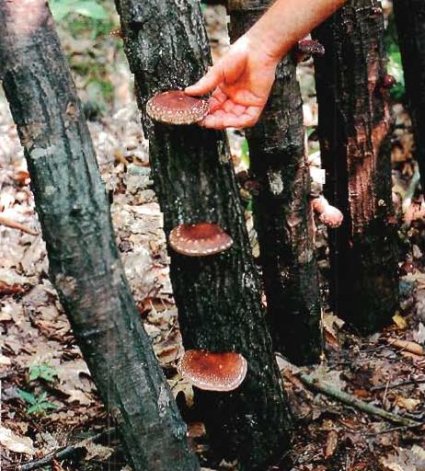
Shiitake - Lentinula edodes
Many farmers and gardeners in our region grow shiitake mushrooms. Their cultivation is fairly simple and reliable. Shiitakes will grow on logs or stumps. Their rich flavor and firm texture make shiitakes a popular gourmet mushroom. Many Asian cultures also consider them medicinal. (image above)

Oyster Mushroom - Pleurotus ostreatus
Oysters grow easily in a variety of substrates. Cultivators usually grow them on logs or stumps, but they can also grow in compost piles, straw mulch, or almost any carbonaceous material. They are voracious decomposers and are even used to clean up and digest toxic oil spills. Their gourmet flavor does, in fact, resemble that of oysters.

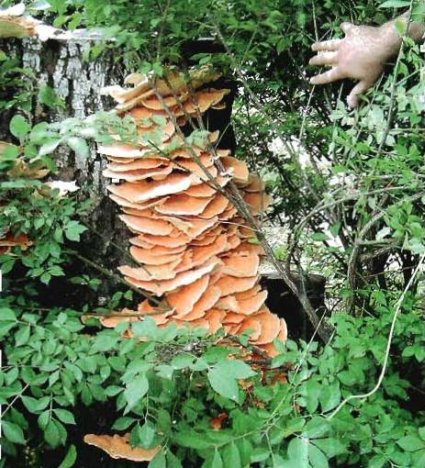
Chicken-of-the-Woods - Polyporus sulphureus
Chicken-of-the-woods mushrooms provide exceptional quality food. They exhibit a Day-Glo orange color and actually do taste just like chicken. Chicken-of-the-woods grows best on stumps but can also grow on partially buried logs. (image below)

King Stropharia - Stropharia rugoso-annulata
King stropharias are large, gourmet mushrooms. Their flavor resembles that of potatoes cooked with wine. Stropharias are well suited to cultivation in straw or wood-chip mulch—in fact, they commonly pop up uninvited in bark mulch used for landscaping. When overmature, the caps can exceed 12 inches (30 cm) in diameter.

Wednesday, February 22, 2012

In His Image and Likeness (book 4 chapter 30)

In this chapter Anastasia talks about having children and the thought that should go into that process, rather than what usually happens.


"Yes, unfortunately, that is the way it often happens. Most people are conceived in fleshly indulgence. But Man, the image and likeness of God, should not come into the world as the result of fleshly indulgence.

"Now picture a different scenario. He and she build their splendid living home in love for one another and in thoughts about their future co-creation. And they visualise how their son or daughter will be happy in that place. How their offspring will hear its first sounds - its mother's breathing and the singing of the birds, God's creations. Then they will visualise how their child, when he grows up, will want to rest in his parents' garden after a hard day's journey and sit in the shade of a cedar tree. In the shade of a tree planted in love for him by his parents' hands, with thoughts of him, in their native land. The planting of the family tree on the part of the future parents will define this first point, and this point in turn will call upon the planets to aid them in their future co-creation. It is vital! It is important! And above all else it belongs to God! It is confirmation that you will be creating in His likeness! In the likeness of Him, the Grand Creator! And He will rejoice in the conscious awareness of His son and daughter.

"Thought is the origin of everything. Please believe me, Vladimir. The currents of all the diverse energies of the Universe will unite in that spot where the thoughts of two have merged into one in love, where two together are contemplating a splendid creation.

"The second point, or rather, yet another human plane, will be born and light a new star in the heavens when two bodies merge into one - merge in love and with thoughts of a splendid creation - in the very place where you build your Paradise home, your living home for your future child.

"Then the wife who has conceived should live in that spot for nine months. And it is best of all if these months are the blossoming of spring, the sweet fragrance of summer, and the fruits of autumn. Where nothing will distract her except for joy and pleasant feelings. Where the wife, in whom a co-creation is already dwelling splendidly, is surrounded only by the sounds of Divine creations. She lives there and feels with her whole self the whole Universe. And the future mother should see the stars. And mentally give all the stars and all the planets to her splendid child as a gift - something the mother can do all with the greatest of ease, something completely within her power. And everything will follow the mother's thought without hesitation. And the Universe will be a faithful servant to the splendid creation these two people have produced in love.

"And a third point, a new plane of being should come about in that space. Right there on the spot where the conception occurred the birth should take place. And the father should stay close around. And the great all-loving Father will raise over the three of them a crown."

"Wow! I don't know why, Anastasia, but I find your words even took my breath away. You know, I was able to visualise the spot you're talking about. And oh, how I could visualise it! It made me feel as though I wanted to be born again myself in such a place. So that right this moment I could go and rest in a splendid garden planted by my father and mother. So that I could sit in the shade of a tree planted for me before my birth. The place where I was conceived and where I was born. Where my mother walked in the garden, thinking about me, even before I came into the world."

"Such a place would greet you with great joy, Vladimir. If your body should fall ill, it would heal the body. If your soul, it would heal the soul too. And if you were weary it would give you food and drink. It would embrace you in a gentle sleep and wake you with a joyful dawn. But, as with most of the people living on the Earth today, you do not have such a spot. You do not have a native land - a Motherland - where the planes of being can merge into one."

Sunday, February 5, 2012

Even Today Everyone Can Build a Home (book 4 chapters 26-27)

In chapter 26 Anastasia provides the first step for building a home.


"First choose for yourself a place of your own you like best of all the pleasing spaces on the Earth. A place where you would like to live, and would like your children to live out their lives. And then you will indeed leave to your great-grandchildren a fitting memorial to you. The climate, too, in that place must be favourable for you. Take one hectare (~2.5 acres) of land in that place for yourself in perpetuity."

In chapter 27 Anastasia and Vladimir discuss putting a fence around the property. Initially, Vladimir feels Anastasia might be against a fence, but that is not the case as she says even animals mark out their own territory. Vladimir then suggests a fence with posts and boards, but Anastasia has a different idea.


"Would it not be better, Vladimir, in place of a whole lot of posts, which can later rot, to plant trees?"

"Trees? And then what, nail boards...?"

"Why nail boards to them? Look there, in the forest there are a lot of trees growing with their trunks only one-and-one-half to two metres apart."

"Yes, you're right. But there are holes between them. It's not the same as a fence."

"But it is possible to plant bushes in between them that people cannot get through. Take a careful look, and think what a splendid living fence you would have! And it would be just a little bit different with each person. And everyone would come to admire the view. And your descendants in the ages to come will remember the creator of this splendid hedge. And the hedge will not only save them time on repairs but will bring them benefits as well. It will serve, in fact, as far more than just a barrier. One person will make a hedge out of birches growing in a row. Another will use oak. And someone with a creative impulse will make a coloured hedge, the kind one reads about in fairy tales."

"What d'you mean, coloured?"

"Planting different-coloured trees. Birches, maples, oaks and cedars. Someone may intertwine a rowan-tree with clusters of bright red berries and still plant guelder-roses in between. And make room for bird-cherry trees and lilac bushes. After all, you can plan it all out in advance. Each planter should watch to see how high each one grows, how it blooms in the spring, what kind of a fragrance it has and what feathered friends it attracts. Thus your hedge will be both sonorous and pleasantly fragrant, and you will never get tired of looking at it, as the picture will be changing its tints with each passing day. It will flourish with colours anew every spring and every autumn burst forth in an explosion of fiery hues."

Next, Vladimir talks about all of the work that will be involved to grow a garden, including hauling in manure and fertilizer by the truckload. Once again Anastasia has a different idea.


"Vladimir, right now you are in the taiga. Look around you, how high the trees are, how mighty their trunks! Among the trees herbs and bushes are growing. There are raspberries, and currents...indeed, a whole lot of everything grows right here in the taiga for Man's use. And over thousands of years not a single person has fertilised the ground. But the land remains fruitful. What do you think: how has it been fertilised and by whom?"

"By whom? I don't know how or by whom. But you've pointed out a really important fact. Indeed, it's simply amazing how Man somehow gets everything twisted around. Tell me yourself, why aren't various kinds of fertiliser needed in the taiga?"

"Here in the taiga God's thought and God's plan are not interfered with to the same degree as where Man lives today. In the taiga leaves fall from the trees, and little branches are torn off by the breeze. And these leaves and branches, along with worms, fertilise the ground in the taiga. And the grass which grows all around regulates the composition of the earth. The bushes help it clear away excesses of acids and alkalies. None of the fertilisers you are familiar with can substitute for leaves falling from the trees. After all, leaves include many of the diverse energies of the Universe. They have seen the stars, the Sun and the Moon. And not only seen, but they have interacted with them. And even many thousands of years from now, the ground here in the taiga will still be fertile."

"But the ground-lot where our house is to be built is not the taiga, you see."

"Then start planning! You yourself can plant a forest of different kinds of trees."

Later in chapter 27 Anastasia provides further details on how to develop our one hectare of Motherland.


"Let us say our lot is on a barren section of land, and is now enclosed on all sides by a hedge. Let us divide it, reserving half or three-quarters of the lot for a forest, and there plant a variety of trees. On the edge of the forest, where it borders on the remaining part of the lot, we shall plant a hedge in such a way that animals cannot pass through it and trample the crops growing in the garden plot.

"In the forest we shall set up a pen using densely planted saplings, which in time will be home to a goat or two. And we shall also use saplings to construct a shelter for egg-laying hens.

"In the garden plot we shall make a pond approximately 16 metres across. We shall plant raspberry and current bushes among the trees in the forest, and wild strawberries around the edge. Later, after the trees in the forest have grown a little, we can set up two or three empty log hives there for bees. And we shall use trees to make a gazebo where you will have a cool place, safe from the heat, to talk with your children or your friends. And we can make a summer sleeping area out of living things, along with a creative workshop for you. And sleeping places for the children, and a living room."

"Wow! It won't be a forest we end up with, but more of a palace!"

"Only the palace will be a living entity, and continue to grow in perpetuity. This is how the Creator Himself thought up the whole balance of things. And all Man has to do is to assign everything its task - according to his own taste, design and understanding."

"But why didn't the Creator do it all this way to begin with? Everything in the forest grows just where it happens to end up."

"Think of the forest as a book for you as a creator. Look more closely, Vladimir - everything therein has been written by the Father. Look over there: three trees are growing just a half-metre apart. You are free to plant them in a row and use a whole lot of them to make up other configurations. In among the trees there are bushes growing - think of how you can make use of them to sweeten your life. And where the trees do not allow grass and bushes to grow between them, you can take that as a lesson for building your future house out of living materials. It is as though all you have to do is to formulate the required programme and adjust it according to your taste. Everything around you is charged with the task of cherishing and delighting you and your children, cherishing and feeding them."

"To feed ourselves, we'll need to plant a vegetable garden. And that'll take a lot of sweat."

"Believe me, Vladimir, even the vegetable garden can be set up so that it will not be an aggravation. You just need to keep everything under observation. Among the herbs, just the way everything grows in the forest, you could have the most splendid tomatoes and cucumbers under cultivation. Their taste will be much more appealing and healthful for the body than when they are grown simply on a patch of bare ground."

"But what about the weeds? And won't they be destroyed by pests and beetles?"

"There is nothing useless in Nature, Vladimir, and there are no purposeless weeds. Neither are there any beetles that are harmful to Man."

"What d'you mean, there aren't any harmful beetles?! Take locusts, for example, or the Colorado beetle - a real vermin that eats away at potato crops in the fields."

"Yes, it does. It is also thereby showing people how their ignorance is eating away at the self-sufficiency of the Earth, contradicting the designs of the Divine Creator. How can people keep stubbornly ploughing year after year in one and the same place, torturing the ground? It is like scraping an open wound, at the same time demanding benefits from the wound. Locusts or the Colorado beetle will not touch the ground-lot which you and I have outlined. When everything grows together in one grand harmony, the fruits accruing to the owners are also harmonious."

"But if that's the way everything is going to ultimately turn out, meaning that on the lot you have thought up there is no need for Man to fertilise the ground, or fight off vermin with various kinds of poisons, or do weeding, and everything is just going to grow all by itself, then what is there left for Man to do?"

"Live in Paradise. The way God wanted us to. Anyone who is able to build himself a Paradise like that will come into contact with the Divine thought and produce a new co-creation together with Him."

"What new co-creation?"

"Its turn will come once the creation of Paradise has been completed in due course. Let us consider now what you and I still need to do."

Most of what Anastasia has said in these chapters is well known to those who have studied permaculture; the foundation from which the Golden Age will be built.

Wednesday, January 11, 2012

Take Back Your Motherland, People! (book 4 chapter 24)

In this chapter Anastasia provides new meaning to the word "Motherland", but as usual that meaning is lost on Vladimir (for now).


At first I found my dialogue with Anatasia about what constitutes the Motherland rather unintelligible. Her arguments didn't even seem normal to me, at least initially. But later...

Even today I can't help thinking of them. I distinctly recall her response to my questions about what to do to prevent war - either earthly or interplanetary - from happening to us, to eliminate bandits altogether and bear happy and healthy children. It went this way:

"We need to tell everyone, Vladimir: Take back your Motherland, people!"

"'Take back your Motherland?' - are you sure you're not mistaken, Anastasia? Everyone has a Motherland, or a native land, only not everybody lives in the country where they were born. Maybe you didn't mean 'take back your Motherland', but 'you need to come back to your Motherland' - is that what you were trying to say?"

"I was not mistaken, Vladimir. Most people living on this planet today have no Motherland at all."

"What d'you mean they haven't a Motherland? For Russians, Russia is their Motherland, the English have England. After all, everybody was born somewhere, and so people will use the term Motherland or native land to refer to the land where they were born."

"Do you consider that one's Motherland must be measured by someone's arbitrarily determined border?"

"What else? That's the way things are. All states have borders."

"But if there were no borders, how could you determine your Motherland then?"

"By the place I was born - the town or village - or maybe the whole Earth would then be a Motherland for everyone?"

"The whole Earth could be a Motherland for each one of its inhabitants, and Man could be caressed by everything in the Universe, but for that to happen, he would need to join together all planes of being into a single point, call it his Motherland, and create with his own self a Space of Love therein. Then all the best things of the Universe would come into contact with it first hand - come into contact with the space of your Motherland. You in yourself will feel the whole vast Universe through this point, and possess power unsurpassed. They will know about this on other worlds. Everything will serve you, as God, our Creator, wanted it."

"You've really got to speak in simpler terms, Anastasia. I didn't get anything about those 'planes of being', or how to join together their strands. Or about the 'point' I can call my Motherland."

So while you might be feeling the same as Vladimir right now, all will be explained in the coming chapters (and my future posts).

Sunday, December 4, 2011

The Invasion Centre (book 4 chapter 23)

In this chapter Anastasia talks about what is commonly known as "Disclosure". Essentially, ETs are in discussions with various governments to provide advanced technology to all humans on Earth. Here she explains in detail what would happen if Disclosure were allowed to proceed. We begin with Anastasia describing the ET proposal to our governments.


"The text will read something like this:

We the representatives of an extraterrestrial civilisation, having achieved the ultimate level of technological development by comparison with other intelligent inhabitants of the Universe, do hereby consider Earth people our brothers in reason.

We are prepared to share our knowledge with societies on the Earth in various branches of science and social structure and offer them our technology.

We ask you to consider our proposals and select the ones most suitable for improving the life of every member of your society.


"Then will follow a whole series of concrete proposals, the substance of which amounts to this:

"The visitors offer to share their technology in providing each citizen of the country with nutrient mixture and rapid construction of housing for everyone who has reached the age of maturity. This is the same kind of housing you have already seen, Vladimir, only with not quite so many functions. As an example, they will introduce their mini-factories into the country. They will integrate their alien factories with existing Earth factories, but in five years all Earth technologies will be discarded and replaced by technologically more advanced counterparts. A job will be guaranteed for all who wish to have one. Not only that, but every single inhabitant of the Earth will be required to contribute a certain minimum amount of work toward maintaining the technological devices.

A nation that signs a treaty with the visitors will be completely protected from military invasion by any other nation. In a society which embraces the new social order and its technologically supported lifestyle there will be no crime. In the apartments provided you, everything you need will react only to your voice commands, identified by tones inherent only in your voice. Every day before you take in food, the computers in your apartments will scan your eyes, breath and other parameters to determine your physical health and prescribe the corresponding food mixture composition.

"Each computer installed in an individual apartment will be linked with the main computer, which will thereby be able to pinpoint the exact geographic location of every individual, along with his state of physical and mental health. Any criminal offence will be easily uncovered with the help of a special programme in the main computer. Besides, the social conditions which now foster crime will be absent.

In return, the visitors plan to ask the government's permission to settle representatives of their civilisation in sparsely inhabited areas - mainly in forests - as well as the right of people to exchange their individual garden plots for technologically equipped apartments and provision of lifetime care if they choose to do so.

The governments will agree, under the impression that they will still be in full control. A number of religious denominations will start preaching that the alien visitors are God's emissaries, since the aliens will not deny any of the religions existing on the Earth. Religious leaders who do not believe in the aliens' Divine perfection will find it impossible to stand up against the visitors since they will be accepted by the majority of the citizens in each country that signs the treaty. All other countries will start seeking similar treaties of co-operation with the visitors.

Nine years after the first landing on the Earth a new way of life will have been speedily inculcated into all countries on all the continents of the Earth. All information media will broadcast the ever advancing achievements in technology and social order. The majority of the population will glorify the 'emissaries of the Mind of the Universe' as intellectually superior brethren, as deities in themselves."

"And not without justification," I remarked to Anastasia. "There's nothing wrong in having no wars and crime on the Earth. Everyone will be provided with an apartment, food and employment."

"Vladimir, do you not realise that once mankind accepts the terms of the aliens, they at the same time renounce their non-material, Divine self? In fact, it will self-destruct. All that is left will be material bodies. And every Man, Vladimir, will come to more and more resemble a biological robot. And all the children of the Earth will henceforth be born biological robots."

"But why?"

"All people on the Earth will be compelled to render daily service to those devices which outwardly serve them. All mankind will fall into a trap, surrendering their own freedom and that of their children for the sake of an artificial technological perfection. Before long many Earth people will intuitively recognise their mistake and start ending their lives by suicide."

"Strange. What would they be lacking?"

"Freedom, creativity and the feelings that only co-creation with the Divine creation can bring."

Monday, September 12, 2011

The First Day (book 4 chapter 4)

In the first few chapters of the fourth book "Co-Creation", Anastasia gives her version of God creating the universe and then human life on Earth in the Garden of Eden. It is the poetic version of what the Founders state very succinctly in Earth History (part 3).


The humanoid form was seeded on your planet approximately 100 million years ago, right in the middle of this jungle period. There were small groups of humanoids confined to relatively small areas of your world. These humanoids were seventh density beings with wings and highly developed telepathic and psychic abilities. They lived in paradise. They were loving and cooperative and communicated with the exotic plant and animal life that abounded everywhere. They extracted their food directly from sunlight, and assimilated water through their pores. They had need of nothing but each other. This is a rough equivalent of what you call the Garden of Eden in your religious writings.

In chapter four, Anastasia explains to Vladimir that the first human on Earth (symbolically Adam) was able to live without food. Since the Founders state that this is part of the Ascension process, I'm including Anastasia's additional insight into the requirements for living without food.


"Adam was interested in everything. Each blade of grass, each intricate little bug, the birds in the sky above, and water. The first sight of a stream, its transparent running water sparkling in the Sun, filled him with wonder and admiration, and in it he could behold life in its infinite manifestations. When Adam bent down to touch the water, his hand was immediately embraced by the current which caressed all the folds of his skin and drew him in. Upon immersing himself in the water he found his body becoming lighter. The gurgling water supported him and comforted his whole body. Splashing the water in the air with his hands, he was delighted to see the play of the Sun's bright rays in each and every drop, before the drops were once more received back into the stream. And it was with a great sense of delight that Adam drank the water from the stream. And before the Sun set he gladly contemplated, and bathed again, and meditated."

"Hold on, there, Anastasia. You mentioned him drinking, but did Adam eat anything the whole day? What food did he eat?"

"All around him were a multitude of fruits with a variety of tastes, berries and edible grasses. But during those first days Adam felt no sense of hunger. He remained satisfied with fresh air alone."

"With fresh air? But you can't live on air. There's even a saying about that."

"One certainly cannot live on the air Man breathes today. Today's air is dying, and is often harmful for one's body and soul. You mentioned the saying that one cannot live on air, but there is another saying: 'I have been fed by air alone', which corresponds to what was available to Man in the beginning. Adam was born in a marvellous garden, and the air surrounding him did not contain a single harmful particle. Pollen had been dissolved into that air, along with drops of purest dew."

"Pollen? What kind of pollen?"

"Pollen from flowers and grasses, from trees and fruit, which diffused fragrances into the air. Some came from those close by, while breezes brought others from distant places. Back then Man was not distracted from his great works by any problems of finding food. He was fed by everything around him through the air. This was the way it was all designed by the Creator right from the very beginning, so that all life on Earth should strive to please Man, and the air and the water and the breeze would be life-giving, under the impulse of love."

"You're right about one thing: air can be very harmful, but Man invented the air conditioner. It purifies the air of dangerous particles. And people sell mineral water in bottles. So, you see, the problems of air and water have been solved - at least for the many people who aren't poor."

"Alas, Vladimir, the air conditioner does not solve any problems. It keeps back harmful particles, yes, but the air continues to die. The water preserved in air-tight bottles dies for lack of fresh air. All it does is feed the old cells of the body. For new birth, so that the cells of your body may constantly renew themselves, living air and water are needed."

Tuesday, June 21, 2011

The Founders on the 4D Timeline

This post continues from my last post where the 3D timeline was covered. In this post I present what the Founders have to say about the 4D timeline.


Those that are able to withstand the frequency change, but are not able to go completely through the stargate into the fifth dimension, will find themselves in the fourth dimension, which is the dimension of thought and time. To a fourth density being living in a fourth dimensional time/space continuum, life seems quite similar to third density except that such souls are aware that they are conscious creators and that consciousness creates their experience of reality.

They learn to create from the center of their being outward, and the world they see is an enlightened paradise that reflects their higher state of consciousness. This is the "golden age" spoken of by many of your prophets.

Fourth density humans remaining with the Earth will create intentional self-sufficient spiritual communities of light in the safe places on Earth, where they will flourish and thrive. They will create what the Hopi call the "fifth world." (Pangaea is the first, Lemuria the second, Atlantis the third and the rapidly declining present civilization the fourth world.) The number of souls choosing the fourth density path will likely be between one and two billion.

The Founders don't say much about those following the 4D timeline, except that they will "create intentional self-sufficient spiritual communities." This sounds a lot like an EcoVillage to me. To find one near you, check out the FIC Directory. If you've read my blog from the beginning, you'll also know that my favorite source for spiritual guidance on self-sufficient living is Anastasia (see Label "anastasia" in the right column). Here is my introductory post on Anastasia to get you started.

Tuesday, June 7, 2011

Work Out Your Own Happiness (book 3 chapter 10)

This chapter continues the story of Aniuta. Here, Vladimir does not believe that Anastasia's words could have made much difference to the little girl's life, but Alexander tells him otherwise.

"Well, Alexander, those are all theories of yours, assumptions. You still have to look at real life and see whether any destinies will change on account of a bunch of words or not. Anyway, what could possibly change in life for that little girl? Unless some sort of miracle happened."

"A miracle has happened. It turns out that all the miracles we need are within ourselves."

"What kind of miracle happened?"

"Little Aniuta's whole mind and life got reprogrammed. She broke all the bonds of karma for herself and those around her."

"What do you mean, 'broke'? How do you know this?"

"I know it. Some time afterward I went back to the village. I decided to offer Aniuta my radio receiver, since hers was too crackly, and set up an antenna for it on the roof. So I'm walking along to Aniuta's house and I notice that the boards on the wooden sidewalk have been fixed. Before they were quite decayed, and now all the rotting boards had been replaced with new ones. Wow, I thought, what's all this renovation going on here? I saw Aniuta's granddad sitting on the porch, washing his boots in a pail of water. I said hello to him, and explained why I'd come.

"'Well, fine!' said the grandfather. 'Come on in, if you like. Only you'll have to take off those shoes of yours. You see, we've got new rules around the place.'

"I took off my shoes on the porch and accompanied the grandfather into the hut. Everything was simple inside, as you'd expect in a small village, only extremely clean and cozy.

"'You see, our granddaughter's got this new order set up for us,' the grandfather told me. 'She worked at it for a long time. She cleaned the floor, and then washed everything spic and span. She was at it from morning 'til night for over a week, like a wound-up spring. She would have a rest and then start cleaning again. She persuaded me to paint the walls a fresh coat of white.

"'And now when I come into the hut with my boots on and leave tracks, right away she gets out a rag and starts cleaning away the tracks. So, I guess, it's better not to leave any tracks. We don't have any slippers. Instead of slippers she adapted some old galoshes. Here, you can put these on. Make yourself comfortable.'

"I sat down at the table. It was covered with an old, but clean tablecloth. The cloth was torn in one place, and the tear was patched, as neatly as a child's hand could make it, with a piece of coloured cloth cut in the shape of a bunny-rabbit. In the middle of the table stood a cut-glass tumbler, out of which corners cut from notepad sheets neatly protruded - instead of serviettes.

"'I see they've started improving your village, too,' I said to the grandfather. 'And it looks like the authorities have been paying attention, seeing they fixed the wooden sidewalks.'

"And he replied:

"'It's got nothing to do with the authorities. They don't pay any attention to us. It's my granddaughter, Aniuta. She just can't keep still.'

"'What do you mean, Aniuta? She's still a wee one, much too little to repair sidewalks. Those are heavy boards there.'

"'Heavy boards. Yeah. You see, one day I was about to set out hunting, and I asked a neighbour if she would look in on Aniuta. And Aniuta says to me, "Go on, Grandpa, go on about your business. Don't worry, I'll take care of everything myself. Just let me take a saw to that board that's standing against the wall in the barn."

"'I was surprised, but I thought: why not let the child play, if that's the way she likes to play. So I put the board on the wood-block, handed her a couple of saws and set off to do some hunting. Later my neighbour told me what happened while I was gone.

"'Aniuta pulled out the old rotten pieces of board from the sidewalk. She measured the hole with a string and began sawing the board I had given her according to the measurement. The neighbour says she spent half the day sawing the board, but she managed to do it somehow. Then she lugged the new board right up to the sidewalk and put it in the place of the rotten one.'

"'She's so thin and frail, how on earth could she have lugged such a heavy board?' I asked.

"'She found herself a helper. Back a couple of months ago she made friends with an orphaned dog, a Siberian laika (husky). An old lady died who lived at the other end of our village, leaving a large dog. Back at the funeral Aniuta kept stroking him. Then she started taking him something to eat. At first the laika wouldn't leave his own yard, even though there was nobody left living in the hut. The old lady had been living alone.

"'Aniuta fed the dog for several days. He started following the girl around, and now he never leaves her side. Now this old dog helps carry out whatever our granddaughter fancies. So he helped her lug the board over. Aniuta tied a string around one end and started in dragging it herself, when the huge dog grasped hold of the other end with his teeth, and between the two of them they managed to drag it to the sidewalk.

"'Then Aniuta asked a neighbour lady for some nails, and borrowed my hammer. And here she was trying to nail the board into place with the hammer. But nothing happened. The neighbour saw Aniuta sitting on the sidewalk, trying to hammer in the nail. She hit her hand in the process and blood started oozing out. The dog was sitting right beside her, watching and whimpering.

"'The neighbour came over, took the hammer and nailed the board in place. The next evening she saw Aniuta and the dog dragging another board over. Which meant there was another hole in the sidewalk to patch up.

"'The neighbour asked Aniuta if she were going to patch up all the holes this way - couldn't she think up some other little girl's thing to do? And my granddaughter replied:

"'"It's very important, Auntie, for all the sidewalks outside the houses to be new and free from holes. You see, otherwise someone might decide to come visiting, walking along the boards, and there's holes in them, and that would spoil the visitor's good mood. And my Mamochka, when she comes, might get upset if she saw such a shoddy sidewalk."

"'So the neighbour hammered down the second board for her. And then she raised a hue and cry throughout the village, shouting out to everyone: "Get busy fixing the sidewalks in front of your houses. I'm not going to let a child do drudgery on account of your disorderliness! She's working her hands to the bone!"

"'So, you can see, everyone's fixed up the sidewalk in front of their houses. So they wouldn't have to hear the neighbour lady rail at them any more.'

"'And where is your granddaughter now?' I asked the old fellow.

"'She's lugged a tin of paint over to the house at the far end. She'll probably spend the night there, with the old Losin couple. Yeah... She may spend the night there.'

"'What kind of paint, and what's it for?'

"'Just ordinary oil-based paint, bright orange. She got it from the steamship in exchange for fish. That's her latest fancy.'

"'And what kind of fancy might that be?'

"'She's decided that all the huts need freshening up. Need to look more cheerful. So when the ship comes - that's the ship that collects fish that's been caught around here, she goes and offers 'em a whole catch of fish in exchange for paint. And then she lugs the tin of paint to one of the huts. She asks them to paint the nalichniks (ornate window frames). And the old people start painting. Soon it'll be my turn. Whaddya know! I'll do the painting. Why not? Maybe it'll be better if the painting gets done, if the huts are going to look more cheerful on the outside.'

"'And where does she get the fish from?'

"'She catches them herself. Every morning she brings home two or three connies, sometimes more. If only once she'd come home empty-handed, but no, the fish just seem to land on her hooks all by themselves. And here I'm lying in bed with my back problems, and she says to me: get up. And keeps at me: "Get up, Grandpa! You've gotta salt the fish, so it doesn't go bad." Every morning it's the same,' the old fellow muttered, but with no trace of annoyance in his voice.

"So I asked him how Aniuta managed to cope with the fishing tackle - all by herself?

"'See, I told you,' he replied. 'Aniuta's got a helper - this Siberian laika. He may be old, but he's smart, and obedient. He helps her carry out all her fancies. Aniuta takes my throw-line with its five hooks, neatly arranges the bait on the hooks and goes down to her treasured spot on the riverbank every evening with her laika. She'll tie one end of the line to a post on the shore, then attaches the other end to a stick. The dog then takes the stick in his mouth and swims out into the river. He keeps on swimming as long as Aniuta, standing on the shore, keeps encouraging him: "Swim, Druzhok, swim, Druzhok!" The dog keeps pulling the line until Aniuta changes the tone of her voice as she calls: "Come here, Druzhok, come here Druzhok!" Then the dog releases the stick from his jaws and swims back to shore...

"'Well, that's enough for now. Let's get some sleep.'

"With that the old fellow climbed onto the stove. And I lay down on the wooden sofa. When I woke up at dawn, I went outside and saw Aniuta down by the river tugging on the iron ring to which the fishing line was attached. A huge Siberian laika was helping her. The laika had grasped hold of the ring with his teeth and braced himself with his legs as he backed up. Together they were dragging the line with quite a decent catch on the end of it. Aniuta was wearing rubber boots three sizes too big over her bare feet.

"Once the catch was almost at the shore, she took hold of a scoop net and ran down to collect the fish. The laika was standing on his hind legs, holding the ring in his teeth. Aniuta went into the water deeper than her boots allowed, and the water started pouring over the tops of her boots.

"She drew the catch onto the riverbank and unhooked three splendid fish, which she put into a bag. Then she and the laika together took hold of the rope attached to a piece of plywood carrying the bag, and dragged it home.

"The water was sloshing around in Aniuta's boots, interfering with her walking. She stopped and took off her boots - first one, then the other - and stood barefoot on the cold ground while she emptied out the water. Then she put on her wet boots again and continued on her way.

"As the two of them together lugged their morning catch up to the porch, I got a good look at Aniuta's face and was amazed.

"Her cheeks were a rosy red, and her little eyes were sparkling with determination. These, together with the hint of a smile on her face, made her virtually unrecognisable by comparison with the sickly, sallow-skinned little girl I had met earlier. Aniuta set about rousing her grandfather. With a rather loud wheeze he climbed down from the stove and put on a jacket. Then he took a knife and salt and proceeded to cut up the fish. In the meantime Aniuta served me tea, and I asked her why she got up so early every morning to bring home the fish.

"'Those fellows on the steamship, on the river, they come and collect our fish,' she said. 'They give me money. And I asked them to bring me paint for the houses in our village. They brought me the paint in exchange for the fish. Along with some lovely material for a dress. For that I gave them all the fish I had caught that week.' And when she said that, she went and fetched a huge piece of magnificent silk fabric.

"'Well, Ania,' I observed, 'I see there's enough here for more than one dress. How come so much?'

"'This isn't for me. I've got it ready as a present for my Mamochka, when my Mamochka comes to see me. And I'm also going to give her a beautiful shawl and a long beaded necklace.'

"Then Aniuta opened an old worn suitcase and pulled out a pair of imported women's pantihose, a pearl necklace and a magnificent brightly-coloured shawl.

"'I don't want Mamochka to be upset that she can't give me any presents. I can buy everything for her now myself. I don't want her to think she's been wasting her life.'

"I watched as she joyfully showed me the gifts she had prepared for her mother - she was so happy admiring them - and I realised what had happened: here Aniuta had transformed herself from an utterly helpless, pitiful little girl, waiting for somebody else to help her, into an active, self-confident individual. And happy that she has known such great success, or maybe her happiness stems from an entirely different source...

"Now I believe that each one's happiness lies within themselves, within each one of us. It is there at a particular level of awareness. The only question is: how do we reach that level?! Anastasia helped little Aniuta reach it. Will she be able to help everyone else do the same? Or maybe we ourselves need to learn in some way how to figure things out ourselves."

Tuesday, May 17, 2011

When Words Change Destinies (book 3 chapter 9)

During Vladimir's journey to meet Anastasia for the second time he meets Alexander who tells him the story of Anastasia's meeting with Aniuta.

"...out from the group of elderly villagers emerged a frail little girl, about six years old, with pale yellowish skin. She was wearing an old jacket, pieced together from fragments of some adult garment, her thin legs were covered by patched pantyhose, and she had little old boots on her feet.

"Later I found out the girl's name was Aniuta. She was a sickly child, with a congenital heart disease. Her mother had brought her from the city when she was just six months old and left her with the oldsters, not coming back even once to see her daughter. They say she works somewhere as a painter for a construction firm.

"Aniuta went up to Anastasia and started tugging on the hem of her skirt, pleading with her:

"'Bend down, Auntie Anastasia. Bend down to me.'

"Anastasia looked at the little girl and squatted down in front of her. The girl quickly took off the old white kerchief she was wearing on her head. She salivated on one edge of it and began to carefully wipe the blood which had already dried on Anastasia's face and temple, saying:

"'You don't come any more, Auntie Anastasia, to sit on your little log by the shore. Grandpa said that earlier you used to come more often. You would sit on the log and watch the river. Now you don't come. Grandpa showed me the little log where you used to sit, Auntie Anastasia. Grandpa showed me, and I started coming to it, to your log, myself. I sat there all alone, waiting for you to come, Auntie Anastasia. I really wanted to see you. I have a secret to tell you. But you wouldn't come to sit on your log and watch the river. Maybe 'cause the log is quite old. I kept asking Grandpa and he brought a new little log for you. There it is, lying right beside the old one.'

"The little girl took Anastasia by the hand and started pulling her over to the log.

"'Let's go, let's go, Auntie Anastasia, let's go sit on the new log. Grandpa hewed out two seats on it with his axe. I was the one who asked him to do that, so that when you came we could sit together.'

"Anastasia at once responded to the little girl's request, and they sat down together on the log. They just sat there silently for a while, not paying any attention to anyone. It was as though there had been no one else around. And everyone stood silently, without budging. Then the little girl started talking:

"'Grandma told me a lot about you, Auntie Anastasia. And when my Grandma died, I began asking Grandpa, and he told me about you, too. Whenever Grandpa talks about you, I think about my little secret I have to tell you. Grandpa told me that when I was little, my heart wasn't working right. It wasn't ticking evenly. One time its tick was way off. Then they brought in Auntie Doctor in a boat. Auntie Doctor said there was nothing they could do with such a bad heart - there was no one it would obey. And that it would die before long.

"'Grandpa told me how you, Auntie Anastasia, were sitting at the time on your old little log and watching the river. Then you got up and came into our hut. You took me in your arms and put me on the grass outside the house. Then you lay down beside me and put your hand on my chest. You put your hand here, where you could hear my heart ticking. Right here.' And the girl clasped her hand to the left side of her thin little chest.

"'Grandpa said that you too, Auntie Anastasia, started lying next to me as if you were breathless, since your own heart had started ticking ever so softly, just like mine. Then your heart started beating faster, and called out to mine to catch up. My heart obeyed yours, and together they started ticking the way they ought to. That is what Grandpa told me. Did he tell me everything right? Right, Auntie Anastasia?'

"'Yes, Aniuta. Your grandpa told you right. Your heart will always be good now.'

"'That means your heart called to mine and mine obeyed? It obeyed, did it?'

"'Yes, Aniuta dear, your heart obeyed.'

"'Now I shall tell you my secret, Auntie Anastasia. It is a very, very important secret!'

"'Tell me your important secret, Aniuta.'

"Aniuta got up from the log and stood in front of Anastasia, clasping her thin little hands to her chest. Then all of a sudden she... Suddenly little Aniuta fell on her knees before Anastasia. She barely managed to restrain the excitement in her voice when she said:

"'Auntie Anastasia, dear Auntie Anastasia, ask your heart again! Ask it! Ask your heart to call to my Mama's heart. Have my Mama come see me. Even just for a day. To see me. That's my secret. Have your heart... Mama's... heart... hear...'

"Aniuta choked from emotion, then fell silent, her eyes fixed on Anastasia.

"Anastasia squinted her eyes and looked off into the distance, past the little girl kneeling in front of her. Then she looked at the girl once more and quietly stated a fact that must have been horrifying for the child. She answered her as she would have an adult:

"'Aniuta, dear, my heart is unable to call to your Mama. Your Mama is far away in the city. She tried to find happiness but did not find it. She does not have a home of her own, she does not have any money to buy you gifts. And unless she can bring you gifts she does not want to come and see you. It is hard for her in the city. But if she should come and see you, it will be even harder for her. A visit with you would become a sad and tormenting experience. It would be more difficult and frightening for her to see you so sickly and so poorly clothed. She would see how the houses in your village are falling apart, and how dirty and shabby the house you live in is. It would be all the more difficult since your Mama no longer believes she can do anything good for you. She simply does not believe it. She feels she has tried everything and this is what fate has determined for her. She has given in to the very hopelessness she has imagined for herself.'

"Little Aniuta listened to the terrible truth, and her wee body trembled. It seemed to me awfully cruel to talk to a child that way. I thought a white lie would have been more appropriate here. Like stroking the poor little girl's head and promising her mother would arrive soon. And saying they would have a happy meeting.

"But that is not what Anastasia did. She told this helpless, defenceless little girl the whole bitter truth. Then after spending some time watching her body shake all over, she began talking to her again.

"'I know, Aniuta dear, you do love your Mama.'

"'I love... love... I love my poor dear Mamochka,' the girl replied, her child's voice on the point of breaking into tears.

"'Then you make your Mamochka happy. You are the only one, the only one in all the world who can make her happy. It is very simple. You become healthy and strong, and learn how to sing. You will be a singer. Your marvellous, pure voice will sing together with your heart. Your Mama may meet you in twenty years, and seeing you will make her very happy. Or your Mama may come to see you next summer. By that time you should already be healthy and strong. To welcome her. Get some presents ready for your Mamochka. Show her how strong and beautiful you are, and you will make your Mamochka very happy, and your meeting with her will be a joyful one indeed.'

Aniuta's story continues in the next chapter (and my next post).

Thursday, April 7, 2011

The Answer (book 2 chapter 8)

In this chapter Anastasia and Vladimir are discussing the possibility of a global catastrophe. Vladimir appears to be a believer in the biblical apocalypse and demands an answer from Anastasia.

"But when will it happen on a global scale - when will the apocalypse come?"

"It might occur in 2002, for example. But it can be prevented, or delayed, as happened in 1992."

"You mean to say it might have come to pass in 1992?"

"Yes, but they delayed it."

"Who are 'they'? Who averted it? Who delayed it?"

"A catastrophe on a global scale in 1992 was averted thanks to the dachniks."

"Wha-a-at?!"

"There are all sorts of people all over the world who are working against global disaster. The 1992 catastrophe did not happen mainly thanks to the Russian dachniks."

"And you... that means you!... Even at six years old you were aware of the dachniks' significance? You foresaw it? You worked non-stop. You helped them."

"I understood the dachniks' significance, Vladimir."

"But why Russian dachniks in particular? What's the connection here?"

"You see, Vladimir, even though the Earth is very large, it is very, very sensitive.

"Think of how big you are by comparison with a tiny mosquito. And yet, when a mosquito lands on you, you feel it through your skin. And the Earth also feels - everything. When people pave it over with concrete and asphalt, when they cut down trees and burn the forests growing on it, when they pick and poke at its innards and sprinkle it with powder called fertiliser, it feels the hurt. And yet still it loves people, as a mother loves her children.

"And the Earth tries to absorb into its depths all humanity's anger, and only when it no longer has the strength to hold it back, that anger explodes in the form of volcanic eruptions and earthquakes.

"The Earth needs our help. Tenderness and a loving attitude give it strength. The Earth may be large, bit it is most sensitive. And it feels the tender caress of even a single human hand. Oh, how it feels and anticipates this touch!

"There was a time in Russia when the Earth was deemed to belong to everyone and therefore nobody in particular. So people did not think of it as their own. Then changes came in Russia. They began giving out tiny private plots to people to go with their dachas.

"It was no coincidence at all that these plots were extremely small, too small to cultivate with mechanised equipment. But Russians, yearning for contact with the Earth, took to them with joyous enthusiasm. They went to people both poor and rich. Because nothing can break Man's connection with the Earth!

"After obtaining their little plots of land, people intuitively felt their worth. And millions of pairs of human hands began touching the Earth with love. With their hands, you understand, not with mechanised tools, lots and lots of people touched the ground caressingly on these little plots. And the Earth felt this, it felt it very much. It felt the blessing touch of each individual hand upon it. And the Earth found new strength to carry on."

Tuesday, March 29, 2011

The Cherry Tree (book 2 chapter 6)

This chapter, in the second Anastasia book "The Ringing Cedars of Russia", is perhaps my favorite chapter in the whole book. Using Vladimir's cherry tree as an example, Anastasia deepens our understanding of the trees and plants in our garden, thereby enhancing the benefits from the practices given in the first book "Anastasia". This is a long excerpt to give the full effect of the story being told.

"Remember, Vladimir, everything within you associated with this little tree. Remember, starting right from the moment you first made contact with it."

"I shall try to remember, if you think it's important."

"Yes, it is important."

"I was riding in my car, I don't remember where I was going. We stopped near the Central Market. I asked my driver to get out and buy some fruit. I stayed in the car and watched people leaving the market carrying all sorts of saplings."

"You watched them and were surprised. Why?"

"You see, their faces were happy and contented. Even though it was cold and rainy out, here they were hauling away some kind of saplings with their roots all bound in cloth. These saplings were heavy to carry, but the people's faces were content, and here I was sitting in my warm car and I was sad.

"When the driver returned, I got out and went over to the market myself. I kept walking up and down past the merchants' stalls and bought three cherry saplings. As I was tossing them into the baggage compartment, the driver said that one of the saplings wouldn't survive, since its roots had been cut too short, and I'd better throw it out right off, but I decided to keep it. It was the most graceful of the three. Then I went and planted the saplings in the garden of my country home.

"I threw in extra topsoil around the tree with the short roots, and a sprinkling of peat moss, along with a bit of fertiliser."

"In trying to help it, you burnt two more little roots of the sapling with the fertiliser," Anastasia added.

"But it survived! In the spring, when the buds started coming out on the trees, its branches came to life, too. Little leaves began to appear. Then I set out on my commercial expedition."

"But before that," Anastasia observed, "every day for a period of more than two months you would drive out to your country house and the first thing you did was go and see how the little tree was getting on. Sometimes you stroked its branches. You were so happy to see the leaves, and kept watering the tree. You drove a stake into the ground and fastened the trunk to it with twine all around so the wind wouldn't break it.

"Tell me, Vladimir, do you think that plants react to people's attitude toward them? Do you think they feel good and bad thoughts?"

"I've heard, or read, somewhere that house-plants and flowers do react that way. They can even become all withered when their care-giver goes away. I've heard about scientific experiments where they attached sensors to various plants, and needles jumped one way when the plants were approached aggressively, and the other way when someone approached them with thoughts of gentleness and kindness."

"So, Vladimir, you know about plants reacting to the expression of human feelings. And, according to the Grand Creator's design, they strive to do all within their power, all that they can, to meet Man's needs - they bring forth fruit, and try to arouse positive emotions in Man with their flowers beautiful and fair - indeed, they put oxygen into the air so that we can breathe.

"But plants have been granted yet another function which is no less important. Plants which come into direct contact with an individual Man create for him a Space of true Love. The kind of Love without which life for the human race would be impossible.

"Many dachniks are in a hurry to get out to their plots because it is there that such a Space has been created for them. And this little Siberian cherry tree you thought to plant, the one you cared for yourself, it tried to do the same as all other plants and perform its assigned function.

"If there are a lot of them, plants can create for Man a significant Space of Love - if they are of different varieties and Man communicates with them, and approaches them with Love. All together plants can create for Man a significant Space of Love which enhances the soul and makes the body whole.

"You see, Vladimir - all together, when there are a lot of them. But you looked after just one sapling. And so this one little Siberian cherry tree began aspiring to do what only a number of plants acting together can do.

"Its aspiration was aroused by your special relation to it. It was something you yourself realised only intuitively - in all your surroundings only this one little tree was not asking anything of you, it was not being hypocritical, it only aspired to give of itself - and then you came along. You were tired after a busy day. You went over to the tree, stood and pondered. You looked at it, and it responded.

"Before the first ray of dawn appeared in its perfection, the leaves of the tree tried to catch that ray's reflection in the brightening sky. And when the Sun went down afar, it tried using the light of a bright star. And as it persisted, something transpired by and by, just a wee bit of something transpired.

"Its roots, twisting themselves around the burning fertiliser, were able to take in what they required from the Earth. And the Earth's juices began turning and running through the veins of the tree a little more quickly than usual. And then one day, in an early morning hour, you came and saw the little flowers to which the tree's delicate branches had given birth. The other saplings were devoid of flowers, but this one, thanks to your gift of caring, had already blossomed. You were overjoyed. Your spirits were uplifted and then...do you remember what you did, Vladimir, after seeing the flowers?"

"I really was overjoyed. For some reason my mood was on a high, I felt a lightness in my head. I went and stroked its branches with my hands."

"You gently stroked its branches. And you said, 'Well now, my beauty, you've blossomed!'

"You see the trees, Vladimir, and you see the leaves, and the fruit borne thereof. But more than that, the trees create a Space of Love. The little cherry tree very much wanted you to have this Space. But where was the place for the tree to find the strength to give back to Man what it had received from him? It had tried and tried and had already given everything that was in its power, but it had received something extraordinary besides - a showing of tenderness toward itself and the flowers it bore. And then it had the desire to do more! All by itself!

"You went off on your very long expedition. And then, completing your journey and returning, the first thing you did was go to the garden plot to see your little cherry tree. But along the way you were eating cherries you had bought at the market. As you approached it, you noticed that there were three red cherries growing on your tree. You stood there beside it, all tired out, eating the bought cherries and spitting out the stones. Then you tore one of the cherries off your tree and tried it. Indeed, it was just a little bit more sour, a little less sweet than the market cherries you had decided to eat, and you did not touch the other two."

"I had had my fill of the other cherries. And this one was indeed more sour."

"Oh, if only you had known, Vladimir, how much power those little cherries contained on their own that was so beneficial to you! How much energy and Love! From the depths of the Earth and the expanses of the Universe and more, the tree had gathered everything helpful for you and poured it into these three cherries. It had even let one of its branches wither in order to make these three cherries ripen. One of them you tried, but you left the other two on the tree to die."

"I had no idea. But still, I was happy that it was capable of bearing fruit."

"Yes, you were happy. And then... do you remember what you did this time?"

"Me? Well, I stroked the tree's branches some more."

"And you not only stroked them. You even bent over and kissed the leaves on the branch which was resting on the palm of your hand."

"Yes, I did. Because I was in such a good mood."

"And something incredible happened with the tree. What more could it do for you, since you had not taken the fruit thereof that had been grown with so much Love? What could it do?

"It trembled from the kiss of Man, and the thought and feelings inherent only in Man but produced by this little Siberian cherry tree took flight into the Universe's space of light - to give back to Man what it had received from him. To give back to Man its kiss of Love, to warm him with this - the bright feelings, the Space of Love. And against all laws that thought swept across the Universe but could not find a resting-place, a means of manifesting the breath - the life - of itself.

"Knowing that one cannot find a resting-place means death.

"Then the forces of light returned to the cherry tree the bright thought it had produced, so that it might destroy the thought within itself and not perish. But the tree did not pick it up!

"The little Siberian cherry tree's burning desire endured unchanged, extraordinarily pure and trembling.

"The forces of light did not know what to do. The Grand Creator was not about to change the established laws of harmony for you. But the cherry tree did not perish. It managed to endure because the thought, aspiration and feelings thereof were extraordinarily pure, and by the laws that constitute creation as a whole nothing can destroy pure Love. And it circled over your soul and dreamt of finding a resting-place, a place to thrive. Alone in the Universe, it was striving, aspiring to create for you a Space of Love.

"I came to your ship to at least try to be of some help and fulfil the cherry tree's desire to find this resting-place, to manifest its love. Even though I did not know to whom it was addressed."

Anastasia paused.

"You mean to say," I queried, "that your relationship to me arose out of your desire to help the tree?"

"My relationship to you, Vladimir, is simply that: my relationship. It is difficult to say who was helping whom here - the cherry tree me or I the tree. Everything in the Universe is interrelated. To perceive what is really going on in the Universe one need only look into one's self."

Sunday, March 13, 2011

A Helper and Mentor for your Child (book 1 chapter 13)

In this excerpt Anastasia explains that everything she has taught so far (see all previous posts on book 1), should also be taught to your children.

"So, these parents arrive with this three-year-old child at their dacha plot and bring along his favorite toys. Artificial toys which displace the true priorities of the Universe. Oh, if only they had not done that! Just think, the child could have been occupied and entertained with something far more interesting than senseless and even harmful interaction with manufactured objects.

"First of all, you should ask him to help you, only ask him in all seriousness, without any pandering, especially since he will actually be able to offer you assistance. If you do any planting, for example, ask him to hold the seeds in preparation for sowing, or rake out the seedbeds, or have him put a seed into the hole you have prepared. And in the process talk to him about what you are doing, something like this:

"'We will be putting the little seed into the ground and covering it with earth. When the sun in the sky shines and warms the earth, the little seed will get warm and start to grow. It will want to see the sun, and a little shoot will poke its head out of the earth, just like this one.' At this point you can show him some little blade of grass. 'If the seed likes the sunshine, it will grow bigger and bigger and maybe turn into a tree, or something smaller, like a flower. And I want it to bring you tasty fruit, and you will eat it if you like it. The little shoot will prepare its fruit for you.'

"Whenever you arrive with your child at the dacha plot, or when he awakes first thing in the morning, have him look and see whether any new shoots have come up. If you should notice one, show your delight. Even when you are putting young plants rather than seeds into the ground, it is important to explain to your child what you are doing. If you are planting tomato seedlings, for example, let him hand you the stalks one by one. If a stalk should inadvertently break, take the broken stalk into your hands and say: 'I do not think this one will live or bear fruit, since it is broken, but let us try planting it anyway.' And plant at least one of the broken ones right along with the others.

"A few days later, when you visit the seedbed again with your child and the stalks have firmed up, point out the broken, withering stalk to your little one and remind him that it was broken during the planting, but do not use any preaching tone of voice in doing so. You need to talk with him as an equal. You should bear in mind the thought that he is superior to you in some respects - in the purity of his thought, for example. He is an angel! If you succeed in understanding that, you can then proceed intuitively, and your child will indeed become a person who will happify your days.

"Whenever you sleep under the stars, take your child with you, lay him down beside you, let him look at the stars, but under no circumstances tell him the names of the planets or how you perceive their origin and function, since this is something you do not really know yourself, and the theories stored in your brain will only lead the child astray from the truth. His sub-conscious knows the truth, and it will penetrate his consciousness all by itself. All you need to do is to tell him that you like looking at the shining stars, and ask your child which star he likes best of all.

"In general, it is very important to know how to ask your child questions. The next year you can offer your child his own seedbed, fix it up and give him the freedom to do whatever he likes with it. Do not ever compel him by force to do anything with it, and do not correct what he has done. You can simply ask him what he likes. You can offer help, but only after asking permission to work along with him."

As expected, Vladimir doesn't understand the benefit of all this, and Anastasia tries to explain that this is the path to spiritual enlightenment for your child (i.e. all of his brain cells will awaken). This too is meaningless to Vladimir, so she continues as follows.

"The contact he has established with his planets will allow him to constantly take in - and exchange - more and more information. The incoming messages will be received by his sub-conscious and transmitted to his consciousness in the form of many new thoughts and discoveries. Outwardly he will look like everyone else, but inwardly... This is the kind of Man you call a genius."

Thursday, March 3, 2011

Sleeping Under One's Star (book 1 chapter 12)

In chapter 12 Anastasia describes a nice little spiritual practice (or meditative practice) that leverages the bond you've created with the plants in your garden and their interaction with the cosmic forces of the universe.

"Once plants have received information about a specific person, they embark upon an information exchange with cosmic forces, but here they are simply intermediaries, carrying out a narrowly focused task involving one's fleshly body and certain emotional planes. They never touch the complex processes which, out of all the animal and plant world on the planet, are inherent only in the human brain and on human planes of existence. Nevertheless, this information exchange they establish allows Man to do what he alone can do - namely, interact with the Intelligence of the Universe or, more precisely, to exchange information with this Intelligence. An altogether simple procedure permits him not only to do this, but also to feel the beneficial effect of such interaction.

"Pick an evening when weather conditions are favourable and arrange to spend the night under the stars. You should situate your sleeping place close to raspberry or current bushes, or to beds where cereal seeds have been planted. You should be there alone. As you lie with your face to the stars, do not close your eyes right away. Let your gaze, physically and mentally, wander across the celestial bodies. Do not become tense while thinking about them. Your thought must be free and unencumbered.

"First, try to think about those celestial bodies which are visible to your eye; then you can dream about what you treasure in life, about the people closest to you, people for whom you wish only good. Do not attempt to even think at this point about seeking revenge or wishing evil upon anyone, for that might have a negative effect on you. This uncomplicated procedure will awaken some of the many little cells dormant in your brain, the vast majority of which never wake even once during a person's whole lifetime. The cosmic forces will be with you and help you attain the realization of your brightest and most unimaginable dreams, will help you find peace in your heart, establish positive relationships with your loved ones, and increase - or call into being - their love for you.

"It is useful to try repeating this procedure a number of times. It is effective only when carried out at the location of your constant contact with the plant world. And you will feel it yourself as early as the next morning. It is especially important to go through this procedure on the eve of your birthday. To explain how all this works would take too long right now, and is not important. Parts of the explanation you would not believe, other parts you would not understand. It can be discussed much more quickly and easily with people who are already trying it and feeling its influence on themselves, since the information, once received and verified, will facilitate the reception of any information that follows."

Wednesday, February 23, 2011

It will Prepare Everything by Itself (book 1 chapter 11 part 3)

In this final part of chapter 11, Anastasia continues to explain how to build a strong bond with the plants in your garden. Many are known, such as touching and talking to your plants each day, but she also talks about pouring water over yourself in the morning while standing in the garden, as well as washing your feet with water in the evening then pouring that in the garden. This allows the plants to continue to get updated information from you regarding your state of health.

In part 1 she talked about the importance of growing cereal grains in your garden, and here she provides more details on their benefit.


"You should also take it upon yourself to gather some cereal grain, thresh it, grind it into flour and then use the flour to bake bread. This is extremely important. Anyone consuming this bread even once or twice a year will build up a store of energy capable of awakening his inner spiritual powers - not only calming his soul but also exerting a beneficial influence on his physical condition. This bread can be shared with relatives and close friends. If shared with sincerity and love, it will have quite a beneficial influence on them as well. It is very helpful to every individual's health to spend three days, at least once each summer, eating only what is grown in his garden-plot, along with bread, sunflower oil and just a pinch of salt."