Showing posts with label mythology. Show all posts

Monday, August 10, 2015

Ekadashi Fasting

For about 6 months in 2002 I practiced Ekadashi fasting and found it to be a powerful addition to my yoga practice. Let's start with the mythology behind the fast. Here is a quick summary from OnlineTemple.com:


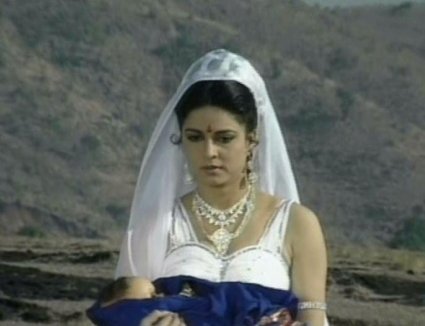
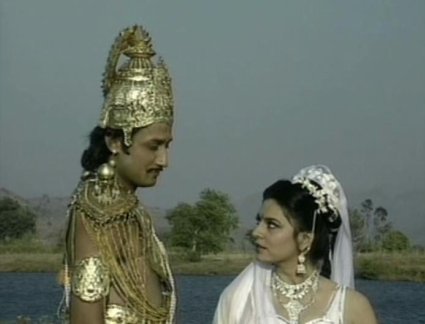
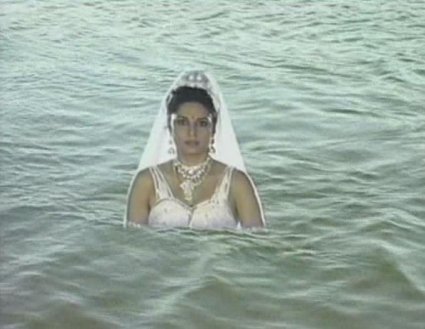
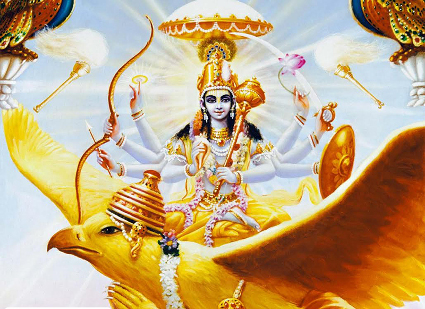
It is said that the demon Mur conquered Indralok after defeating Indra and other Devas. The Devas sought refuge in Lord Vishnu and requested Him to defeat the demon. The battle between Lord Vishnu and the demon lasted for many years. During the battle, Lord Vishnu decided to rest in a cave for some time. Sensing victory over Lord Vishnu, the demon entered the cave only to find a beautiful damsel called Ekadashi who fought and killed Mur. On waking up, Lord Vishnu found that Ekadashi had killed the demon. Pleased with Ekadashi, Lord Vishnu blessed Her and said that whosoever worships Ekadashi on the same day would attain moksha.

In terms of instructions for the fast, Wikipedia says the following:


Only fruits, vegetables and milk products are eaten during Ekadashi. This period of abstention runs from sunrise on the day of Ekadashi to sunrise on the day following Ekadashi.

The site drikPanchang.com provides everything you need to know to practice Ekadashi fasting, including a calculation of the Ekadashi days corresponding to your location. Ekadashi follows the lunar cycle which varies according to location. Here are some more food guidelines:


Devotees take single meal in the afternoon a day before fasting day to make sure there is no residual food in the stomach on next day. Devotees keep strict fast on Ekadashi day and break the fast on next day only after sunrise. Eating of all type of grains and cereals is prohibited during Ekadashi fasting.

Devotees can choose to observe fasting without water, with only water, with only fruits, with one time latex food (vegetables, milk and nuts) according to their will and body power.

When I practiced this fast, I ate normally the day before, took water only on the day of the fast, and ate normally the day after, which means fruit, followed by oatmeal for breaking the fast. Once I even tried no water, and had no problems. My meditation practice on the morning after the fast was always particularly deep and spiritual. You may be wondering why I stopped practicing? It was primarily due to my discovery of Shankhaprakshalana in the fall of 2002.

Saturday, May 9, 2015

The Alchemist

Paulo Coelho has written an excellent book on following your dreams and realizing your Personal Legend. It is called "The Alchemist". In the excerpt below, the boy Santiago, who is the hero of the story, is helping an Englishman to find the Alchemist.


Another man appeared. He was older, and was carrying a small bucket. The boy repeated his question.

“Why do you want to find that sort of person?” the Arab asked.

“Because my friend here has traveled for many months in order to meet with him,” the boy said.

“If such a man is here at the oasis, he must be the very powerful one,” said the old man after thinking for a few moments. “Not even the tribal chieftains are able to see him when they want to. Only when he consents.

“Wait for the end of the war. Then leave with the caravan. Don’t try to enter into the life of the oasis,” he said, and walked away.

But the Englishman was exultant. They were on the right track.

Finally, a young woman approached who was not dressed in black. She had a vessel on her shoulder, and her head was covered by a veil, but her face was uncovered. The boy approached her to ask about the alchemist.

At that moment, it seemed to him that time stood still, and the Soul of the World surged within him. When he looked into her dark eyes, and saw that her lips were poised between a laugh and silence, he learned the most important part of the language that all the world spoke — the language that everyone on earth was capable of understanding in their heart. It was love.

Something older than humanity, more ancient than the desert. Something that exerted the same force whenever two pairs of eyes met, as had theirs here at the well. She smiled, and that was certainly an omen — the omen he had been awaiting, without even knowing he was, for all his life. The omen he had sought to find with his sheep and in his books, in the crystals and in the silence of the desert.

It was the pure Language of the World. It required no explanation, just as the universe needs none as it travels through endless time. What the boy felt at that moment was that he was in the presence of the only woman in his life, and that, with no need for words, she recognized the same thing. He was more certain of it than of anything in the world.

He had been told by his parents and grandparents that he must fall in love and really know a person before becoming committed. But maybe people who felt that way had never learned the universal language. Because, when you know that language, it’s easy to understand that someone in the world awaits you, whether it’s in the middle of the desert or in some great city. And when two such people encounter each other, and their eyes meet, the past and the future become unimportant. There is only that moment, and the incredible certainty that everything under the sun has been written by one hand only. It is the hand that evokes love, and creates a twin soul for every person in the world. Without such love, one’s dreams would have no meaning.

Maktub, thought the boy.

The Englishman shook the boy: “Come on, ask her!”

The boy stepped closer to the girl, and when she smiled, he did the same.

“What’s your name?” he asked.

“Fatima,” the girl said, averting her eyes.

“That’s what some women in my country are called.”

“It’s the name of the Prophet’s daughter,” Fatima said. “The invaders carried the name everywhere.” The beautiful girl spoke of the invaders with pride.

The Englishman prodded him, and the boy asked her about the man who cured people’s illnesses.

“That’s the man who knows all the secrets of the world,” she said. “He communicates with the genies of the desert.”

The genies were the spirits of good and evil. And the girl pointed to the south, indicating that it was there the strange man lived. Then she filled her vessel with water and left.

The Englishman vanished, too, gone to find the alchemist. And the boy sat there by the well for a long time, remembering that one day in Tarifa the levanter had brought to him the perfume of that woman, and realizing that he had loved her before he even knew she existed. He knew that his love for her would enable him to discover every treasure in the world.

Sunday, December 9, 2012

The Mahabharata (book 5.CLXXVI)

When Amba arrived at Salya's palace she was ushered into the same room where she and her sisters had first met the handsome king. However, today when Salya entered the room, he was limping in obvious pain with bandages at various points along his arms and legs. His expression was sour as well when he asked, "What are you doing here?"

Amba rose and rushed to him while saying, "I've come to be with you my Lord."

Salya put up his hand to stop her advance, "You are to be wedded to Vichitravirya are you not?"

"I refused him so I could be with you . . . for I love you."

Salya laughed cruelly in response, "When you were abducted by Bhishma you seemed to go with him quite cheerfully as far as I could tell."

"That is not true", flustered Amba as she began to realize her plan to marry Salya was falling apart. "I was weeping the whole time, and only thinking of you. It is only by convincing Bhishma of my love for you that he has allowed me to come. Please accept me."

Salya shook his head, "How can I accept someone who has been promised to another? Not only that, but forcibly abducted to wed another. You belong to Bhishma now." Recalling his defeat, Salya's expression turned to rage, "Bhishma humiliated me in battle and when I look at you now all I remember is that humiliation. Be gone!"

Salya turned and left leaving Amba alone. Once again Amba realized the reality of her situation. No king would marry someone promised to another. She had no choice but to return to Hastinapura and marry Vichitravirya, but somehow that thought was just revolting. It was really Bhishma that she wanted to marry. Salya was right though, that since it was Bhishma that abducted her, then it is Bhishma that is now responsible for her. It is his duty to accept her as his wife.

With this new line of reasoning firmly in her mind, Amba returned to Hastinapura. After once again gaining a private audience with Bhishma at the palace, she began, "Salya informed me that after having been abducted by you that I am now your responsibility. You are my protector."

Bhishma replied, "This is true. Then you will marry Vichitravirya after all?"

Before Amba could answer, there was a knock at the door and an attendant entered the room, "I deeply sorry to interrupt my liege, but king Vichitravirya has passed away."

"What!?!" exclaimed Bhishma as both he and Amba turned to the attendant with startled expressions.

The attendant continued, "It seems the exertions of married life were too much for him. He has succumbed to his phthisis."

Bhishma regained his composure and replied, "Tell queen Satyavati I'll be there shortly."

"Yes, my liege," replied the attendant, as he left closing the door behind him.

Amba turned to Bhishma and said, "I am sorry for your loss."

After a short pause, she continued, "As the only remaining heir to the throne it seems you have no choice now but to assume your rightful role as king of Hastinapura."

Amba waited with anticipation for Bhishma's response as she felt certain her deepest desire was soon to be fulfilled.

Bhishma looked into Amba's eyes and this time allowed them to penetrate his soul. He then knew she was his destiny. In another life he would have been king and she his queen. In another life, they would have been incredibly happy together and raised many children; grown old together and watched their children and the kingdom prosper. In another life . . . but not this life.

After a lengthy pause, Bhishma then replied, "I have made a vow to never assume the throne for myself, and I intend to maintain that vow until the day I die."

Amba couldn't believe his answer. She was certain his lengthy gaze into her eyes was one of true love. Perhaps he just needs a nudge to reach the right conclusion, so she replied, "but surely queen Satyavati's father will no longer hold you to that vow given that his heirs have all died."

"It doesn't matter. Once a vow has been taken it must be kept, regardless of the circumstances."

Amba was now beginning to get angry over Bhishma's stubbornness. "Would you see the kingdom destroyed with no king to rule it?"

"If it came to that, yes, but I believe there are still other alternatives by which an heir may be produced."

Amba's anger was now growing. "What about your responsibility to me then? How will you fulfil that responsibility now that king Vichitravirya is dead?"

Bhishma thought for a moment, then replied, "I cannot."

Amba continued, "Failing to fulfil your responsibilities to me is a sin equal to or even greater than breaking your vow. So why not choose the path aligned with the destiny of a kshatriya?"

"I am sorry, but my vow takes precedence as I made it with full knowledge of the outcome. Your situation, though it grieves me, is an accident beyond my control."

Amba was now furious. "Heed my words! You will be destroyed for committing this grave sin against me." She turned and stormed out of the palace, but soon began weeping uncontrollably. Climbing into her chariot, she left Hastinapura as quickly as possible with no particular destination in mind.

Footnotes

1. Derived from: Udyoga Parva, Section CLXXVI, p. 336-337.

2. Vichitravirya's death: Adi Parva, Section CII, p. 222.

Sunday, December 2, 2012

I Am Ramtha (chapter 2)

In this post from chapter 2 of "Ramtha: The White Book", Ramtha presents his own life story.


I am Ramtha, the Ram. In the ancient language of my times it means "the God." I am the great Ram of the Hindu people, for I was the first man born of the womb of woman and the loins of man who ever ascended from this plane.

The only "great Ram of the Hindu people" that I was aware of was Ram from the Hindu epic the Ramayana. However, upon reading further it became clear that Ram, the prince of Ayodhya, bore no resemblance to Ramtha the pauper.


I did not blame the Unknown God for his inability to love me. I did not blame him for not loving my people. I did not blame him for the death of my mother and my little sister. I did not blame him; I hated him.

I had no one left, for my brother was kidnapped by a satrap and taken into subserviency into the land that would later be called Persia. There he was abused for the pleasure of the satrap and his need for what is called loin gratification.

I was a lad of fourteen with no meat upon my bones and a great bitterness inside me. So I decided to do battle with the Unknown God of my forefathers, the only thing I felt worthy of dying by. I was determined to die, but as an honorable man. And I felt that dying at the hands of man was a dishonorable way to perish.

I saw a great mountain, a very mysterious place that loomed on the distant horizon. I thought that if there were a God, he would live there, above us all, just as those who governed our land lived above us. If I could climb there, I thought, I would get in touch with the Unknown God and proclaim my hatred for him at his unfairness to humanity.

I left my hovel and journeyed for many days to reach this great mountain, devouring locusts and ants and roots along the way. When I reached the mount I climbed into the clouds, which now veiled its whitened peak, in order to do battle with the Unknown God. I called out to him, "I am a man. Why have I not the dignity of one?" And I demanded that he show me his face, but he ignored me.

I fell upon my haunches and wept heartily, until the whiteness iced itself from my tears. When I looked up, I beheld what seemed to be a wondrous woman holding a great sword before me. She spoke to me saying, "0 Ram, 0 Ram, you who are broken in Spirit, your prayers have been heard. Take this sword and conquer yourself." And in but a blink of my eye she was gone.

Conquer myself? I could not turn the blade around and hack off my own head; my arms would not reach the hilt of the sword. Yet I found honor in this great sword. No longer did I shiver against the great cold but found warmth instead. And when I looked again where my tears had fallen, there grew a flower of such sweet aroma and color that I knew the flower was of hope.

I came down from the mountain with the great sword in my hand, a day which was recorded in the history of the Hindu people as the terrible day of the Ram. A boy had gone to that mountain, but a man returned. No longer frail or weak of bodily movement, I was a Ram in every sense of the word. I was a young man with a terrible light about me and a sword that was larger than I was. Sometimes I think I was very slow to understand in that existence, for I never fully realized why the wondrous sword was so light that I could carry it, yet it was so large that nine hands together could hold the hilt of it.

I returned from the mountain to the city of Onai. In the fields outside the city I saw an old woman stand up and shade her eyes to look at me a'coming. Soon all stopped their labors. Carts stopped. Donkeys squealed. Everything became quiet. When the people ran up to look upon my countenance, they must have been persuaded because everyone of them took up his meager tool and followed me into the city.

We destroyed Onai because the Atlatians spat in my eye when I demanded they open the granaries to feed our people. So unprepared were the Atlatians for this that they were easily overtaken, for they did not know of battle.

I opened the granaries to our poor people, and then we burned Onai to the ground. It never occurred to me that I couldn't do that, for I did not care if I lived or died at that point; I had nothing left to live for.

When the slaughter and burning were finished, a great hurt was still within my being, for my hatred had not been satisfied. So I ran from the people to hide in the hills, but they followed me in spite of all my cursing and throwing stones and spitting at them.

"Ram, Ram, Ram, Ram," they chanted, carrying their tools of the field and grain tied in linens, and herding sheep and goats before them. I shouted at the people to leave me alone and go home. But still they came, for they no longer had a home. I was their home.

Ramtha goes on to describe how he eventually conquered three-quarters of the known world. That is certainly significant, but if he isn't Ram of the Ramayana, then who is he? I know there are 10 avatars (Dashavatara) that are talked about in the scriptures, and upon looking through the list I discovered another Ram: Parashurama which translates to "Ram with the Axe" and sure enough, after performing a penance to receive his axe/sword, Ram went on a rampage and killed every Kshatriya on earth thereby conquering the known world.

Parashurama is also one of the seven immortals (Chiranjivi) who will remain on earth during the entire Kali Yuga until Satya Yuga begins (in 2030).

Sunday, November 18, 2012

The Mahabharata (book 1.CII part 2)

Bhishma was thinking of king Vichitravirya's upcoming wedding amidst the pounding hoofbeats and jostling of the chariot when an arrow flew by and grazed his ear. Startled, he turned and saw Salya in hot pursuit. Commanding the women to take cover, he readied his bow and took aim at Salya. Hesitating to shoot, he had to instead dodge another one of Salya’s incoming arrows. Drawing his arrow again, Bhishma commanded his driver to veer left, then released. The arrow flew with extreme precision between Salya’s galloping horses and impacted on his chariot’s axle, severing the left wheel.

Salya’s chariot ground to a halt as his left wheel continued rolling on its own. He leapt out and ran after Bhishma screaming, "Come back you coward and fight like a man!"

Bhishma knew he should have let the comment go, but when he looked into the eyes of his charioteer and the three princesses, he knew he couldn’t. Commanding the charioteer to stop and keep an eye on the princesses, he began walking back towards Salya.

Salya saw him coming and began marching out to meet him. They stopped within arrow shot of each other, and stood with eyes locked under the blazing sun. Salya went for his arrows first and Bhishma didn’t move. He fired five arrows in succession which Bhishma easily dodged. Seeing that Salya had stopped, Bhishma drew his own arrow and fired.

As Salya moved to dodge it, the arrow suddenly multiplied into dozens of arrows that were now impossible to dodge. Salya quickly threw up his arms to protect his chest and face, but the arrows pierced him everywhere else. Their force on impact threw him backwards to the ground and blood poured from multiple wounds all over his body. Though in incredible pain, Salya tried to get back to his feet, but his limbs were too weak and he fell back to the ground. He screamed in frustration, for Amba was to be his bride, but now she was lost to Bhishma.

Bhishma returned to his chariot without a word, and returned to Hastinapura with the three princesses without further delay. The waterfall stopped and the other kings found the defeated Salya. They helped him back to Kasi where his wounds were bandaged such that he was able to return to his own kingdom.

When Amba saw Bhishma climb onto the stage at the self-choice ceremony, she was startled by his majestic stature and handsome features. When their eyes met she felt a special connection she had never felt before. She also felt the power in his arms when he lifted and carried them away, and observed his supernatural ability with his bow to effortlessly defeat any number of foes. Her heart had swooned through it all, while her mind completely forgot about his vow of celibacy.

Once at the palace though, Bhishma introduced the three princesses to Satyavati and their soon-to-be husband: the frail and weak Vichitravirya. It was at this moment that Amba realized the reality of her situation. There was no way she could marry someone so weak and frail, and if Bhishma was committed to celibacy then certainly Salya would take her as his bride. He had made his desire clear during their visit to his palace, and his valiant attempt to defeat Bhishma was also likely driven by the same desire. She too, was also ready to choose Salya at the ceremony . . . before Bhishma interrupted everything.

Amba quickly formed a plan, then while her sisters were talking with Vichitravirya, she discretely turned to Bhishma and whispered, "May I speak with you privately?"

Bhishma led her to another room and asked, "What is it?"

Amba took a deep breath and began, "At heart I had chosen king Salya for my husband. He had, in his heart, accepted me for his wife. At the self-choice ceremony, I would have also chosen him as my lord. As someone conversant with all the dictates of virtue, I have full faith that you will act wisely with this knowledge."

Bhishma was somewhat relieved that Amba wanted to leave, for he couldn't shake the strange sensation he got every time he looked at her. But Vichitravirya still needed at least one wife, so he replied, "Assuming that your two sisters will remain and marry Vichitravirya, then you are free to go."

Amba's sisters had no interest in Salya and his obsession with horses, so they said their goodbyes to their sister and she left on a chariot arranged by Bhishma to king Salya's palace.

The next day, Vichitravirya married Ambika and Ambalika in a quiet ceremony at the palace.

Footnotes

1. Derived from: Adi Parva, Section CII, p. 220-222.

Sunday, October 28, 2012

The Mahabharata (book 1.CII part 1)

The day of the self-choice ceremony had finally arrived. The noise was deafening as the crowd of thousands cheered King Salya. He waved in gratitude as he made his way to the stage to meet the three princesses. The stadium was packed as the entire kingdom of Kasi had turned out to see who the princesses would choose for their husbands.

"Bhishma, Regent of Hastinapura! Representing King Vichitravirya!" screamed the announcer through his megaphone.

The crowd was silent, then rumblings of disapproval began as Bhishma climbed onto the stage. Bhishma's vow of celibacy was well known throughout the land and many felt he had no right to be participating in this ceremony. The three sisters whispered to each other as he approached. Bhishma paid no heed to the crowd's disapproval, but was instead evaluating the relative size of each princess for the next part of his plan. The youngest sister, Ambalika on his left, was a bit on the plump side, while the middle sister, Ambika, was extremely thin, but the eldest sister, Amba on his right was . . . well, she was just right. Bhishma raised his eyes to look in her face and their eyes met. Bhishma felt a tingle through his body in that moment but quickly looked away and disregarded it.

When he got near to them, the middle sister Ambika, smiled at him and asked, "Why is King Vichitravirya not here in person?"

Bhishma responded a bit nervously while looking away, "Actually . . . I’m here to take you to him."

Bhishma moved with lightning speed. He stepped forward and crouched between them, wrapped his left arm around Ambalika’s hips, while using his right hand to pull Amba behind Ambika and wrap his right arm around both of their hips. The princesses all screamed as he heaved all three of them up onto his shoulders, turned, leapt from the stage and ran for the exit.

The king of Kasi, upon hearing his daughters scream and seeing them being carried away, jumped from his throne on the stage and grabbed the announcer’s megaphone, "Stop him! He’s kidnapping the princesses!"

An enormous uproar from the crowd followed just as Bhishma made it out of the stadium to his waiting chariot. As soon as they were in, the charioteer sped off over the dry, flat, dusty terrain.

Shortly, the dust of dozens of chariots in pursuit could be seen. The larger transport chariot they were in was much slower than the small battle chariots in pursuit. It was only a matter of time before they would be caught. Bhishma readied his bow and drew an arrow at the now visible chariots, but instead of firing on them he turned and fired into the clear blue sky in front of their own chariot.

The arrow sailed high into the air and seemed to impact on the sky itself. There was a loud crack and a corresponding visible crack appeared across the sky, wider than could be seen. The princesses looked at each other in bewilderment, then water began to pour from the crack like a giant waterfall. The charioteer felt a twinge of panic, as they were not past it yet and the water was heading rapidly towards the ground.

An arrow whizzed by as the approaching chariots were now within firing range. The princesses crouched down, closed their eyes and held on tight, preparing for the impact of the water. The charioteer was yelling to command the horses even faster. Everyone cringed as they felt the water then heard the thunderous crash of it . . . behind them.

On the other side, the leading horses came to a grinding halt throwing some kings forward onto the ground. The horses reared up on their hind legs and neighed loudly. They ran in every direction despite a lot of whipping to try to control them. Many charioteers ran from their chariots, praying to god for mercy. Water splashed everywhere, and the dry ground was rapidly turning to mud. The scene was one of complete pandemonium.

Through it all came one chariot, led by a team of four magnificent horses, pounding forward towards the waterfall with unflinching determination. It was king Salya. His horses were renowned on the battlefield, for he trained them hard, but loved them even more. They were his children, and him their father, who they were ready to die for.

They hit the water at full speed. Salya and his charioteer sucked in a deep breath as they entered the downpour. The force of the water slowed the chariot to a halt and flattened them to the floor. The combination of no air to breathe and the constant pounding of the water meant they would be unconscious in another minute and drown. The horses, however, had the strength in their legs to stand, but more importantly, their heads had made it through to the other side.

Despite the overwhelming desire to collapse right then and there, the horses knew their father was drowning. So with every ounce of strength they had, they struggled and pulled until the chariot started moving again and didn’t stop until their father was safe.

Footnotes

1. Derived from: Adi Parva, Section CII, p. 219-220.

Sunday, October 7, 2012

The Mahabharata (book 1.CI)

Haunted by guilt over Bhishma's sacrifice, Santanu had all but lost the will to live. Regardless, he knew he had to father sons to ensure successors for the throne, and this he did. First born was Chitrangada, followed a couple years later by Vichitravirya, and as soon as Chitrangada became an adult, Santanu passed away. Bhishma then installed Chitrangada as king of Hastinapura.

Chitrangada always felt he was in Bhishma's shadow, and this insecurity drove him to extremes. He did everything he could to try to prove he was Bhishma's equal. He trained relentlessly in order to master all of the weapons of war and challenged anyone willing to prove their prowess against him in battle. To Chitrangada's credit he was victorious against all kings and warriors that came to challenge him and his fame spread throughout the land.

The king of the gandharvas then approached him for a duel. Bhishma tried to warn Chitrangada that gandharvas, like apsaras are from the heavenly realms and have astral powers that exceed those of mere mortals, but Chitrangada didn't listen, and instead thought he finally had an opportunity to outdo Bhishma in battle.

Chitrangada and the gandharva king met on the battlefield of Kurukshetra and a fierce battle took place, but just as Bhishma feared Chitrangada was killed. Bhishma now had no choice but to install Vichitravirya on the throne who was very weak and frail due to his phthisis. Bhishma became eager to get him married so an heir would be produced quickly as it seemed that what little strength Vichitravirya had left was quickly fading.

The king of Kasi had announced a self-choice ceremony would be held for his three daughters and Bhishma thought they would be excellent wives for Vichitravirya, but the problem was how to get them. According to the rules of a self-choice ceremony, each daughter would choose a husband from among the attending kings, and the odds of any one of them picking the frail and weak Vichitravirya would be next to nothing. Bhishma reflected on this and decided that if there was a solution to be had it would be found in the ancient and sacred scriptures.

A few days later he had formed a plan, so he went to see Satyavati to discuss it. Satyavati's thinking was along the same lines and asked, "If we can't send Vichitravirya to it then what do you suggest?"

Bhishma opened the sacred text he was holding, "It says here that there are eight means by which a man may claim a woman as his wife: he may receive her as a gift, he may trade goods for her, buy her with money, he may kidnap her while she is conscious, kidnap her while she is drugged, he may ask her parents for consent, ask her to marry him directly, or finally accept her proposal for marriage."

Satyavati frowned, "No one practises most of the things you’ve mentioned anymore."

"But they are still all considered valid."

"What are you trying to suggest?"

"I want to go and kidnap all three daughters during the ceremony."

"You can’t be serious. I can't condone such a show of disrespect to the king of Kasi and his daughters."

"Think of our kingdom. You know yourself that it is highly unlikely that any princess would choose Vichitravirya for a husband. As Regent and Queen, it is our duty to ensure a successor to the throne. If you have a better idea, then please tell me."

Satyavati had none and therefore no choice but to agree to Bhishma's request. After he left, she still couldn’t help feeling that something bad was going to come of this . . . stealing of brides.

The three daughters of the king of Kasi were enjoying some tea and biscuits when king Salya entered the room. They were visiting him at his palace, the fifth palace they had visited so far in their tour of neighbouring kingdoms, for after the self-choice ceremony was announced many kings invited the daughters to visit them in hopes of winning their favour at the upcoming ceremony.

Salya was tall with broad shoulders and muscular arms. The princesses smiled secretly to each other as the previous kings were nowhere near as handsome by comparison. Salya bowed and spoke formally, "Would the princesses please do me the honour of accompanying me outside to view my pride and joy?"

The princesses all rose and replied, "It would be our pleasure."

Salya led them outside and then through the stables. The younger daughters began to wrinkle their noses at the smell and watch carefully where they were stepping, but the eldest daughter didn't seem to care. Past the stables, Salya stopped in front of a fence enclosing a large field where four majestic horses were galloping, but as soon as they saw Salya they came running to the fence to greet him. Salya petted and hugged each of them around their necks, while playfully speaking with them as if they were his children.

The large horses made the younger daughters very nervous so they kept their distance, but the eldest, Amba, came next to Salya and began petting and talking with the horses as well. When Salya turned and saw her, his heart swelled like never before.

Footnotes

1. Derived from: Adi Parva, Section CI, p. 218-219.

2. Derived from: Adi Parva, Section CII, p. 219-220.

Sunday, September 9, 2012

The Mahabharata (book 1.C part 2)

Over the next four years Devavrata demonstrated to the ministers and nobility that he was not only a powerful and brave warrior, but also an intelligent statesman and above all a kind and generous leader. Everyone in Hastinapura loved him and knew he would be a great king one day. Santanu couldn't have been more proud.

One day Devavrata noticed his father looking rather melancholy. He had seen his father like this before and knew it was because he was missing his wife Ganga (Devavrata's mother). Devavrata thought about suggesting to his father that he should remarry, but also knew that other women could not compare to Ganga in beauty and thus his father had no interest in them.

Usually his father would recover in a day or two, but this time an entire week went by with no improvement and Devavrata began to worry. Santanu hardly left his bed chamber so Devavrata went to see him there. "Father, for more than a week now you have not been attending to your kingly duties, and you have not even partaken in your favourite activity of horseback riding. Please tell me what is the matter so that I may try to find a cure?"

Santanu betrayed a guilty expression before regaining his composure and replying. "I've only been thinking about you my son, and am worried about your well-being. You practice the art of war with such dangerous weapons that I fear for your life. What am I to do if you are accidentally killed? What is the kingdom to do?"

Devavrata was shocked to hear this from his father, for previously his father had expressed nothing but pride for his prowess in battle. However, he did not question his father and instead simply answered, "I understand father," and took his leave.

Devavrata then immediately went to see the chief minister for information regarding his father's grief. The minister received him warmly, and upon Devavrata's query responded, "I too am worried about your father's depression, and I probably shouldn’t tell you this, but when your father and I were returning from Chedi we encountered a beautiful maiden that your father immediately proposed to..."

"And?" asked Devavrata eagerly.

"I don't know. They both seemed happy and joyous as if all of their dreams were about to come true. Santanu informed me that they were going to see her father for his blessings, and then after some time Santanu returned alone looking dejected and refused to speak a word about what transpired."

"Take me to them!"

After a couple hours of travel they arrived at the fisherman’s hut. They were warmly greeted by the fisherman and welcomed inside. Devavrata's attention was quickly drawn to Satyavati due to her scent and beautiful appearance, but there was something strangely familiar about her that he couldn't quite put his finger on.

Once seated, the fisherman then asked, "To what do I owe the honour of this visit?"

Devavrata replied, "I've become aware that my father, King Santanu, has asked for your daughter's hand in marriage. Is this correct?"

"Yes, that is correct", replied the fisherman carefully.

"Then why has she not returned with him to Hastinapura to be married?"

"When your father, King Santanu, came to me with the proposal, I noticed at the same time a change in my daughter and immediately knew she would receive many offers from many kings. So to be a good father, I needed to ensure that only the best offer was accepted."

"Ours is the wealthiest kingdom in the land. What is it that my father was unable to offer you?"

"I desire that my daughter's first born son be made heir to the throne."

Devavrata now knew the cause of his father's grief. He glanced at Satyavati again, and then it hit him She's half apsara just like me! For unbeknownst to Satyavati her mother was the apsara Adrika, who returned to heaven shortly after giving birth.

Devavrata now clearly recognized her unique apsara beauty that his mother also possessed, and when combined with the incredible allure of her scent, it was equally clear why his father was obsessed with her.

The fisherman would no doubt have his choice of kings to choose from. It would be virtually impossible to find someone comparable to Satyavati for his father. There was only one thing he could do.

"I, Devavrata, hereby renounce my position as crown prince and vow that the son born of this maiden," he indicated Satyavati, "shall be made king of Hastinapura."

The fisherman was pleased but was still not completely satisfied, for he had thought of another way by which his grandson may not acquire the throne, "I have no doubt you are a man of your word, but there is still the possibility your children might vie for the throne. How can you ensure that doesn’t happen?"

"I have already relinquished my right to the throne, and I shall now settle the matter of my children. O fisherman, with God as my witness, I hereby vow to remain celibate for my entire life!"

There was an ominous flash of lightning and thunder clap as Devavrata completed his vow. The fisherman was filled with delight and declared, "I hereby bestow my daughter to King Santanu of Hastinapura!"

Devavrata then turned to Satyavati and offered his hand saying, "Mother, please come with me to your new home."

Satyavati was in shock at the events of the evening, and the sacrifice Devavrata had made. Her initial happiness at the thought of marrying Santanu had now turned somewhat sour.

When they returned to the palace, Santanu was outside waiting for them. As Devavrata and the chief minister dismounted from the chariot, Santanu saw Satyavati was with them. He turned to Devavrata and asked, "Did you have to renounce your right to the throne?"

"Yes, father," replied Devavrata solemnly.

Santanu began to feel guilty for he knew he was responsible for his son making this sacrifice, but was ultimately happy that his wish to marry Satyavati had come true. He smiled at her and offered his hand for her to descend from the chariot, and upon feeling her soft hand, his desire began to build within.

Seeing that Devavrata had not given all of the details of his sacrifice, Satyavati then spoke with deep sadness. "Devavrata did not only renounce his right to the throne. My father also made him take a vow of celibacy to ensure that even his children could not vie for the throne."

"What!", shouted Santanu. "Is this true?!?" he asked Devavrata.

Devavrata kept his eyes on the ground and nodded. Santanu suddenly found himself overwhelmed with guilt and all of the lust he had, left him in that instant. "Why would you do such a thing?" pleaded Santanu.

"Because I love you father."

Tears poured from Santanu's eyes as he pulled his son into a tight hug and spoke, "Death shall never come to you for as long as you desire to live. Truly, death shall only approach one as pure as you after first obtaining your command."

Santanu then released his hug and continued while holding Devavrata's shoulders, "And for this terrible vow you have taken, you are no longer Devavrata. You are now Bhishma instead."

The next day, Santanu and Satyavati were married at the palace without any celebration at all.

Footnotes

1. Derived from: Adi Parva, Section C, p. 215-218.

2. Adrika: Adi Parva, Section LXIII, p. 126.

Sunday, August 19, 2012

The Mahabharata (book 1.C part 1)

ROAR! CRASH! BOOM! SPLASH!

The noise was deafening and shook the palace. It started suddenly and gave everyone a jolt. Santanu was examining the kingdom’s increase in goods production with his ministers when the thunderous assault on their ears began.

One servant asked timidly, "Shall I go investigate, my liege?" obviously not wanting to.

Santanu picked up his bow and said, "I’ll go." But as soon as he got outside he almost dropped it, for he immediately saw the top half of an enormous water monster rising from the river Ganges. It must have been close to a hundred feet tall. He rushed down to the river bank, while the others all hid back in the palace, praying for their lives.

At the river bank, he saw the battle that was raging. In the middle of the river, some two hundred feet from the bank, stood a handsome youth on a large rock jutting from the water. He was firing arrows in rapid succession upon the monster from an automatically replenishing quiver on his back.

Some of his arrows would hit and vaporize a part of the creature into steam, and others would explode, sending water spraying everywhere. The creature though continued to rebuild itself from the water of the river. It summoned giant waves of water to crash down on the youth, which he destroyed with his arrows, but the creature also had hundreds of water tentacle arms that lashed the youth, which he could do little against.

Santanu found the youth oddly familiar It can’t be! It had been almost two decades since Ganga had left with his son, and Santanu suddenly felt it was him!

The boy decided to try a different tactic. He drew an arrow and pointed it at the creature’s head, then closed his eyes in concentration. Giant waves from either side sped towards him amidst the constant lashing of the tentacles that were taking their toll. He let his arrow fly just as the waves came crashing down on him, flattening him to the stone.

The arrow missed, flying well over the creature’s head. The boy clung to the rock, barely conscious and able to hold on as another onslaught of waves headed in his direction. Santanu was in a panic I’ve got to do something! but he knew his ordinary arrows were useless against such a beast. Suddenly, activity in the sky caught Santanu’s attention.

The arrow that had missed, multiplied itself into millions upon millions of arrows that filled the sky. As they began their descent, they converged on each other in an interlocking manner to create a massive dam-like structure spanning the entire width of the river. It came crashing down in a thunderous splash that stopped the flow of the river completely.

Surprisingly, the water monster seemed pleased as it soon found itself washed down the river. The youth shakily got to his feet and surveyed the river bottom that now surrounded him. The roar of the water monster was heard again from the opposite side of the dam. It raised itself up to be seen, and bowed to the youth in defeat.

The youth took one more arrow and fired upon the dam, blowing apart the center section. The water rushed through and shortly broke up and washed away the rest of the dam. The water monster rapidly approached the youth again but with an expression of glee if such is possible. As it neared it began to shrink and transform. . . into Ganga!

She stepped onto the rock and gave the youth a hug, "I'm so proud of you. You've now even bested me in battle, and are most certainly the greatest warrior to ever walk the face of the earth. You are the best son a mother could ever wish for and I will miss you dearly as our time together is now almost over."

Santanu could see that they were speaking but couldn't hear what they said.

Ganga continued, "See the man standing on the bank? He is your father. It is now time for you to fulfill your role as his son and prince to the kingdom of Hastinapura."

A fountain of water appeared before the rock where they were standing, and then together they stepped out onto it and it brought them to where Santanu was standing.

Ganga now spoke to Santanu, "May I introduce Devavrata, your son."

The boy bent down to touch his father’s feet, but Santanu grabbed his shoulders and pulled him up into a tight hug. Ganga continued, "My involvement in your lives is now complete." She cupped the side of Santanu’s face with her palm and said, "You’ve done well."

"Can’t you stay and make this a happy family?", pleaded Santanu.

"I’m sorry, but my destiny lies elsewhere." She then turned to her son and hugged him again saying, "Now remember what I’ve taught you."

"I will mother, but I’ll miss you."

"Your father is now here to take my place. Love him as you’ve loved me, and you’ll do fine." She gave them both a smile, as she dematerialized from their view.

Temporarily putting Ganga out of his mind, Santanu turned to his son with a smile, "A huge celebration is in order to welcome you back and inaugurate you as heir to the throne of Hastinapura!"

Santanu threw his arm around his son's shoulders as they walked back to the palace and said, "I have so much I want to ask you that I hardly know where to begin. Perhaps you can explain how you are able to imbue your arrows with such incredible power?"

Devavrata thought for a moment before answering, "During my time in the astral realms I was initiated in the use of numerous mantras that give me that ability," then sensing his father's next question continued, "but I would be unable to effect the necessary energy transference to initiate anyone else in their use."

Santanu smiled, "That is fine, I'm just so happy to have you back." and hugged his son again.

A week later a huge celebration was held in the capital as the entire kingdom turned out to welcome back their crown prince.

Footnotes

1. Derived from: Adi Parva, Section C, p. 214-215.

Monday, July 30, 2012

The Mahabharata (book 1.XCVIII)

Ganga was about half way through her eighth pregnancy. This was the last of the Vasus and her promise would finally be fulfilled, but rather than feeling relieved that it was almost over she felt uneasy instead. She decided that perhaps a walk in the countryside would help her clear her head.

After some time she came upon a farmhouse with a woman and boy sitting on front steps. They had a book open and didn't notice her. She hid behind a tree and continued watching.

"cha...rye..oat?" said the boy, looking up at the woman.

"chariot," she replied.

"What's a cha-ri-ot, Mama?"

"It's used by kings and warriors in battle. It's like our ox cart, except smaller and pulled by horses. It is usually very beautiful and shiny, and sometimes even embedded with jewels. One person commands the reins to steer the horses, while the other stands behind with a bow for attacking." as she spoke she motioned with her arms as if she were holding reins, then drawing a bow with an arrow and shooting.

Turning somber, she continued, "King Santanu hasn't been to the city to speak with the people and address their concerns in many years now, but the next time he does perhaps we can go and you can see him in his chariot."

"Oh, I would love that, Mama."

Ganga watched as they read together a bit more, then could see the boy was starting to get restless.

"Mama, can I play now?"

"Sure. You're doing really well with your reading and I'm very proud."

The boy hopped down from the steps and started running around in front of the house.

"Look how fast I can run Mama. I think I'm even faster than you now."

"Is that so?" said his mother, smiling, as she kicked off her chappals. "I think we'll have to see about that."

She jumped up and started chasing her son around the yard. He was giggling and screaming with delight as she feigned catching him during several instances. Finally, she scooped him up in her arms and hugged him tightly as she spun around. He too threw his little arms around her neck and hugged her back saying, "I love you Mama."

Ganga quietly left and returned to the castle reflecting on what she had seen.

A few months later Ganga gave birth, but on the day after, when the early morning arrived she followed a different course of action. Instead of going to the river alone, today she turned to Santanu and said, "Come with me."

Santanu pretended to be asleep and not hear her, but when she was at the door she said with authority, "Now!" to which he scurried out of bed and followed her.

They stood on the river bank together as she gathered her thoughts and then spoke. "During all of our years together we have done nothing but indulge ourselves in sensual pleasures while neglecting the kingdom and the people. We have even failed to produce an heir," she said while looking down at her sleeping son in her arms.

"As I look back, I am now sickened and disgusted by what we have done. What I have done. What you have allowed me to do."

She paused and looked at him for a response; he had none, so she continued. "So whether or not you decide to stop me from murdering our eighth son," as she motioned with her arms, "we are through."

Nooo!! Santanu felt his whole world crumble. He begged for forgiveness with his eyes, while reaching out to touch his wife’s shoulder. She pulled it away saying, "Don’t touch me!" then proceeded to walk into the water to drown her son.

Santanu fell to his hands and knees, but quickly realized there was still one thing in his life that could be salvaged, "Stop! Stop!"

He was weeping on the ground when Ganga came and stood before him. She shook her head and said, "Get up and be a man for God’s sake! Be a king!"

Santanu was startled by this new side of his wife, and got himself together and stood up. She then continued, "You have incredible talents and abilities that have all gone to waste during our years together. You are now going to put those talents to work and be the best king you can be."

Santanu's self-esteem was feeling a boost as she went on, "You are not only going to bring prosperity and happiness to your own people, but to people everywhere and be renowned throughout the world."

Santanu nodded in agreement as his life regained its purpose, but Ganga still was not finished, "As for our son, I will use my astral powers and take him to heaven with me and raise him there. He will have the best teachers in all three planes, to develop his mind, body and spirit to levels rarely seen on earth. I will teach him that life on earth is not about indulging in sensual pleasures as I had once thought, but about love. . . for your parents, your family, friends, neighbors and all the people of your kingdom. I will be the best. . . "

Ganga's emotions had been building throughout her speech, until her voice finally cracked. She looked down into the face of her son, and tears rolled down her cheeks as she said, "the best mother ever!"

Santanu watched as they dematerialized from view. He then focussed his attention on what she had commanded, for if there was any hope of ever winning her back, he would pursue it with every waking moment.

Footnotes

1. Derived from: Adi Parva, Section XCVIII, p. 210.

Sunday, July 8, 2012

The Mahabharata (book 1.XCVII)

Santanu was the perfect son for a king. He was so much a born leader, warrior, diplomat, administrator and judiciary, that Pratipa made him king as soon as he was an adult. Pratipa and the Queen then retired to the woods to live out their lives practicing asceticism.

When Ganga heard that Santanu was now king, she decided it was time to collect on his father’s promise. But before she could leave, the eight Vasus appeared at her door looking dejected.

"What’s wrong?" she asked.

Prithu answered, "Brahma has commanded us to take birth on earth so that we may learn a lesson about stealing. It was Dyu actually, but the rest of us did help, and it was only a cow; more of a prank really. Anyway, we also heard that you were planning to go to earth to get married, so. . . "

Not making the connection, Ganga asked, "So?"

"Would you please be our mother?"

Ganga smiled broadly, "I would love to! Eight excellent sons such as yourselves would certainly make my husband very happy."

The Vasus looked at each other, something else was still troubling them, "Actually, we would like for you to drown us in the river after birth, so we can escape having to live a full life on earth."

"Oh. . . I don’t know about that. I doubt my husband would agree to something like that."

"Please don’t tell him then."

"But certainly he will demand an explanation, as well as try and stop me after the first one of you is drowned?"

"We understand that there are a lot of things that can go wrong, all we ask is that you try. . . Please. . . " They all looked at her with pleading eyes, drooping mouths and their hands clasped as if they were praying.

She sighed, "Fine. I’ll do what I can." They all leapt for joy and each one excitedly kissed their mother-to-be on the cheek and went happily on their way. Ganga just shook her head What have I gotten myself into!

It was late afternoon and Santanu was about to head back to the palace after a day of deer hunting, when the sun’s sparkle on the river Ganges held his attention and soothed his senses. His mouth dropped open in shock when a woman of blazing beauty began to rise from the water.

The shock was due to the story his father had told him about his future wife arriving in such a fashion. He had never believed his father’s story, but still entertained himself by fantasizing about it through his adolescence. Now that it was actually happening, it sent a shiver up his spine.

As his father had said, her beauty would be beyond imagination and it was. His gaze trapezed from eyes to toes, from lips to hips, in continued shock and disbelief. He rubbed his eyes and looked again; now slowly sipping in her beauty from the contours of her face to the slenderness of her waist.

His head began to swim with visions of lovemaking, as his arousal began to rage within. Ganga, seeing how enamoured he was by her, was very pleased. As she approached, he spoke first, "O maiden of heavenly beauty, please tell me you are here to be my wife."

"It is so, but under the condition that you never interfere with anything I do or speak to me harshly. The moment you interfere or are unkind, I will leave you."

Santanu gave her condition only a moments thought Interfere? Unkind? He didn't even think to ask why she requires such a condition, and worse, he didn’t even realize the threat she was making and answered "So be it." as sexual fantasies engulfed his mind.

Even Ganga was surprised her condition was accepted so easily, but then realized the time for lovemaking in the flesh was finally here. Their eyes locked as that single thought penetrated both of their souls. They rushed into each others arms, embracing and kissing passionately, making love on the river bank right then and there. A glorious royal wedding followed a week later, with celebrations throughout the kingdom.

All day and all night, day after day, Ganga was ready to please him, and he became addicted to it. There were sexual undertones to everything she did. From the way she walked and talked, to the way she liked to touch him and have him touch her; secretly in public, openly in private. But what he loved most was her dancing.

She instructed the court musicians in the creation of the most sensual music, and she would then dance to it. The flexibility of her body and the seductive grace of her movements ravaged his senses. He savoured it all, like a drug he couldn't live without.

Santanu lay awake in bed reminiscing about their past year together. It was early morning and Ganga and their one day old son were asleep in bed next to him. She had been breastfeeding all night.

During the pregnancy she couldn’t please him how he had become accustomed to, but it was worth the sacrifice to now have a son he thought. With servants to help with the caring of the baby and her only duty being the breastfeeding, he was wondering how long it would be before she could lavish her attention on him again.

She awoke, and saw he was also awake. Smiling, she kissed him and said, "Wait here. I’ll be right back." She then picked up their sleeping son and was gone. Returning a few minutes later, empty handed, she jumped into bed and made love to him. He was in heaven.

As the day progressed, he soon realized his son was nowhere to be found. He asked the servants if anyone knew what had happened, and no one did. Ganga acted as if she had never had a son, and now he became afraid. What is going on!

He was about to ask her when he remembered the condition she had given him. The threat that she would leave him if he ever said anything unkind, and he became even more afraid, for he couldn't risk losing her at any cost. He convinced himself there must be a reasonable explanation and stayed quiet. . . trying to forget.

When their second son was born, he had the servants working in shifts to watch her every move. When she left again with the baby in the early morning, he later found out that she had drowned the baby in the river. His stomach churned, and he fought to control his nausea; quivering with fear his thoughts lost all coherency.

After a few days, his nerves steadied and he decided to make a trip into the woods to see the sage his father consulted regularly for advice. When he arrived at the spot he remembered, the sage was still there thankfully. He bowed down and touched the old man’s feet in respect as is customary.

The sage stroked Santanu's head lovingly, "What is it my child? What is troubling you?"

"My wife. . . she. . . murdered our son."

"I see."

"What am I to do?"

"Did you ask her why?"

"No."

"Why not."

"I’m afraid she will leave me if I do."

"I see," said the sage as he closed his eyes and pointed his face skyward. After a couple minutes he spoke, "She is fulfilling a promise she made in heaven. You must choose between her and a son. I can say no more."

"Why? Why is this happening to me? What have I done to deserve this?"

"All I can say is that you must choose, you cannot have both."

Santanu made his way back to the palace, repeating the same thoughts over and over I cannot lose her! I will sacrifice a hundred sons for her! She is all that matters! I will sacrifice my kingdom, my life, everything for her! I will not lose her!

Footnotes

1. The Vasus: Adi Parva, Section XCVI, p. 207.

2. Santanu's proposal: Adi Parva, Section XCVII, p. 209.

3. Santanu's sons: Adi Parva, Section XCVIII, p. 210.

Monday, June 18, 2012

The Mahabharata (book 1.XCVI)

In that portion of the astral plane commonly referred to as heaven, Ganga was late again for Lord Brahma’s lecture. She scrambled to pull up her lehenga and throw on her dupatta (forgetting to secure it) and then ran. When she entered the courtyard, Brahma paused in his discourse and all assembled turned to look at her. If she wasn’t yet embarrassed, the sudden gust of astral wind that blew off her dupatta leaving her exposed made certain she was.

All immediately looked away, and while she was feeling foolish, she felt a bit disappointed that no one cared to steal a glimpse. Covering herself with her arms, she turned to leave when she noticed Mahabhisha staring which lifted her spirits. She lowered her arms suggestively while puckering her lips in his direction.

"Mahabhisha! Ganga! What do the two of you think you are doing? This is heaven for God’s sake!" It was Brahma. "Cover yourself," he said to Ganga as her dupatta appeared in her hands.

"I’m quite dissappointed in you Mahabhisha. I think you need to take birth on earth and learn a lesson or two about lust. And you Ganga are going to teach him. I have spoken," concluded Brahma as he deastralized from view, returning to his abode in the causal plane before either one could argue.

Mahabhisha took Brahma’s command seriously, for he knew his inability to resist a beautiful woman was something he needed to work on. Having been a successful king during past lifetimes on earth, he submitted a request for King Pratipa of Hastinapura to be his father.

Ganga on the other hand didn’t know what to think Me teach? then decided Brahma couldn’t have been serious. She was, though, feeling somewhat aroused after her experience with Mahabhisha and thought a trip to earth might be just the right cure.

Ganga was the apsara for the river Ganges, so she materialized herself on earth in her river form, and was immediately aware of all activity in her waters and on her banks. It was early morning and most were still asleep when she noticed a fit and muscular man with greying temples sitting on her bank. His legs were tightly folded and he had his eyes closed and back straight. She rose from the water in her human form and walked quietly onto the bank to stand before him.

He remained motionless, apparently not aware he had a visitor. She then sat on his right thigh and draped her arms around him to announce her arrival. The man opened his eyes and was quite startled to see this beautiful woman on his lap, but maintained his steady posture nonetheless.

"Is there something I can do for you?" he asked.

"There most certainly is! You can marry me so that we may make passionate love right here and now," she replied enthusiastically.

"I am sorry, but I’m afraid I'll have to decline."

Stunned, Ganga replied, "Am I not beautiful beyond measure? Am I not worthy of being enjoyed in every way?" With her displeasure subsiding, she continued more positively, "I will please you in ways beyond your imagination, so how can you refuse me?"

The man then knew she was an apsara and told Ganga how he and his wife were unable to have children, so they consulted a sage for advice on whether he should take another wife. The sage told them that even a hundred wives would not produce a child, however, ascetic penances would.

"So since I’m now committed to celibacy, I cannot accept your offer." Seeing her disappointment, his heart opened to her and he continued, "But did you know it is customary for a man's wife to sit on his left lap and for his daughter to sit on the right? So since you've chosen my right lap, and if God does grant me a son, I can then accept you as my daughter-in-law instead." to which her face lit up again. She gave her father-in-law-to-be a hug, disappeared back into the river and returned to heaven in excited anticipation.

Brahma was deeply pleased with the man’s adherence to his commitment and granted him the son he desired. His wife conceived that very day, as Brahma accepted the request from a soul in heaven wishing to be this man’s son: it was Mahabhisha. When he was born nine months later, King Pratipa and the Queen named him Santanu.

Footnotes

1. Derived from: Adi Parva, Section XCVI, p. 207.

2. Ganga's proposal: Adi Parva, Section XCVII, p. 208.

Monday, May 21, 2012

The Mahabharata (book 1.LXIII)

Satyavati sat at the back of the boat with both hands gripping the single oar. Her rowing was mechanical and her gaze was fixed on the opposite bank of the Yamuna river. Her passengers sat at the other end of the boat, occasionally looking back at her with disgust in their eyes. She was used to it now, having lived with it for her entire life.

When she was a child, the other children constantly bullied and tormented her. She had no friends, and even adults would approach her with smiles that turned to nausea once they got near. She lived in complete isolation, with only her fisherman father for support.

At night, her grief was often overwhelming and she sobbed uncontrollably, but her father was always there to console her. Putting his arm around her shoulders, she would rest her head against him and listen to his soothing voice, "Don’t lose faith... God will find a way."

She should have been married by now, but felt there was little hope of that ever happening. To occupy herself and help out her father, she began rowing travellers across the Yamuna. She kept a tin for fares at the other end of the boat, so travellers would never have to come near her. However, first time customers always made that mistake, like the people currently in her boat, for she was stunningly beautiful by appearance.

When the water became too shallow for rowing, Satyavati pulled her sari up between her legs and tucked it in at her waist, then jumped out and pushed the boat the rest of the way up onto the bank. Her passengers disembarked, raising two coins in the air for payment. She pointed to the tin, they deposited the money and hurriedly went on their way.

She walked over and picked up the tin to count her earnings, when a man spoke from directly behind her, "Can you take me across?"

She turned and looked up at him smiling sweetly at her. He was tall with a darker complexion, and thick long hair. He wore the simple clothing of a Rishi with a tika on his forehead. She continued to look up at him, waiting for his expression to sour; when it didn’t, she became perplexed and asked, "Can you not smell the foul fish stench emanating from my body?"

"At the moment, your beauty is flooding all of my senses."

Satyavati was taken aback and didn’t know how to respond, as this was the first compliment she had ever received. The Rishi Parasara then asked again, "Can you take me to the other bank?"

Still disoriented she agreed absentmindedly. Parasara sat in the middle bench, facing her as she rowed, then after a short distance said, "Make love to me."

"What?!?"

"Make love to me."

He’s crazy! she thought, but not wanting to offend him, searched for excuses instead, "Where? In this boat? With people watching from either bank?" She had stopped rowing, but continued to hold the oar, while the boat began to drift.

Parasara closed his eyes in concentration and in a matter of seconds, the clear sky became overcast and a thick fog descended on the river. Satyavati was in awe, but at the same time started to panic, "Wait! Wait. My family’s name will be sullied and my virginity lost. Please. Please don’t persist... I beg of you."

Parasara opened his arms to the fog that encircled them. "You have witnessed my abilities, so have no fear. I will restore your virginity and no one need know what we’ve done. I will even grant you one wish beforehand, anything your heart desires."

Satyavati filled with hope, which she quickly quelled, for she knew disappointment would be far too painful. She steadied herself, then asked, "If it pleases you to do so, all I ask is that my body emit a sweet scent, rather than the vile one it now has."

"So be it."

She held her breath tensely, too afraid to breathe. At first, Parasara didn’t realize what the problem was, then said, "It’s alright... breathe," and she did. Tears of joy poured from her eyes and her heart filled with gratitude as she looked upon the smiling Rishi. She dropped her oar and threw herself on him, bowling him over, frantically kissing every part of his face, uttering "Thank you" again and again between every kiss.

As they lay on the boat bottom and her kisses slowed, she then remembered what he had wanted in return and proceeded to satisfy him with all of her heart.

As they finished their lovemaking, the boat came aground on a small island in the middle of the Yamuna. Parasara led her from the boat and told her she had conceived a child that would be born shortly. Before she could object, she found herself with a swelled belly and in labour.

The baby boy that was born continued growing miraculously until he was an adolescent. After taking a moment to examine himself, he materialized the clothing of a sage then greeted his parents with joined palms.

Satyavati lay on the beach exhausted as this sage Her son! told her he would go and live in isolation practicing ascetism, but that if she ever had need of him, all she had to do was think of him and he would appear. With that he dematerialized from her view and was gone.

Parasara then told her that their son was named Dwaipayana (island born), but kept from her that their son was also Vyasa (the compiler). Parasara then proceeded to restore everything to as it was before he had interrupted her rowing: the clear sky, their position in the river, her strength and virginity.

It suddenly all felt to her like some strange dream that had never happened, and she would have convinced herself of that, were it not for her new wondrous scent.

As they approached the opposite bank, Satyavati saw a group of men jostling there. When they arrived, Parasara bid her goodbye with a smile and a wink amidst the farmers, merchants and other male villagers vying for her attention. What she didn’t know was that her new scent didn’t only extend a couple feet from her body, but extended for a yojana (eight miles) and also had a seducing effect on all men.

One merchant had just outbid the others for the right to row her across the river when a majestic man appeared from the trees. The sun glinted off his golden armour catching everyone’s attention.

He was tall with broad shoulders; muscular and handsome. It was King Santanu of the kingdom of Hastinapura, standing in the kingdom of Chedi. Satyavati immediately recognized him, as did many others, for he had made a public address at their capital a few years ago to announce an alliance with their king, Uparichara. The entire kingdom had turned out, including her and her father, for Santanu was famous throughout the eastern world.

Through peaceful alliances he had brought his governing principles to dozens of kingdoms, creating prosperity and happiness for people everywhere. Respected by men and adored by women; boys imagined being him, while girls dreamed of marrying him, but Satyavati had never entertained such thoughts... until now.

As Santanu approached her, all of the villagers cleared a path. When their eyes met, she immediately knew what was coming. He took her left hand with his right; then covering it with his left, he bent down on one knee and with deep adoration asked, "Will you marry me?"

Footnotes

1. Derived from: Adi Parva, Section LXIII, p. 127.

2. Santanu's proposal: Adi Parva, Section C, p. 215.

Monday, May 7, 2012

The Mahabharata (book 1.I)

Om! Having bowed down to Narayana and Nara, the most exalted male being, and also to the goddess Saraswati, must the word Jaya be uttered.

The sage, Sauti, had been travelling for many days when he caught sight of his destination: the forest of Naimisha. Deep in the forest he found a group of sages sitting and conversing. He approached them with joined palms, and they invited him to sit with them.

The Rishi with the longest white beard then asked, "O Sauti, where hast thou spent the time? Please tell us in detail."

"I have just heard the Mahabharata composed by Krishna-Dwaipayana Vyasa, and recited in full by Vaisampayana at the Snake-sacrifice of the royal sage Janamejaya, the son of Parikshit. I then journeyed to Samantapanchaka, where the battle between the children of Kuru and Pandu was fought. Then, anxious to see you. I have come into your presence."

The normally serene Rishi betrayed some excitement as he said, "The purana, Mahabharata, is the most eminent narrative that exists, gleaned from the four Vedas. We are very eager to hear it."

Sauti continued, "Some are now already teaching this history, and others, in like manner, will hereafter promulgate it upon the earth."

As they spoke many more Munis and Rishis gathered around to listen. Once they had all settled in Sauti began his story.

"The son of Satyavati, the noble Dwaipayana Vyasa, had finished this greatest of narrations and began to consider how he might teach it to his disciples. Then in a sudden flash of light, Brahma appeared before him."

Surprised, Vyasa joined his palms and bowed before him, then asked, "O divine Brahma. I have composed a great poem, that explains the nature of existence and non-existence, birth celestial and human, asceticism, the art of war, and the nature of the all-pervading spirit. For such a work, no transcriber can be found on earth."

Brahma replied, "I know of your anxiety and have come accordingly. I know thou hast revealed the divine word in the language of truth. Let Ganesa be thought of, O Muni, for the purpose of writing down this poem." And with that Brahma vanished.

Vyasa sat in meditation and in no time at all Ganesa appeared before him. With bowed head and joined palms, Vyasa then asked, "O guide of the Ganas, be thou the transcriber of the Bharata which I have formed in my mind and will presently dictate?"

Ganesa replied, "I will become the transcriber of thy work provided thou art able to dictate continuously without pause or hesitation."

Vyasa thought for a moment, then said, "Agreed, but you must first fully comprehend what I dictate before you write it down."

"Om!", came Ganesa's terse acquiescence.

Sauti continued, "O Muni, no one is able to this day, to penetrate those closely knit difficult slokas. Even the omniscient Ganesa took a moment to consider, while Vyasa would avail himself of this interval to compose many more stanzas in his mind.

"In former days, the celestials placed the four Vedas on one side and the Bharata on the other and weighed them in the balance. And as the latter weighed heavier, being esteemed superior both in substance and gravity of import, it became known in the world from that day as - The Mahabharata!" (great Bharata)

Footnotes

1. Derived from: Adi Parva, Section I, p. 1-5, 15.

Tuesday, May 1, 2012

More Than Entertainment?

I'll start this post with a quote from "Conversations with God" for you to consider.


So go ahead now. Ask Me anything. Anything. I will contrive to bring you the answer. The whole universe will I use to do this. So be on the lookout. This book is far from My only tool. You may ask a question, then put this book down. But watch. Listen. The words to the next song you hear. The information in the next article you read. The story line of the next movie you watch. The chance utterance of the next person you meet. Or the whisper of the next river the next ocean, the next breeze that caresses your ear—all these devices are Mine; all these avenues are open to Me. I will speak to you if you will listen. I will come to you if you will invite Me. I will show you then that I have always been there. All ways.

Fictional movies, books and television shows in a few select cases have given me a sense that they have a broad spiritual message for humanity. So if you have not yet completely given up on these sources of entertainment, then I have some recommendations for you.

The movie "Avatar" contains the subtle message that planets are living beings, to be respected rather than exploited. This is perhaps the most important message that people entering the Golden Age will need to understand. The book "The Hunger Games" contains the subtle message of how to survive the end of civilization. If the Founders are correct, millions will face the same situation as Katniss in just a few years time, but rather than face it with despair, Katniss shows how simple hunter/gatherer skills combined with bartering can enable you to survive. In that vein, I plan to start a series of posts on wild edibles in the near future. Finally, the television show "Avatar: The Last Airbender" contains the subtle message that higher spiritual beings take birth on occasion to restore balance to the planet. The sequel "The Legend of Korra" also looks promising.

To reach a wide audience, these messages are then wrapped in a highly entertaining package filled with action, adventure, romance and drama. Presented as harmless fiction, the message enters the subconscious of the audience without them fully realizing what has taken place - a shift in consciousness. This strategy has likely been used since ancient times, and can even be seen in the great mythological epics from cultures around the world.

In India, one such mythological epic is know as The Mahabharata, which contains plenty of action, adventure, romance and drama on the surface, but at its heart contains one of the greatest spiritual scriptures in the world: The Bhagavad Gita. So starting shortly, I will begin presenting my interpretation of that epic story in the hopes of creating a highly entertaining package with a subtle spiritual message hidden within.

Thursday, April 26, 2012

Faeries, Devas and Findhorn

In the book "Earth Changes and 2012", the Founders talk a bit about the Faerie and Elemental realms.


As Earth ascends, you will be drawn closer to what this channel (Sal Rachele) calls the "higher etheric realms." This is where the nature spirits, faeries, sprites, devas and other fairy folk dwell. As you increase your vibration and expand your consciousness, you will become aware of the spirits that are all around you. While it is possible to become more aware of the lower and middle astral realms, those realms will have less and less appeal to you as you move into etheric consciousness. Instead, you will be drawn to the loving and kind spirits of the higher astral and etheric planes, including most of the faeries and devas. You can call upon these helpers to assist you in feeling closer to the Earth. They will help you anticipate climate changes and where you should be physically for the greatest comfort and joy. They will help you grow your gardens and find good drinking water. They are Earth specialists. They help the Earth herself move into fourth density.

Perhaps the most famous example of what the Founders describe happened at the Findhorn Ecovillage in Scotland during the 1960's.


Co-creation with Nature

Eileen and Peter Caddy and Dorothy Maclean all followed a disciplined spiritual practice for many years before they came to live at Findhorn, and they continued their regular meditation times when they came to live at the caravan park.

In May, 1963 Dorothy Maclean received an insight from within as she meditated:

. . . The forces of nature are something to be felt into, to be reached out to. One of the jobs for you as my free child is to sense the Nature forces such as the wind, to perceive its essence and purpose for me, and to be positive and harmonise with that essence.

When Dorothy shared this insight with Peter, his idea was to apply to their fledgling garden what Dorothy learned from the forces of nature. Dorothy then received this insight:

Yes, you can cooperate in the garden. Begin by thinking about the nature spirits, the higher overlighting nature spirits, and tune into them. That will be so unusual as to draw their interest here. They will be overjoyed to find some members of the human race eager for their help.

Angels, devas and elemental beings

Dorothy first attuned to the garden pea. As her communication with the forces of nature developed, Dorothy realised that she was in contact not with the spirit of an individual plant, but with the ‘overlighting’ being of the species, which was the consciousness holding the archetypal design of the species and the blueprint for its highest potential. She was experiencing a formless energy field for which there is no word. The closest word to convey the joy and purity that these beings emanated was the inaccurate word ‘angel’ (which in the west is full of form), and her first thought was to call them that. However, the Sanskrit term ‘deva’, meaning ‘shining one’ seemed more accurate and freer of cultural associations. In practice, she uses both words, although neither word is adequate. Peter and Dorothy applied the insights of the meditations to their work in the garden, and through this the Findhorn garden flourished. These were the first steps in the Findhorn Community’s co-creation with nature.

Wednesday, October 20, 2010

Earth History (part 9)

This is the ninth of ten posts on the history of the Earth based on the book: "Earth Changes and 2012: Messages From the Founders". Now we get to recent times and the story of Egypt. Use the link below to read the full message at the author`s web site.

The Founders on Earth History Part 9


The so-called battle between light and dark continued after the destruction of Atlantis. Your world seemed to seesaw between periods of brief enlightenment, followed by times of corruption and relative darkness. Egypt was a case in point.

A group of seventh-density Pleiadeans, determined to restore the blueprint of humanity, long lost to Orion, Draco, Sirian, Andromedan and other renegade groups, took advantage of the fact that the few survivors of Atlantis were relatively pure in heart and mind. Those that landed along the Nile River were the first to be visited by the Pleiadean welcoming committee. This contingent was headed by a teacher later named "Thoth" who, contrary to ancient writings, did not have the head of a bird or reptile. The creature depicted as such was a Draco-Andromedan hybrid who came along much later and corrupted the teachings of Thoth.

Thoth was a radiant being of blue-white light, a humanoid with similar color and energy to ourselves in the higher realms. He was able to step his vibration down far enough to communicate directly with the descendants of Atlantis and to teach them in the ways of truth, cooperation, harmony and higher mathematics.

As many channeled writings will confirm, Thoth was the engineer behind the Great Pyramid. This device served several purposes, but its primary function was an ascension chamber and controller of Earth's grid system. As correctly pointed out by your "Egyptologists", it was aligned with Mintaka, the central star in Orion's belt. Mintaka became the central point in Orion's enlightened government following the resolution of the Rigel-Betelguese wars about 100,000 years ago. Mintaka also had geographical and geological significance in that it indicated a central axis point of Earth's precession of grand cycles, occurring every 25,920 years (approximately). The grid system of Earth was correlated with the point at Giza being the center of the grid, and ley lines and vortexes coming off at various sacred geometric angles therefrom. The Martians, during their heyday, had a similar grid system constructed at the same latitude and longitude on their planet, also engineered by seventh density Pleiadeans, but alas, it never achieved its potential as a Portal for ascension, due to interference from Orion and Draco factions.

Another strategic purpose of the Great Pyramid was to serve as an incoming Portal for groups of Pleiadeans so that the purity and vision of the original blueprint would have a fighting chance of getting re-established on Earth.

Thoth and his group had a fair degree of success in working with the Atlanteans to construct temples of initiation and soul evolution along the banks of the Nile. Of the several thousand Atlanteans who made this area their home, a significant percentage took part in the ascension activities and initiations in the Great Pyramid. The seventh density Pleiadeans constructed the device in a matter of days, using levitation and laser technology. A series of passageways were designed to accommodate those who needed extended periods inside the device in order to accelerate their ascension templates in preparation for moving into fifth density light bodies.

The subterranean chambers beneath the Giza Plateau were already inhabited by those who had escaped underground during previous conflagrations. The Pleiadeans, in concert with these underground groups, established the Hall of Records several thousand feet below the Great Pyramid. The Sphinx was later erected by another group of Egyptians to mark the entrance to the portal. The pyramid was completed in approximately 10,500 B.C. It has only been in the last 20 years that scientists on your world have correctly dated the Great Pyramid. Until recently it was assumed this device was linked to various other pyramids that were constructed (using the labor of the Egyptian people) to serve as tombs for the Pharoahs. This channel goes into detail (in his book) on the lame attempts by later Egyptians to reconstruct the ascension chambers after Egypt had fallen to the Sirians. We will have more on that later.

Accounts from adepts of the original mystery schools of Thoth can be found sporadically in various stone tablets and channeled writings, including the Emerald Tablets. Essentially, they document the initiations given to prepare the fourth density souls for ascension into fifth density.

Ancient Egypt thrived until about 7,500 B.C., at which time seventh density Sirians from the Sirius B star system arrived on the scene and began unraveling the work of Thoth and his group. The Christian, Jewish and Greek legends and myths are all about the Sirians.

Although these ET factions had great technological and psychic power, they had not resolved their egoic issues satisfactorily and as a result, became infatuated with worship and praise by their underlings. In other words, they were on a "guru trip" to quote a popular phrase. At first it was subtle. They demonstrated their miraculous powers to those who did not have the spiritual understanding to see through the charade. As they intermingled and interbred, the DNA of the descendents became more and more polluted with their brand of egoistic messiahship. The mystery schools began to devolve into pecking orders and devotion to Sirian gods.

The God of the Old Testament, Jehovah, was a seventh density Sirian. Those of you familiar with Jehovah’s teachings, but unwilling to accept the premise that Jehovah was an egotistical Sirian, should examine the result of Jehovah’s presence on the Earth. As stated many times by this channel, the Old Testament is one of the bloodiest and most violent books ever written. Would a highly evolved, enlightened being pit one race against another? Would he order blind obedience to his principles? Would he exalt some over others? In God’s universe, there are no “elite” or “chosen” ones. Everyone is chosen and is created in pure love and innocence. Everyone has equal value in the eyes of God, and that value is infinite. Biblical scholars, Jewish and Christian clerics on your world need to go back to basics and examine the RESULTS of ancient teachings. Did they promote peace and evolution of awareness, or did they promote division and conflict? We, the Founders, seldom preach, but this point is too important to let pass. Now on with the show. We return you to Egypt during its fall into worship and sacrifice.

At the same time as the Sirian invasion (after 7,500 B.C.), the Orions and Dracos began arriving on the scene, and a degree of interbreeding ensued, resulting in many of the part-reptilian, part-avian, part-human forms depicted in later Egyptian drawings. The “bird” people were a hybrid Draco-Andromedan race, the result of “creative DNA engineering,” and they attempted to land their native forms on the Earth, with partial success. They, like the Sirians, used their superior technology and psychic powers to enslave the docile inhabitants of Egypt. You can find drawings of the Sirian and Draco-Andromedan gods on the walls of caves throughout Egypt.

The pure in heart and mind, seeing the experiment once again go awry, sadly retreated back to the inner planes, and a period of relative darkness descended over Egypt. The ritual sacrifices, mummies, and mystery schools of the Pharoahs were all the manifestation of Sirian, Orion, Draco and Andromedan corruption of the original Pleiadean teachings. Had the teachings of Thoth been fully integrated by his students, they never would have been corruptible. The lesson here should be obvious by now. Unless you have fully integrated your ego and higher consciousness, you can be led astray by seemingly well-meaning teachers who themselves have not integrated their egos with spirit.