Wednesday, July 1, 2015

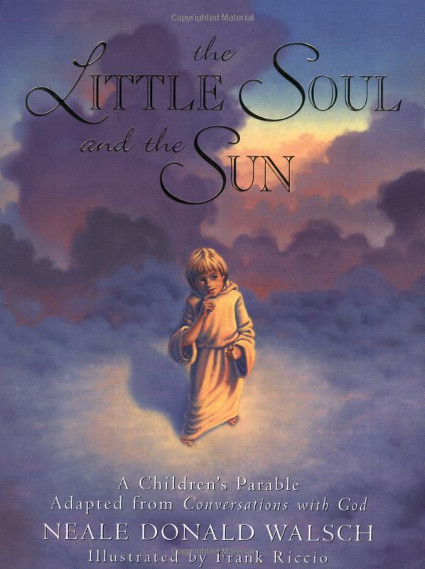
The Little Soul and the Sun

Many people don't understand why a loving God would create a world full of so much pain and suffering. The story of "The Little Soul and the Sun" adapted from the "Conversations With God" books does a nice job of explaining why that is. The excerpt below is the original version with some preamble taken directly from Book 1 and 3 of Conversations with God.


Book 1

Illness and disease are opposites of health and wellness, and are made manifest in your reality at your behest. You cannot be ill without at some level causing yourself to be, and you can be well again in a moment by simply deciding to be. Deep personal disappointments are responses which are chosen, and worldwide calamities are the result of worldwide consciousness.

Your question infers that I choose these events, that it is My will and desire they should occur. Yet I do not will these things into being, I merely observe you doing so. And I do nothing to stop them, because to do so would be to thwart your will. That, in turn, would deprive you of the God experience, which is the experience you and I have chosen together.

Do not condemn, therefore, all that you would call bad in the world. Rather, ask yourself, what about this have you judged bad, and what, if anything, you wish to do to change it.

Inquire within, rather than without, asking: “What part of my Self do I wish to experience now in the face of this calamity? What aspect of being do I choose to call forth?” For all of life exists as a tool of your own creation, and all of its events merely present themselves as opportunities for you to decide, and be, Who You Are.

This is true for every soul, and so you see there are no victims in the universe, only creators. The Masters who have walked this planet all knew this. That is why, no matter which Master you might name, none imagined themselves to be victimized— though many were truly crucified.

Each soul is a Master—though some do not remember their origins or their heritages. Yet each creates the situation and the circumstance for its own highest purpose and its own quickest remembering—in each moment called now.

Judge not, then, the karmic path walked by another. Envy not success, nor pity failure, for you know not what is success or failure in the soul’s reckoning. Call not a thing calamity, nor joyous event, until you decide, or witness, how it is used. For is a death a calamity if it saves the lives of thousands? And is a life a joyous event if it has caused nothing but grief? Yet even this you should not judge, but keep always your own counsel, and allow others theirs.

This does not mean ignore a call for help, nor the urging of your own soul to work toward the change of some circumstance or condition. It does mean avoiding labels and judgment while you do whatever you do. For each circumstance is a gift, and in each experience is hidden a treasure.

There once was a soul who knew itself to be the light. This was a new soul, and so, anxious for experience. “I am the light,” it said. “I am the light.” Yet all the knowing of it and all the saying of it could not substitute for the experience of it. And in the realm from which this soul emerged, there was nothing but the light. Every soul was grand, every soul was magnificent, and every soul shone with the brilliance of My awesome light. And so the little soul in question was as a candle in the sun. In the midst of the grandest light —of which it was a part—it could not see itself, nor experience itself as Who and What it Really Is.

Now it came to pass that this soul yearned and yearned to know itself. And so great was its yearning that I one day said, “Do you know, Little One, what you must do to satisfy this yearning of yours?”

“Oh, what, God? What? I’ll do anything!” The little soul said.

“You must separate yourself from the rest, of us,” I answered, “and then you must call upon yourself the darkness.’

“What is the darkness, o Holy One?” the little soul asked.

“That which you are not,” I replied, and the soul understood.

And so this the soul did, removing itself from the All, yea, going even unto another realm. And in this realm the soul had the power to call into its experience all sorts of darkness. And this it did.

Yet in the midst of all the darkness did it cry out, “Father, Father, why hast Thou forsaken me?” Even as have you in your blackest times. Yet I have never forsaken you, but stand by you always, ready to remind you of Who You Really Are; ready, always ready, to call you home.

Therefore, be a light unto the darkness, and curse it not.

And forget not Who You Are in the moment of your encirclement by that which you are not. But do you praise to the creation, even as you seek to change it.

And know that what you do in the time of your greatest trial can be your greatest triumph. For the experience you create is a statement of Who You Are—and Who You Want to Be.

Book 3

Do you remember the parable of The Little Soul and the Sun that I gave you in Book 1?

Yes.

There is a second half to that parable. Here it is:

“You may choose to be any Part of God you wish to be,” I said to the Little Soul. “You are Absolute Divinity, experiencing Itself. What Aspect of Divinity do you now wish to experience as You?”

“You mean I have a choice?” asked the Little Soul. And I answered, “Yes. You may choose to experience any Aspect of Divinity in, as, and through you.”

“Okay,” said the Little Soul, “then I choose Forgiveness. I want to experience my Self as that Aspect of God called Complete Forgiveness.”

Well, this created a little challenge, as you can imagine. There was no one to forgive. All I have created is Perfection and Love.

“No one to forgive?” asked the Little Soul, somewhat incredulously. “No one,” I repeated. “Look around you. Do you see any souls less perfect, less wonderful than you?”

At this the Little Soul twirled around, and was surprised to see himself surrounded by all the souls in heaven. They had come from far and wide throughout the Kingdom, because they heard that the Little Soul was having an extraordinary conversation with God. “I see none less perfect than I!” the Little Soul exclaimed. “Who, then, shall I have to forgive?”

Just then, another soul stepped forward from the crowd. “You may forgive me,” said this Friendly Soul. “For what?” the Little Soul asked. “I will come into your next physical lifetime and do something for you to forgive,” replied the Friendly Soul.

“But what? What could you, a being of such Perfect Light, do to make me want to forgive you?” the Little Soul wanted to know. “Oh,” smiled the Friendly Soul, “I’m sure we can think of something.”

“But why would you want to do this?” The Little Soul could not figure out why a being of such perfection would want to slow down its vibration so much that it could actually do something “bad.”

“Simple,” the Friendly Soul explained, “I would do it because I love you. You want to experience your Self as Forgiving, don’t you? Besides, you’ve done the same for me.”

“I have?” asked the Little Soul. “Of course. Don’t you remember? We’ve been All Of It, you and I. We’ve been the Up and the Down of it, and the Left and the Right of it. We’ve been the Here and the There of it, and the Now and the Then of it. We’ve been the Big and the Small of it, the Male and the Female of it, the Good and the Bad of it. We’ve all been the All of It. “And we’ve done it by agreement, so that each of us might experience ourselves as The Grandest Part of God. For we have understood that. ... “In the absence of that which You Are Not, that Which You ARE, is NOT.

“In the absence of ‘cold,’ you cannot be ‘warm.’ In the absence of ‘sad,’ you cannot be ‘happy,’ without a thing called ‘evil,’ the experience you call ‘good’ cannot exist. If you choose to be a thing, something or someone opposite to that has to show up somewhere in your universe to make that possible.” The Friendly Soul then explained that those people are God’s Special Angels, and these conditions God’s Gifts. “I ask only one thing in return,” the Friendly Soul declared. “Anything! Anything,’ the Little Soul cried. He was excited now to know that he could experience every Divine Aspect of God. He understood, now, The Plan.

“In the moment that I strike you and smite you,” said the Friendly Soul, “in the moment that I do the worst to you that you could ever imagine—in that self-same moment.., remember Who I Really Am.’ “Oh, I won’t forget!” promised the Little Soul. “I will see you in the perfection with which I hold you now, and I will remember Who You Are, always.”

Monday, June 1, 2015

Web Business Journey

In May I started a new blog called "Web Business Journey". Here is a brief excerpt from my first post:


I’ve been writing about spirituality and making videos on yoga for a few years now and have grown a following way beyond anything I ever expected.

In December of 2014 I decided I would try to turn what has so far been a hobby into a real business. The goal of this blog will be to document that journey. It will focus on what is common to all web based businesses.

I just wanted everyone here to be aware of what I'm working on in case I don't have time to write monthly posts for this blog.

Saturday, May 9, 2015

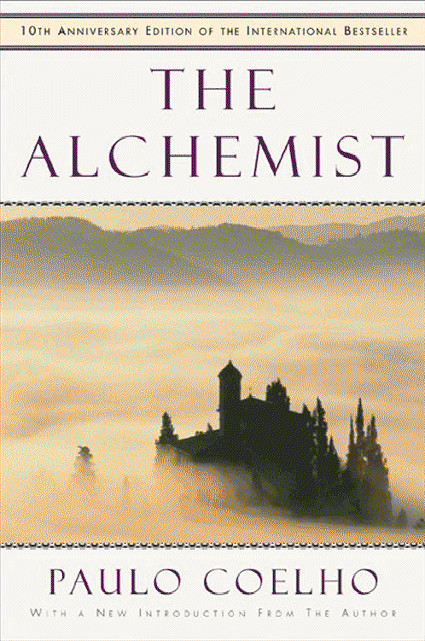
The Alchemist

Paulo Coelho has written an excellent book on following your dreams and realizing your Personal Legend. It is called "The Alchemist". In the excerpt below, the boy Santiago, who is the hero of the story, is helping an Englishman to find the Alchemist.


Another man appeared. He was older, and was carrying a small bucket. The boy repeated his question.

“Why do you want to find that sort of person?” the Arab asked.

“Because my friend here has traveled for many months in order to meet with him,” the boy said.

“If such a man is here at the oasis, he must be the very powerful one,” said the old man after thinking for a few moments. “Not even the tribal chieftains are able to see him when they want to. Only when he consents.

“Wait for the end of the war. Then leave with the caravan. Don’t try to enter into the life of the oasis,” he said, and walked away.

But the Englishman was exultant. They were on the right track.

Finally, a young woman approached who was not dressed in black. She had a vessel on her shoulder, and her head was covered by a veil, but her face was uncovered. The boy approached her to ask about the alchemist.

At that moment, it seemed to him that time stood still, and the Soul of the World surged within him. When he looked into her dark eyes, and saw that her lips were poised between a laugh and silence, he learned the most important part of the language that all the world spoke — the language that everyone on earth was capable of understanding in their heart. It was love.

Something older than humanity, more ancient than the desert. Something that exerted the same force whenever two pairs of eyes met, as had theirs here at the well. She smiled, and that was certainly an omen — the omen he had been awaiting, without even knowing he was, for all his life. The omen he had sought to find with his sheep and in his books, in the crystals and in the silence of the desert.

It was the pure Language of the World. It required no explanation, just as the universe needs none as it travels through endless time. What the boy felt at that moment was that he was in the presence of the only woman in his life, and that, with no need for words, she recognized the same thing. He was more certain of it than of anything in the world.

He had been told by his parents and grandparents that he must fall in love and really know a person before becoming committed. But maybe people who felt that way had never learned the universal language. Because, when you know that language, it’s easy to understand that someone in the world awaits you, whether it’s in the middle of the desert or in some great city. And when two such people encounter each other, and their eyes meet, the past and the future become unimportant. There is only that moment, and the incredible certainty that everything under the sun has been written by one hand only. It is the hand that evokes love, and creates a twin soul for every person in the world. Without such love, one’s dreams would have no meaning.

Maktub, thought the boy.

The Englishman shook the boy: “Come on, ask her!”

The boy stepped closer to the girl, and when she smiled, he did the same.

“What’s your name?” he asked.

“Fatima,” the girl said, averting her eyes.

“That’s what some women in my country are called.”

“It’s the name of the Prophet’s daughter,” Fatima said. “The invaders carried the name everywhere.” The beautiful girl spoke of the invaders with pride.

The Englishman prodded him, and the boy asked her about the man who cured people’s illnesses.

“That’s the man who knows all the secrets of the world,” she said. “He communicates with the genies of the desert.”

The genies were the spirits of good and evil. And the girl pointed to the south, indicating that it was there the strange man lived. Then she filled her vessel with water and left.

The Englishman vanished, too, gone to find the alchemist. And the boy sat there by the well for a long time, remembering that one day in Tarifa the levanter had brought to him the perfume of that woman, and realizing that he had loved her before he even knew she existed. He knew that his love for her would enable him to discover every treasure in the world.

Friday, April 3, 2015

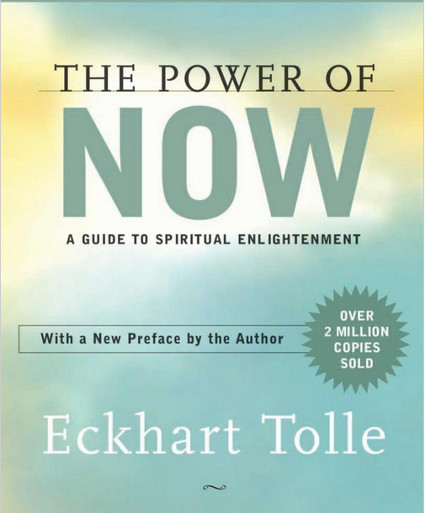
The Power of Now

I just finished reading The Power of Now: A Guide to Spiritual Enlightenment by Eckhart Tolle and found it to be quite good. I even developed a new practice based on it, which is simply to keep my mental voice quiet as much as possible throughout the day. This is the main teaching given in the book, but near the end he talks about surrender and briefly mentions the Apocalypse which I've quoted below.


How do you equate surrender with finding God?

Since resistance is inseparable from the mind, relinquishment of resistance - surrender - is the end of the mind as your master, the impostor pretending to be "you," the false god. All judgment and all negativity dissolve. The realm of Being, which had been obscured by the mind, then opens up. Suddenly, a great stillness arises within you, an unfathomable sense of peace. And within that peace, there is great joy. And within that joy, there is love. And at the innermost core, there is the sacred, the immeasurable, That which cannot be named.

I don't call it finding God, because how can you find that which was never lost, the very life that you are? The word God is limiting not only because of thousands of years of misperception and misuse, but also because it implies an entity other than you. God is Being itself, not a being. There can be no subject-object relationship here, no duality, no you and God. God-realization is the most natural thing there is. The amazing and incomprehensible fact is not that you can become conscious of God but that you are not conscious of God.

The way of the cross that you mentioned is the old way to enlightenment, and until recently it was the only way. But don't dismiss it or underestimate its efficacy. It still works.

The way of the cross is a complete reversal. It means that the worst thing in your life, your cross, turns into the best thing that ever happened to you, by forcing you into surrender, into "death," forcing you to become as nothing, to become as God - because God, too, is no-thing.

At this time, as far as the unconscious majority of humans is concerned, the way of the cross is still the only way. They will only awaken through further suffering, and enlightenment as a collective phenomenon will be predictably preceded by vast upheavals. This process reflects the workings of certain universal laws that govern the growth of consciousness and thus was foreseen by some seers. It is described, among other places, in the Book of Revelation or Apocalypse, though cloaked in obscure and sometimes impenetrable symbology. This suffering is inflicted not by God but by humans on themselves and on each other as well as by certain defensive measures that the Earth, which is a living, intelligent organism, is going to take to protect herself from the onslaught of human madness.

However, there is a growing number of humans alive today whose consciousness is sufficiently evolved not to need any more suffering before the realization of enlightenment. You may be one of them.

Enlightenment through suffering - the way of the cross - means to be forced into the kingdom of heaven kicking and screaming. You finally surrender because you can' t stand the pain anymore, but the pain could go on for a long time until this happens. Enlightenment consciously chosen means to relinquish your attachment to past and future and to make the Now the main focus of your life. It means choosing to dwell in the state of presence rather than in time. It means saying yes to what is. You then don't need pain anymore. How much more time do you think you will need before you are able to say "I will create no more pain, no more suffering?" How much more pain do you need before you can make that choice?

If you think that you need more time, you will get more time - and more pain. Time and pain are inseparable.

This past Christmas I saw a beautiful animated special with the underlying theme of surrender that the whole family can enjoy. It is called the Toy Story That Time Forgot. I've watched it with my kids three or four times already.

Monday, March 2, 2015

Hatha Yoga Pradipika

I just finished reading the Hatha Yoga Pradipika by Shailendra Sharma. It is a quick and easy read, but unfortunately lacks detail for many of the practices. However, when detail is provided it is of the sort that is hard to find elsewhere. As an example, here is the first shloka on nadi shodhana.


nadi shodhan


Sitting in Baddha Padmasana, the yogi should inhale through the left nostril, drink the vayu and hold the breath to full capacity, and then exhale through the right nostril. Then, inhaling through the right nostril, gradually drinking the vayu and retaining it, he should perform kumbhaka as before and then exhale completely through the left nostril.

Sit in Baddha Padmasana and do Khechari. Put your chin down. Now close your right nostril from inside the nasal cavity with the tongue and inhale from the left nostril. Then close your left nostril from inside with your tongue and exhale from the right nostril. When you are doing Baddha Padmasana it sort of squeezes your Sushumna, especially near Anahata Chakra. Without Baddha Padmasana and Khechari, Nadi Shodhan is not possible. It also opens your lungs and your abdomen in a certain way to start a very special reaction of intestines. Opening the lungs enables you to use its full capacity while breathing, so you can fill up your lungs as well as abdomen with vayu and are able to do Nadi Shodhan.

In the Hatha Yoga Pradipika by Swami Muktibodhananda of the Bihar School of Yoga, the sitting posture is translated as Baddha Padmasana, but then it is recommended to not even attempt to sit in Padmasana let alone Baddha Padmasana. Of course, his book is for the general public, while Shailendra's book is for "very senior yogis" only as he says in the Forward.

Sunday, February 1, 2015

Vishwa Amara on 2015

Back in 2010 I posted material from numerous channeled sources, but over time many proved to be very unreliable. On the contrary, the Sapta Rishis (channeled at Vishwa Amara) have been better than most. In 2010 they indicated that nothing significant would happen in 2012 because the major events had been postponed to 2015. Well, 2015 has started and they have confirmed in their January 2015 post that a major crisis will hit by the end of the year. Below is an excerpt.

The New batch of Rishis and the Saptarishis have made many plans for the year ahead. Instead of having two large phases like the last year, they want to divide the year into five phases, each of about two to three months. Each phase would have a certain objective.

In the first phase, the Earth will experience the intensity of the Pralaya energies. The aim of this phase is to help every individual see the merit in choosing righteousness. The more we adopt Light, love and peace into our lives, and outgrow anger, bitterness and pessimism, the easier it will be to sail through. Those who resist will be the ones to face more difficulties. Our humility and surrender to God are essential.

The second phase will be a little relaxed. It will help every individual to assimilate the changes and strengthen their progress. During this phase, many new energies will be anchored on our Earth.

During the third phase, experimentation on freewill will be conducted by the Higher Intelligence. It will be easier to embrace the positive changes and adopt Light. We can also witness many changes all over the Earth. This phase is an important preparatory phase towards the Light Age.

In the fourth phase is when the battles between the Light and the dark will be at their peak. At the global level, the Individuals who spoil the lives of others, corrupt businesses and falsity will be exposed. This battle will also occur within each individual. At each juncture, we have to choose, let go of the unwanted, embrace Light and move on.

The last phase would be chaotic. There will be panic, confusion and a struggle for survival. For those who are connected to Light and have their basics in place, it should be a smooth phase. The Rishis expect Lord Kalki, to begin his work at the physical level during this period.

These are roughly the way the Rishis want to carry out their work during this year. But there will naturally be revisions and improvements based on their observations of how humanity responds to their initiatives.

So while they don't predict what form the crisis will take, Sal and the Founders provide all the details. In this first post they indicate that the $US and all global currencies will lose most of their value, while in this second post they provide instructions for how to prepare for it. Even some financial analysts agree that the world is poised for a Global Currency Crisis and to buy gold in preparation.

Thursday, January 1, 2015

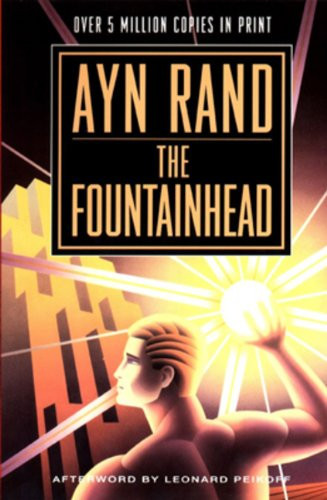
The Fountainhead

I recently finished reading The Fountainhead and found it to be very well written and quite an interesting book. Ayn Rand built quite a following from it and her other work Atlas Shrugged.

The hero of The Fountainhead, Howard Roark, has mastered divine co-creation in architecture, and her presentation of that is quite inspired and makes the book well worth reading just for this. Unfortunately though, all of her characters have no understanding of unconditional love, so it is quite awful from that point of view. Here, the villain, Ellsworth Toohey, explains how spirituality has been used to control and exploit humanity through the ages.

Don’t allow men to be happy. Happiness is self-contained and self-sufficient. Happy men have no time and no use for you. Happy men are free men. So kill their joy in living. Take away from them whatever is dear or important to them. Never let them have what they want. Make them feel that the mere fact of a personal desire is evil. Bring them to a state where saying 'I want’ is no longer a natural right, but a shameful admission. Altruism is of great help in this. Unhappy men will come to you. They’ll need you. They’ll come for consolation, for support, for escape. Nature allows no vacuum. Empty man’s soul--and the space is yours to fill. I don’t see why you should look so shocked, Peter. This is the oldest one of all. Look back at history. Look at any great system of ethics, from the Orient up. Didn’t they all preach the sacrifice of personal joy? Under all the complications of verbiage, haven’t they all had a single leitmotif: sacrifice, renunciation, self-denial? Haven’t you been able to catch their theme song--’Give up, give up, give up, give up’? Look at the moral atmosphere of today. Everything enjoyable, from cigarettes to sex to ambition to the profit motive, is considered depraved or sinful. Just prove that a thing makes men happy--and you’ve damned it. That’s how far we’ve come. We’ve tied happiness to guilt. And we’ve got mankind by the throat. Throw your first-born into a sacrificial furnace--lie on a bed of nails--go into the desert to mortify the flesh--don’t dance--don’t go to the movies on Sunday--don’t try to get rich--don’t smoke--don’t drink. It’s all the same line. The great line. Fools think that taboos of this nature are just nonsense. Something left over, old-fashioned. But there’s always a purpose in nonsense. Don’t bother to examine a folly--ask yourself only what it accomplishes. Every system of ethics that preached sacrifice grew into a world power and ruled millions of men. Of course, you must dress it up. You must tell people that they’ll achieve a superior kind of happiness by giving up everything that makes them happy. You don’t have to be too clear about it. Use big vague words. ’Universal Harmony’--’Eternal Spirit’--’Divine Purpose’--’Nirvana’--’Paradise’--’Racial Supremacy’--’The Dictatorship of the Proletariat.’ Internal corruption, Peter. That’s the oldest one of all. The farce has been going on for centuries and men still fall for it. Yet the test should be so simple: just listen to any prophet and if you hear him speak of sacrifice--run. Run faster than from a plague. It stands to reason that where there’s sacrifice, there’s someone collecting sacrificial offerings. Where there’s service, there’s someone being served. The man who speaks to you of sacrifice, speaks of slaves and masters. And intends to be the master. But if ever you hear a man telling you that you must be happy, that it’s your natural right, that your first duty is to yourself--that will be the man who’s not after your soul. That will be the man who has nothing to gain from you. But let him come and you’ll scream your empty heads off, howling that he’s a selfish monster. So the racket is safe for many, many centuries. But here you might have noticed something. I said, ’It stands to reason.’ Do you see? Men have a weapon against you. Reason. So you must be very sure to take it away from them. Cut the props from under it. But be careful. Don’t deny outright. Never deny anything outright, you give your hand away. Don’t say reason is evil--though some have gone that far and with astonishing success. Just say that reason is limited. That there’s something above it. What? You don’t have to be too clear about it either. The field’s inexhaustible. ’Instinct’--’Feeling’--’Revelation’--’Divine Intuition’--’Dialectic Materialism.’ If you get caught at some crucial point and somebody tells you that your doctrine doesn’t make sense--you’re ready for him. You tell him that there’s something above sense. That here he must not try to think, he must feel. He must believe. Suspend reason and you play it deuces wild. Anything goes in any manner you wish whenever you need it. You’ve got him. Can you rule a thinking man? We don’t want any thinking men."

Unfortunately, this is how spirituality is taught by many. You must practice yamas, niyamas, selfless service, sacrifice, renunciation and self-denial all day every day to achieve that superior kind of happiness. Well, this is simply not true, but you do need to devote about an hour each day with the mind turned inward. This can be done at any time while engaged in any activity that allows for an inward focus, from meditating to exercising, to eating food to having sex. Then in a few months or even weeks, you'll suddenly discover that superior kind of happiness that really does exist.

Of course, once you've realized that this inner happiness is far greater than any external happiness, you may desire to prolong your periods of inner focus, which to the casual observer may appear to be sacrifice, renunciation and self-denial but is in fact the exact opposite.

Ayn Rand on the other hand knew very little about happiness, as can be seen in this excerpt from an article on her at nymag.com.

Rand approached her. “Would you tell me what is the most important thing in life to you?” she asked, showing once again her flair for smooth opening lines. “My mother,” the girl answered. Rand turned away, disgusted. As an adult, she called this exchange “the first most important event in my life socially” and analyzed it as follows: “I had thought she was a serious girl and that she was after serious things, but she was just conventional and ordinary, a mediocrity, and she didn’t mean anything as a person.”

The happiness that girl knew, which most people know, was beyond Ayn Rand's understanding. It's too bad that Ayn Rand died before the book Love You Forever was published, for if she had the opportunity to read that book, she might finally have understood what that girl was talking about.