Sunday, February 3, 2013

Kriya Yoga: Synthesis of a Personal Experience

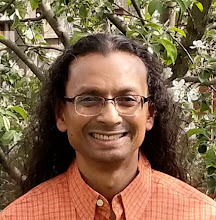
Ennio Nimis has been studying and practicing yoga since the age of 15 and after becoming an adult has focused exclusively on Kriya Yoga. He has now written an excellent book on the subject with all of the details provided. The book is available to download for free from his web site: Kriya Yoga Info. Below is the inspiration that led him to writing this book.


It was winter. One day I went skiing in the nearby mountains with a couple of friends. All went magnificently. During a break in the afternoon, I managed to find time alone. I found myself looking at the mountains that marked the boundaries of the distant horizon in all directions. In less than half an hour the sun would paint them pink – with an intense hue on their eastern side and tinged with blue on the western side. I imagined India to be right behind them, the Himalayas being their continuation. My thought went to all the Kriya enthusiasts who found, as I did, insurmountable obstacles to the understanding of that beloved discipline. All those obstacles seemed to me an absurdity that wore the clothes of a nightmare – I felt an infinite rebellion.

I visualized a book on Kriya explaining every technique in great detail. How often had I wondered what would have happened if Lahiri Mahasaya or one of his disciples had written it! My imagination led me to fantasize about its cover, to skim its few pages – sober, yet rich in content. If this book existed, we would have a reliable manual of Kriya that restrained the many small or large variations made up by various teachers. Perhaps some annotator would try to force its meaning into his own theories. Nay, I was positive that some pseudo-guru would say that the techniques described in it were for beginners only, while there were much more complicated techniques that could only be passed on by an authorized teacher to chosen disciples. Some would swallow the bait, contact the author, and pay good money to be introduced to rubbish that he had assembled either through fancy or borrowed from some esoteric book...

This happens; it’s part of our human nature. However, sincere researchers would surely be able to recognize the strength and self-sufficient intrinsic evidence of the original text.

It is a shame that no one had written that book! For the first time I dared to let my thoughts stray toward what could happen if I wrote it. It would be hard, yet possible, to summarize the totality of my knowledge of Kriya into a book – welding together techniques and theories through a clean, rational vision. The intention was definitely not to celebrate myself or lay the foundations for yet another new school of Kriya. If I were to describe my experiences, it would only be for the purpose of clarifying theoretic and technical explanations. There would be no more rhetorical claims of legitimacy and riddle-like sentences to confuse readers or have them guess at technical details or create further doubts in them! How beautiful it was to dream of a book which would prove its validity by reproducing Lahiri Mahasaya's thought in the simplest and most logical way, in a complete, harmonious set of techniques!

I will be examining Ennio's teachings in greater detail in future posts.

Sunday, January 13, 2013

Creating a Life Together

The book "Creating a Life Together: Practical Tools to Grow Ecovillages and Intentional Communities" is an excellent resource for anyone interested in joining or starting an ecovillage or intentional community. It provides step-by-step practical information on how to create a successful ecovillage. Here is an excerpt from the Introduction.


The Successful Ten Percent

I’ve since learned that EarthDance Farm’s experience is fairly common. Most aspiring ecovillages and community groups — probably 90 percent — never get off the ground; their envisioned communities never get built. They can’t find the right land, don’t have enough money, or get mired in conflict. Often they simply don’t understand how much time, money, and organizational skill they’ll need to pull off a project of this scope.

I wanted to know about the successful ten percent, those groups that actually created their communities. What did they do right?

I’ve sought the answer to this question ever since, in my years as editor of Communities magazine, and by visiting dozens of communities and interviewing scores of community founders. And I’ve seen a definite pattern. Generally, founders used the same kinds of skills, knowledge, and step-by-step processes to create widely different kinds of communities, from urban group households or rural ecovillages.

Creating a Life Together is an overview of that process, gleaned from some of the most innovative and successful community founders in North America. This is what they did, and what you can do, to create your community dream.

To give you an idea of the level of detail that the books goes into, here is the Table of Contents.


Introduction

Part One: - Planting the Seeds of Healthy Community

Chapter 1 - The Successful Ten Percent — and Why Ninety Percent Fail
  • Lost Valley — How One Group Did It
  • What Works, What Doesn’t Work?
  • The Successful Ten Percent
  • Why Ninety Percent Fail
  • “Structural Conflict” — And Six Ways to Reduce It
  • What Will it Cost?
  • How Long Does it Take?
  • How Many People do You Need?
Chapter 2 - Your Role as Founder
  • What Kind of Person Founds a Community?
  • What Else You’ll Need
  • “If Only I Had Known!”
Chapter 3 - Getting Off to a Good Start
  • Don’t Run Out and Buy Land — Yet
  • When You Already Own the Property
  • Organizing Your Group
  • Getting Real about Finances
  • Collecting Funds
  • Raising Money from Supporters
  • Attracting and Integrating New Members
  • Creating “Community Glue”
  • Pioneers, Settlers, and the Flow of Members
Chapter 4 - Community Vision — What It Is, Why You Need It
  • Sound a Clear Note
  • Elements of a Community’s Vision
  • Your Vision Documents and Vision Statement
  • Do It First
Chapter 5 - Creating Vision Documents
  • More Than One Vision?
  • A Sacred Time
  • “That’s Not Community!” — Hidden Expectations and Structural Conflict
  • Exploring the Territory
  • Sharing from the Heart
  • Writing it Down
Chapter 6 - Power, Decision-making, and Governance
  • Power — The Ability to Influence
  • Focused Power, Widespread Power
  • How Consensus Works
  • What You Need to Make Consensus Work
  • “Pseudoconsensus” and Structural Conflict
  • Agreement-Seeking — When You Don’t Want to use Full Consensus
  • Multi-winner Voting
  • Community Governance — Spreading Power Widely
  • More than One Form of Decision Making?
  • What Decision-making Method Should You Use?
Part Two: - Sprouting New Community: Techniques & Tools

Chapter 7 - Agreements & Policies: “Good Documents Make Good Friends”
  • Remembering Things Differently
  • Giving Yourselves Every Chance of Success
  • Your Community’s Agreements and Policies
Chapter 8 - Making It Real: Establishing Your Legal Entity
  • Why You Need a Legal Entity — Before Buying Your Property
  • Using a Lawyer
  • Finding the Right Lawyer
Chapter 9 - The Great Land-Buying Adventure
  • Legal Barriers to Sustainable Development
  • Shopping for Counties — Zoning Regulations, Building Codes, Sustainable Homesteads, and Jobs
  • The Proactive Land Search
  • Friendly Loans from Friends and Family
  • Onerous Owner-financing (Better than None at All)
  • Do-it-Yourself Refinancing with a “Shoe Box Bank”
  • When One Person Buys the Property
  • Acquiring Fully Developed “Turn-Key” Property — Confidence, Persistence, and Negotiation
  • If at First You Don’t Succeed …
Chapter 10 - Finding the Right Property
  • Choosing Your Site Criteria
  • How Much Land Do You Want?
  • Raw Land — Lower Initial Cost, Years of Effort
  • Developed Land — Electricity, Toilets, and Showers
  • Fully Developed Turn-key Property — Move Right In (With a Big Financial Bite)
  • Buying Property like the Professionals Do
  • Conducting the Search — On Your Own or with a Real Estate Agent
  • Investigating Likely Properties
  • Taking Property Off the Market While You Do Further Research
Chapter 11 - Neighbors and Zoning
  • How Zoning Issues can Impact Community Plans
  • Zoning Issues and Your Property
  • Gambling with Former Use Permits
  • Seeking a Zoning Exception
  • Negotiating for What You Want
  • Zoning Exceptions, Neighbors, and Public Hearings
Chapter 12 - Financing Your Property (Loans You Can Live With)
  • About “Renting Money” — What You Should Know
  • Private Financing
  • When One Member Buys the Property
  • Protecting Your Sole Owner with a Triple Net Lease
  • Owner Financing
  • Bank Financing
  • Drawing on the Cohousing Model
  • What about Grants and Donations?
  • Refinancing Your Property
Chapter 13 - Developing Sustainable Human Settlements
  • Earthaven’s Development Process
  • Listening to your Land
  • Creating your Site Plan Yourselves
  • Avoiding “Urban Refugee Syndrome”
  • Creating Privacy in the Midst of Community
  • Designing for Conviviality
Chapter 14 - Internal Community Finances (Can We Afford to Live There?)
  • Rural Communities — How will your Members Make a Living?
  • The Risks of Community Businesses
  • Keeping Member Assessments Affordable
  • Joining Fees
  • Housing Arrangements
  • Site Lease Fees and the Debt Load
  • Labor Requirements
  • Building Equity
  • Can People Afford to Join You?
Chapter 15 - Legal Entities for Owning Property
  • Checklist for Choosing a Legal Entity
  • How You’ll Hold Title and Arrange Members’ Use Rights
  • Organizational Flexibility
  • How You’ll be Taxed
  • Overview: Corporations and Non-profit Corporations
  • Limited Liability Companies (LLCs)
  • Homeowners Associations — Tax Advantages (and Disadvantages)
  • Condominium Associations
  • Housing Co-ops — Separate Ownership and Use Rights
  • Non-exempt Non-profit Corporations
Chapter 16 - If You’re Using a Tax-exempt Non-profit
  • Advantages of a 501(c)3 — Donations, Tax Breaks, Limited Liability
  • Disadvantages of a 501(c)3 — Onerous Requirements, Irrecoverable Assets
  • Land-Owning Entities and 501(c)3 Corporations — The Best of Both Worlds
  • How One Group Retained Control of its Board
  • Title-holding Corporations — Collecting Income from “Passive” Sources
  • Private Land Trusts — Protecting the Land
  • Community Land Trusts — An Irrevocable Decision
  • For “Common Treasury” Communities — 501(d) Non-profit Corporations
Part Three: - Thriving in Community

Chapter 17 - Communication, Process, and Dealing with Conflict: The Heart of Healthy Community
  • The “Rock Polisher” Effect
  • Nourishing Sustainable Relationships
  • The Roots of Conflict: Emotionally-charged Needs
  • High Woundedness, High Willingness
  • Seven Kinds of Community Conflict We Wish We’d Left Behind
  • Twenty-four Common Sources of Community Conflict
  • The Fine Art of Offering Feedback
  • Receiving Feedback — Listening for Kernels of Truth
  • Threshing Meetings
  • Creating Specific Conflict Resolution Agreements
  • Helping Each Other Stay Accountable to the Group
  • A Graduated Series of Consequences
Chapter 18 - Selecting People to Join You
  • Select for Emotional Maturity — the “Narrow Door”
  • But is it Community?
  • Passive Victims, Outraged Victims
  • Membership Screening and the Law
  • Dealing Well with Saying “No”
  • How Can You Tell?
  • Questions, References, “Long Engagements”
Appendix 1 - Sample Community Vision Documents
Appendix 2 - Sample Community Agreements
Appendix 3 - Setting Up and Maintaining a 501(c)3 Non-profit

Saturday, December 22, 2012

Prediction Failed, What Now?

The long awaited day of December 21, 2012 has now come and gone . . . and nothing of any significance happened. The EM field weakness predicted by the Founders for that day did not materialize.


At the end of each Precessional Cycle, the Earth and the solar system pass through what is called a region of scalar electromagnetic impulses, or an area of space in which the EM field polarities become weaker. This weakness in the EM fields sometimes (but not usually) causes the north and south poles of the Earth to reverse polarity.

The geomagnetic field plot for December 21st was the same as any other day with no difference in field strength seen. It is unfortunate that this prediction failed to materialize, but no doubt part of the overall plan for humanity. It is also important to note that the trends described by the Founders are certainly present (i.e. financial crisis, climate crisis, energy crisis, etc.), and many of the other things they mention may still be true, but we won't know with any certainty until we actually experience them.

So what now? The only reason I was waiting for December 21, 2012 was to know who I should consider including in my plan to build an ecovillage. So now that nothing has happened to change anyone's beliefs, I will only seek out those that are already predisposed to the idea of living in an ecovillage. So if you live in the Ottawa, Canada area and are interested in participating in my ecovillage project, please email me at manoj.the.yogi@gmail.com and we can discuss. Here's an overview of my ecovillage vision.

Sunday, December 16, 2012

The Precessional Alignment (part 5)

This is the fifth and final post in a series of posts that discuss the precessional alignment of December 21, 2012 in detail. The Founders cover this topic in chapter 7 of the book "Earth Changes and 2012: Messages From the Founders". Here are their concluding remarks.


The period of time representing the exact alignment (the ending and beginning of Precessional Cycles) is about three days duration in Earth time. The exact midpoint of the next precessional alignment is around 23:00 GMT on December 21, 2012. For about 36 hours before and after this time, the energies of the alignment will be at maximum and the portals opened around the Earth will be causing major shifts in souls. Please remember, beloved Creators, that the actual rotation of the Earth will not change significantly. The sun will still rise in the east and set in the west, and the days and nights will still be roughly the same length as always. This is an electromagnetic phenomenon, not a gravitational or rotational one.

Now to rephrase all this in metaphysical terms, we could say that each Precessional Cycle and Galactic Cycle (precession of the axis and revolution of the solar system around the Milky Way) represent lesson points in a soul's evolution. Every time the precession aligns the Earth with the galactic core, it correlates with another level of soul initiation, or an opportunity to review what the soul has learned since the last cycle. Since everything in this universe operates in spirals, the scenario will change each time the Earth cycles through. So with the approach of the end of the present Precessional Cycle, slated to occur in your year 2012, souls will again have an opportunity to align themselves with the energies of the galactic center. EM energies will surge through the core of the Earth and be distributed first along the ley lines and then across the entire surface of the planet, and souls will have another chance to realign themselves and take stock of what they have learned since the last alignment.

The region of space through which the solar system passes changes with each Precessional Cycle. The particular energy fluctuations associated with this current pass-through are significant in that they mark a similar alignment to what was present about 108 million years ago when the first major wave of individualization began with souls moving out of the Godhead. Therefore, it will seem to many that they are returning home, when in fact, they are simply re-experiencing what occurred about 108 million years ago, but on a different leg of the spiral. In actuality, your souls are already home and always have been, even though many aspects of your souls have been journeying among the cosmos since the differentiation from the Godhead.

Thursday, December 13, 2012

Monitoring the Geomagnetic Field

With only 8 days now remaining until December 21, 2012, I've begun to monitor the earth's geomagnetic field on a daily basis using the Space Weather Canada web site. The plot above represents the data for today. Note that the plot uses Universal Time (GMT), so today is already over, and that virtually no fluctuations can be seen. Click on the image to see the full resolution.

In my post "Validating December 21, 2012" from earlier this year, I had mentioned that I expect the fluctuations seen on December 21st to greatly exceed those of March 13, 1989 when the last major geomagnetic storm occurred near Ottawa. This remains my criteria for deciding whether the Founders' prediction for December 21st has been validated or not.

Since it is also possible that the internet goes down on that day making it impossible to access the Space Weather Canada web site, I also have a backup plan. This includes using the Android app Ulysse Gizmos, as well as a regular orienteering compass as seen in the image below.

However, I've discovered that these sources are easily influenced by computers, TVs, power lines and any other electromagnetic source they are near, so they are far less reliable than the Space Weather Canada data. So hopefully, the internet either stays up, or the Space Weather Canada data becomes available once internet connectivity is restored.

Sunday, December 9, 2012

The Mahabharata (book 5.CLXXVI)

When Amba arrived at Salya's palace she was ushered into the same room where she and her sisters had first met the handsome king. However, today when Salya entered the room, he was limping in obvious pain with bandages at various points along his arms and legs. His expression was sour as well when he asked, "What are you doing here?"

Amba rose and rushed to him while saying, "I've come to be with you my Lord."

Salya put up his hand to stop her advance, "You are to be wedded to Vichitravirya are you not?"

"I refused him so I could be with you . . . for I love you."

Salya laughed cruelly in response, "When you were abducted by Bhishma you seemed to go with him quite cheerfully as far as I could tell."

"That is not true", flustered Amba as she began to realize her plan to marry Salya was falling apart. "I was weeping the whole time, and only thinking of you. It is only by convincing Bhishma of my love for you that he has allowed me to come. Please accept me."

Salya shook his head, "How can I accept someone who has been promised to another? Not only that, but forcibly abducted to wed another. You belong to Bhishma now." Recalling his defeat, Salya's expression turned to rage, "Bhishma humiliated me in battle and when I look at you now all I remember is that humiliation. Be gone!"

Salya turned and left leaving Amba alone. Once again Amba realized the reality of her situation. No king would marry someone promised to another. She had no choice but to return to Hastinapura and marry Vichitravirya, but somehow that thought was just revolting. It was really Bhishma that she wanted to marry. Salya was right though, that since it was Bhishma that abducted her, then it is Bhishma that is now responsible for her. It is his duty to accept her as his wife.

With this new line of reasoning firmly in her mind, Amba returned to Hastinapura. After once again gaining a private audience with Bhishma at the palace, she began, "Salya informed me that after having been abducted by you that I am now your responsibility. You are my protector."

Bhishma replied, "This is true. Then you will marry Vichitravirya after all?"

Before Amba could answer, there was a knock at the door and an attendant entered the room, "I deeply sorry to interrupt my liege, but king Vichitravirya has passed away."

"What!?!" exclaimed Bhishma as both he and Amba turned to the attendant with startled expressions.

The attendant continued, "It seems the exertions of married life were too much for him. He has succumbed to his phthisis."

Bhishma regained his composure and replied, "Tell queen Satyavati I'll be there shortly."

"Yes, my liege," replied the attendant, as he left closing the door behind him.

Amba turned to Bhishma and said, "I am sorry for your loss."

After a short pause, she continued, "As the only remaining heir to the throne it seems you have no choice now but to assume your rightful role as king of Hastinapura."

Amba waited with anticipation for Bhishma's response as she felt certain her deepest desire was soon to be fulfilled.

Bhishma looked into Amba's eyes and this time allowed them to penetrate his soul. He then knew she was his destiny. In another life he would have been king and she his queen. In another life, they would have been incredibly happy together and raised many children; grown old together and watched their children and the kingdom prosper. In another life . . . but not this life.

After a lengthy pause, Bhishma then replied, "I have made a vow to never assume the throne for myself, and I intend to maintain that vow until the day I die."

Amba couldn't believe his answer. She was certain his lengthy gaze into her eyes was one of true love. Perhaps he just needs a nudge to reach the right conclusion, so she replied, "but surely queen Satyavati's father will no longer hold you to that vow given that his heirs have all died."

"It doesn't matter. Once a vow has been taken it must be kept, regardless of the circumstances."

Amba was now beginning to get angry over Bhishma's stubbornness. "Would you see the kingdom destroyed with no king to rule it?"

"If it came to that, yes, but I believe there are still other alternatives by which an heir may be produced."

Amba's anger was now growing. "What about your responsibility to me then? How will you fulfil that responsibility now that king Vichitravirya is dead?"

Bhishma thought for a moment, then replied, "I cannot."

Amba continued, "Failing to fulfil your responsibilities to me is a sin equal to or even greater than breaking your vow. So why not choose the path aligned with the destiny of a kshatriya?"

"I am sorry, but my vow takes precedence as I made it with full knowledge of the outcome. Your situation, though it grieves me, is an accident beyond my control."

Amba was now furious. "Heed my words! You will be destroyed for committing this grave sin against me." She turned and stormed out of the palace, but soon began weeping uncontrollably. Climbing into her chariot, she left Hastinapura as quickly as possible with no particular destination in mind.

Footnotes

1. Derived from: Udyoga Parva, Section CLXXVI, p. 336-337.

2. Vichitravirya's death: Adi Parva, Section CII, p. 222.

Sunday, December 2, 2012

I Am Ramtha (chapter 2)

In this post from chapter 2 of "Ramtha: The White Book", Ramtha presents his own life story.


I am Ramtha, the Ram. In the ancient language of my times it means "the God." I am the great Ram of the Hindu people, for I was the first man born of the womb of woman and the loins of man who ever ascended from this plane.

The only "great Ram of the Hindu people" that I was aware of was Ram from the Hindu epic the Ramayana. However, upon reading further it became clear that Ram, the prince of Ayodhya, bore no resemblance to Ramtha the pauper.


I did not blame the Unknown God for his inability to love me. I did not blame him for not loving my people. I did not blame him for the death of my mother and my little sister. I did not blame him; I hated him.

I had no one left, for my brother was kidnapped by a satrap and taken into subserviency into the land that would later be called Persia. There he was abused for the pleasure of the satrap and his need for what is called loin gratification.

I was a lad of fourteen with no meat upon my bones and a great bitterness inside me. So I decided to do battle with the Unknown God of my forefathers, the only thing I felt worthy of dying by. I was determined to die, but as an honorable man. And I felt that dying at the hands of man was a dishonorable way to perish.

I saw a great mountain, a very mysterious place that loomed on the distant horizon. I thought that if there were a God, he would live there, above us all, just as those who governed our land lived above us. If I could climb there, I thought, I would get in touch with the Unknown God and proclaim my hatred for him at his unfairness to humanity.

I left my hovel and journeyed for many days to reach this great mountain, devouring locusts and ants and roots along the way. When I reached the mount I climbed into the clouds, which now veiled its whitened peak, in order to do battle with the Unknown God. I called out to him, "I am a man. Why have I not the dignity of one?" And I demanded that he show me his face, but he ignored me.

I fell upon my haunches and wept heartily, until the whiteness iced itself from my tears. When I looked up, I beheld what seemed to be a wondrous woman holding a great sword before me. She spoke to me saying, "0 Ram, 0 Ram, you who are broken in Spirit, your prayers have been heard. Take this sword and conquer yourself." And in but a blink of my eye she was gone.

Conquer myself? I could not turn the blade around and hack off my own head; my arms would not reach the hilt of the sword. Yet I found honor in this great sword. No longer did I shiver against the great cold but found warmth instead. And when I looked again where my tears had fallen, there grew a flower of such sweet aroma and color that I knew the flower was of hope.

I came down from the mountain with the great sword in my hand, a day which was recorded in the history of the Hindu people as the terrible day of the Ram. A boy had gone to that mountain, but a man returned. No longer frail or weak of bodily movement, I was a Ram in every sense of the word. I was a young man with a terrible light about me and a sword that was larger than I was. Sometimes I think I was very slow to understand in that existence, for I never fully realized why the wondrous sword was so light that I could carry it, yet it was so large that nine hands together could hold the hilt of it.

I returned from the mountain to the city of Onai. In the fields outside the city I saw an old woman stand up and shade her eyes to look at me a'coming. Soon all stopped their labors. Carts stopped. Donkeys squealed. Everything became quiet. When the people ran up to look upon my countenance, they must have been persuaded because everyone of them took up his meager tool and followed me into the city.

We destroyed Onai because the Atlatians spat in my eye when I demanded they open the granaries to feed our people. So unprepared were the Atlatians for this that they were easily overtaken, for they did not know of battle.

I opened the granaries to our poor people, and then we burned Onai to the ground. It never occurred to me that I couldn't do that, for I did not care if I lived or died at that point; I had nothing left to live for.

When the slaughter and burning were finished, a great hurt was still within my being, for my hatred had not been satisfied. So I ran from the people to hide in the hills, but they followed me in spite of all my cursing and throwing stones and spitting at them.

"Ram, Ram, Ram, Ram," they chanted, carrying their tools of the field and grain tied in linens, and herding sheep and goats before them. I shouted at the people to leave me alone and go home. But still they came, for they no longer had a home. I was their home.

Ramtha goes on to describe how he eventually conquered three-quarters of the known world. That is certainly significant, but if he isn't Ram of the Ramayana, then who is he? I know there are 10 avatars (Dashavatara) that are talked about in the scriptures, and upon looking through the list I discovered another Ram: Parashurama which translates to "Ram with the Axe" and sure enough, after performing a penance to receive his axe/sword, Ram went on a rampage and killed every Kshatriya on earth thereby conquering the known world.

Parashurama is also one of the seven immortals (Chiranjivi) who will remain on earth during the entire Kali Yuga until Satya Yuga begins (in 2030).